
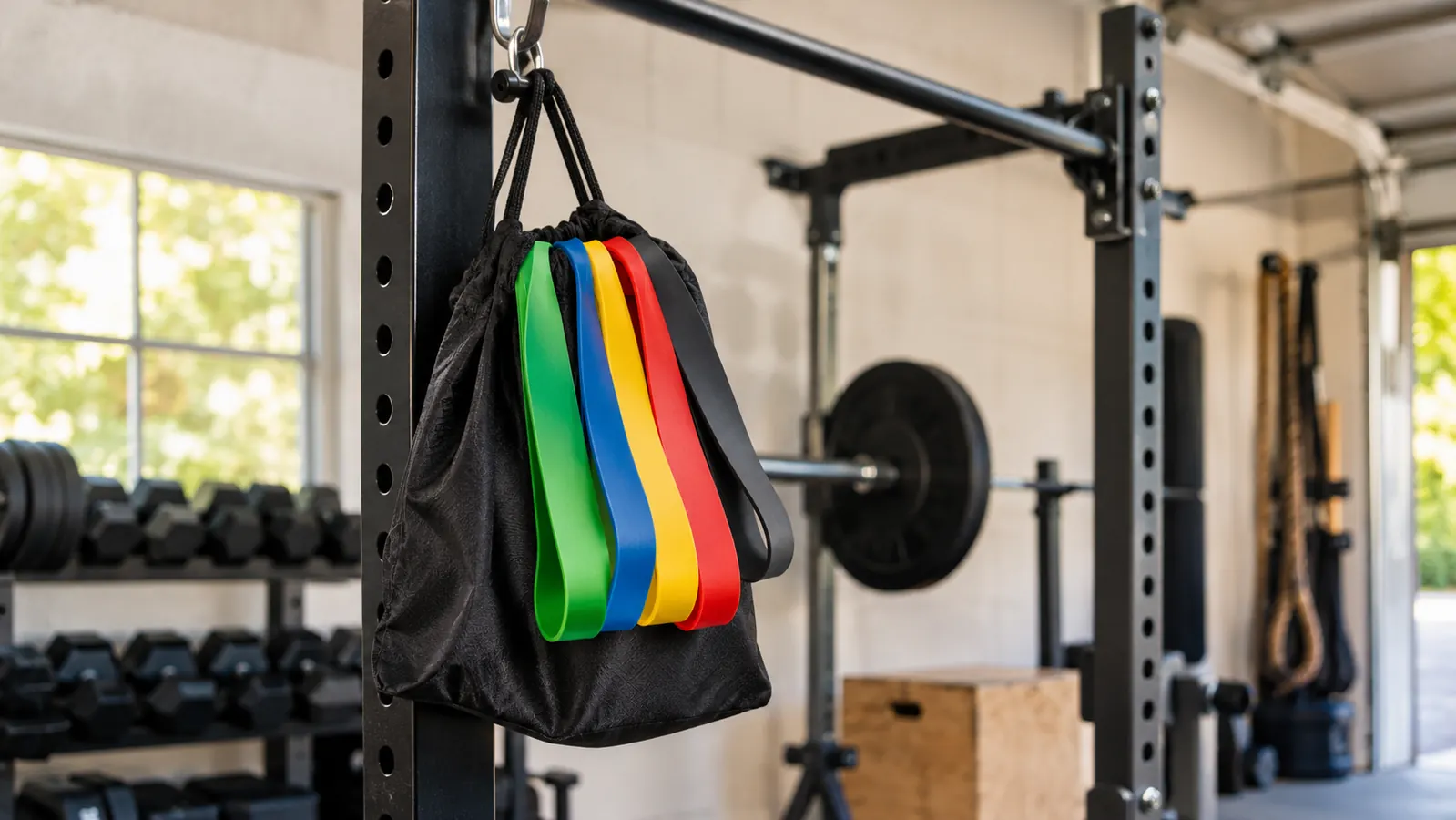
I bought the Sanakma resistance bands in May, mostly because I wanted to do assisted pull-ups without paying for a gym membership. I am 58, I have a stiff right knee, and I have been lifting three mornings a week in my garage for years. I also happen to be someone who tests things for weeks before she writes about them, and I have now used these bands through a full Chattanooga summer and into the fall. Here is the honest version, including the parts I would not have believed if I had only read the listing.
The Quick Verdict
A genuinely useful five-band set for assisted pull-ups and warm-ups, as long as you are not expecting it to replace a full set of dumbbells.
Amazon Check Today's Price →The band set I kept reaching for all summer
After six months of garage workouts, the Sanakma set is the one that stayed on the hook. Five resistance levels, a door anchor, foam handles, and a bag that keeps it all together.
Amazon Check Today's Price on Amazon →How I Have Used These Bands
The set comes with five loop bands, one door anchor, two foam handles, three carabiners, an exercise guide, and a storage bag. The bands are natural rubber, the whole thing weighs 2.8 pounds, and the listed levels run from yellow at 5 to 15 pounds up through the heavier bands. I have seen other reviewers complain about the level labels, so let me be specific about what I actually do with mine.
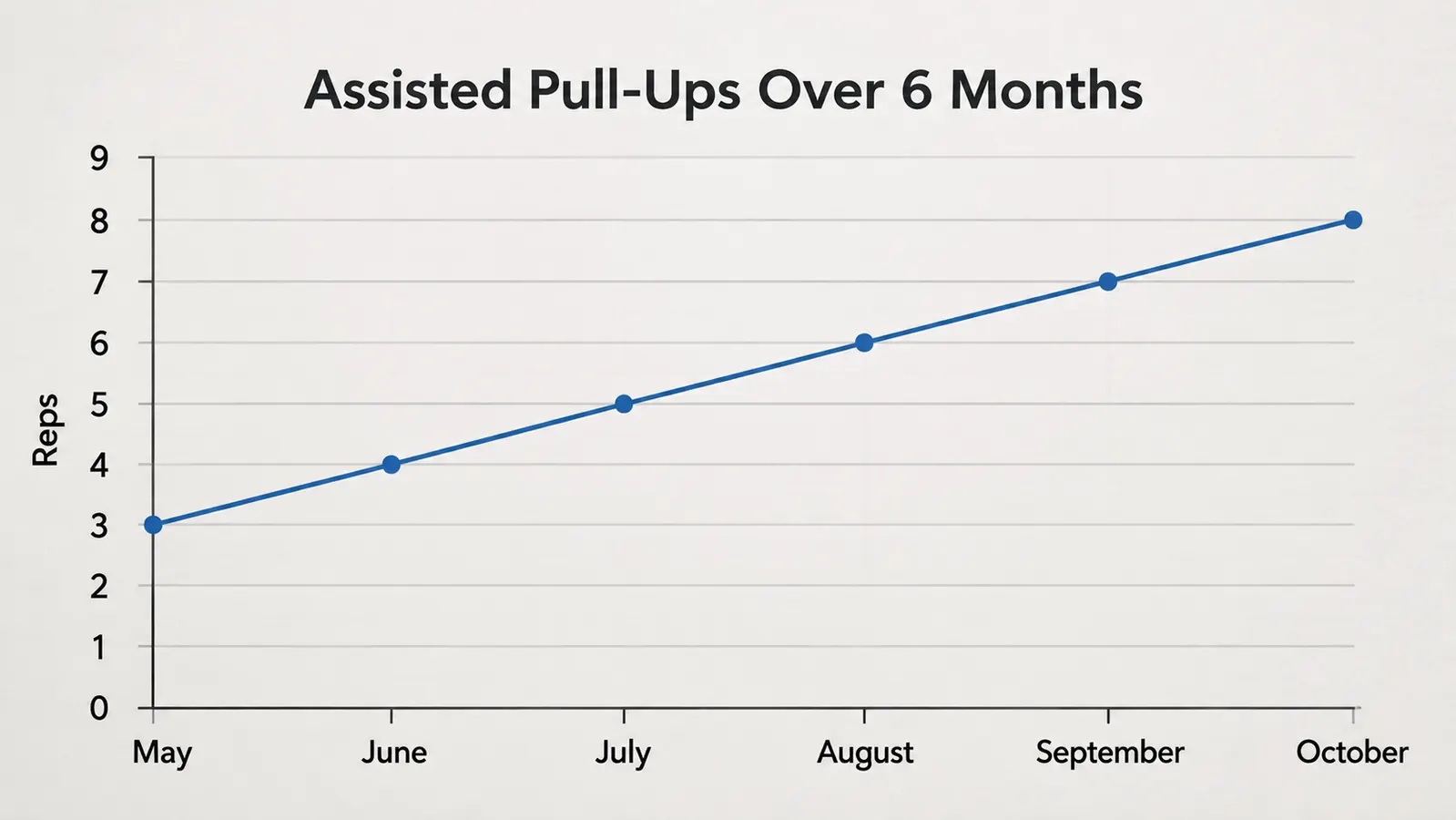
The heaviest band, the green one, loops over my pull-up bar. That is the whole reason I bought the set. In May I could not do a single unassisted pull-up, and the green band took enough of my weight that I could manage three slow ones. By October I was using the purple band, and I can now do eight assisted reps without feeling like my shoulders are doing something they were not designed to do. That is a real, measurable change, and it happened because the bands let me start where I was.
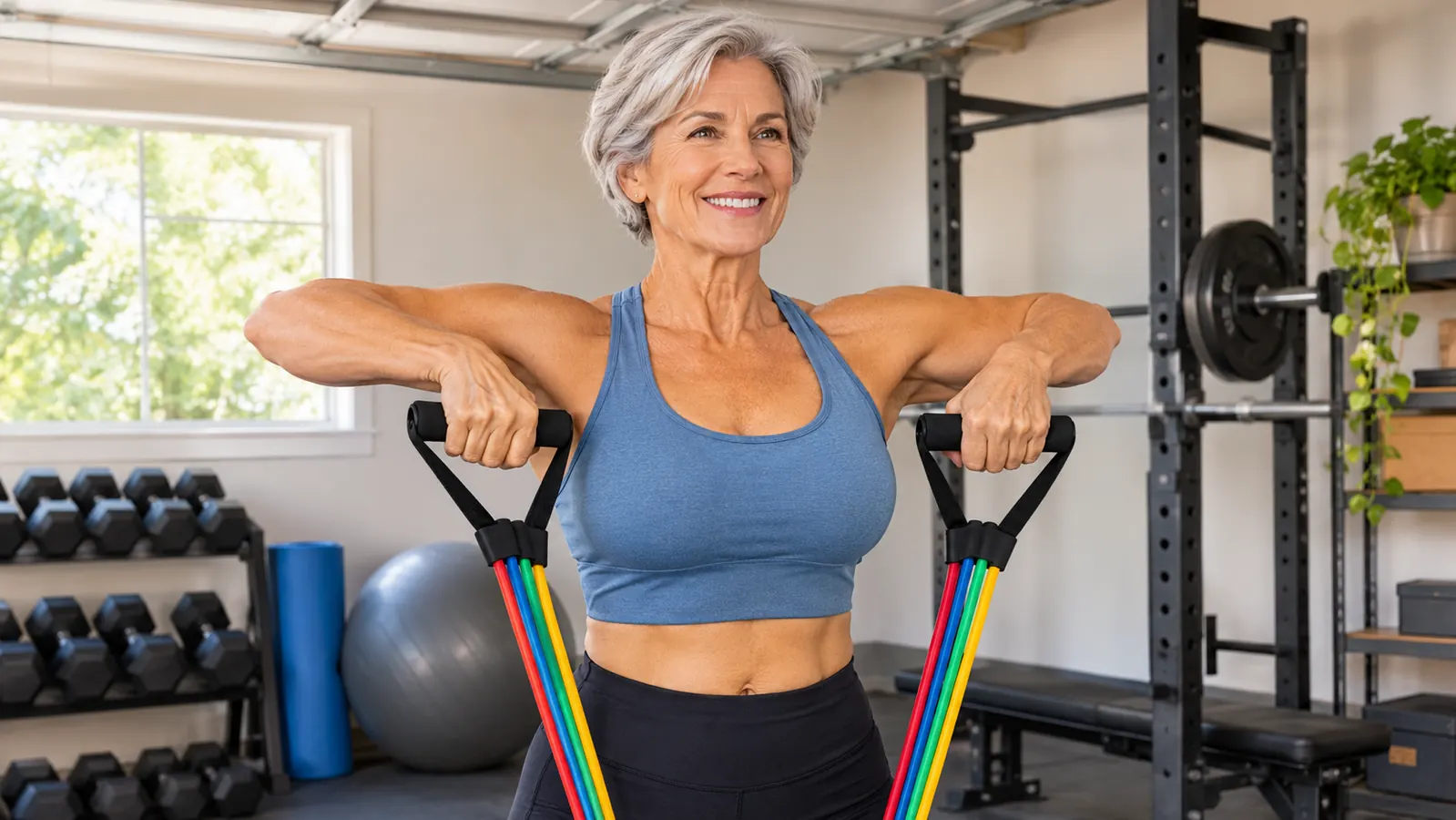
The yellow and red bands with the foam handles are for warm-ups and shoulder work. I use them for band pull-aparts, face pulls, and a few rotator cuff moves before I pick up dumbbells. The door anchor goes in the door from the garage into the house, and I use it for rows and presses on days when I want a little extra work without adding weight to the bar.
I have a system now, and I did not have one in May. That first week I just grabbed bands and pulled on them, and I could not tell you what I was trying to accomplish. The exercise guide that comes in the bag helped, but the thing that helped most was a scrap of paper taped to the garage wall where I wrote down what I did each morning. Monday: yellow band pull-aparts, twenty reps, then red band face pulls, fifteen reps, then three assisted pull-ups on the green band. Wednesday: the same warm-up, then rows with the door anchor, three sets of twelve. Friday: the same warm-up, then assisted pull-ups, trying for one more rep than Monday. That scrap of paper is why I can tell you the progression from the green band to the purple band took about five months. It is also why I know that the week in July when I skipped two days because of the heat, my next session felt twice as hard. The bands had not changed. I had let the routine slip, and the bands were honest about it.
One more detail about the assisted pull-ups, because it is the reason most people buy this set. I am 58 years old, and I have never in my adult life done a pull-up. The green band, the heaviest of the five, took enough of my weight that I could lower myself slowly and pull back up three times on May 19, the day I wrote it on the scrap of paper. By the end of June it was five reps. In August I switched to the purple band, the next one down, and had to start over at three reps. That reset is the part nobody warns you about. Moving to a lighter band feels like starting over, because you are doing more of the work yourself. By October I was back to eight reps on the purple band, and that is where I am now.
What Nobody Tells You About Band Tension
Here is the honest part. Resistance bands do not feel like dumbbells, and no amount of marketing will make them feel like dumbbells. A dumbbell is heaviest at the start of a curl. A band is lightest at the start and heaviest at the top, where you are strongest. That means the exercise feels different, and your muscles get loaded differently. I think that difference is a feature, not a flaw, but it is worth knowing before you buy.
The other thing nobody tells you is that the pound ratings are a starting point, not a promise. The yellow band at 5 to 15 pounds feels roughly like a light dumbbell when it is stretched to the length shown in the guide. Stretch it further and it gets harder. Loop it double and it gets harder still. That is how a 2.8 pound bag of rubber can stand in for a whole rack of dumbbells, but it also means you have to be willing to experiment with where you stand and how you loop the band.
The first time I used the black band for a set of rows, I made a mistake that I will tell you about so you do not make it. I clipped the band to the door anchor, walked back to where I thought the right tension would be, and started pulling. The first rep was easy. The second rep was harder. By the fifth rep I was leaning back like I was in a tug of war, and the band was doing more of the work than I was. The problem was not the band. It was that I had no idea where to stand. With a dumbbell, the weight is the weight no matter what you do. With a band, you are the one who sets the tension, and you set it with your feet. I moved a step closer to the door and the exercise got easier. I moved a step back and it got harder. That sounds obvious written down, but it took me a full session to stop treating the band like a dumbbell and start treating it like a tool with its own rules. The other thing I learned is that bands punish rushing. If I yank a rep, the band snaps back and the movement turns sloppy at exactly the point where I should be controlling it. Slow reps are harder and more useful. I started counting to three on the way back down, and the same band that felt easy at the start of the set felt heavy by the end.
I also learned that the bands are not all the same thickness for a reason. The yellow band is 0.3 inches wide, the red is 0.5 inches, the black is 0.9 inches, and the heavier bands are thicker still. The thinner bands stretch more easily and are better for warm-ups. The thicker ones are for the heavy work. If I had bought a set with five bands that all felt the same, I would have used two of them and ignored the rest. This set, I use four of the five regularly. The green band, the one I started on in May, stays in the bag unless I am having an off day and need the extra help.
In May I could not do a single unassisted pull-up. By October I was on the purple band doing eight slow reps. That is the whole review in one sentence.
What the Sanakma Bands Did Not Do
I want to be fair about this. The Sanakma bands did not replace my dumbbells, and I never expected them to. I still lift three mornings a week with my dumbbells, my bench, and my pull-up bar. The bands are a supplement to that work, not a substitute for it. If you are looking for a complete home gym in a storage bag, this is not that, and no resistance band set is that.
There was one morning in June when I decided to test whether the bands could stand in for a full strength session. It was a Tuesday, my usual dumbbell day, and I told myself I would do everything with the bands: squats with the black band under my feet, rows with the door anchor, presses with the handles, and assisted pull-ups to finish. I made it about twenty minutes before I realized what was missing. The bands gave my muscles plenty of work, but they did not give me the same sense of loading on my legs. A dumbbell squat loads my legs from the first inch of the movement. A band squat is easy at the bottom and hard at the top, and for my stiff right knee, that is actually less comfortable, not more. I finished the session, but I went back to my dumbbells the next morning and I have not tried to replace them since.
The bands also did not do anything for my stiff right knee, and I did not expect them to. Knee trouble from years of coaching on a track is not something a piece of rubber is going to fix. What the bands did do was give me a way to warm up my shoulders and hips before I squat, and I do think that has made my lifting feel better. But I am not going to tell you these bands cured my knee, because they did not, and I do not make medical claims about anything.
What did surprise me was how much the bands helped my bench press, of all things. I have always had tight shoulders, and my right one in particular would complain for a day or two after a heavy press day. In June I started doing two minutes of band pull-aparts with the red band before every strength session. I am not going to claim the bands fixed anything, because I do not know that they did. What I know is that the warm-up became a habit, and the habit made me more consistent on press days. That is the honest version of what these bands did for me.
The Door Anchor and the Handles: The Details That Matter
The door anchor is simple. You close the door on the flat strap, the loop hangs on the other side, and you clip a carabiner through it. I use it in the door from the garage into the house, and it has held fine through months of rows and presses. The foam handles are comfortable enough for warm-ups, though I will say that for heavy rows I prefer to loop the band around my hands instead of using the handles. That is a personal preference, not a complaint about the handles.
The door anchor took me two tries to get right, and I will tell you why. The first time I used it, I closed the door on the strap, clipped a carabiner through the loop, and started doing rows. About six reps in, the strap slid and the whole thing came loose. I had not closed the door firmly enough, and I had the anchor on the hinge side of the door, where there is a gap. Now I put the anchor on the latch side, close the door until it clicks, and give the strap a tug before I start. It has not slipped since. That is the kind of detail that never makes it into a review, but it is the difference between a tool you use and a tool you get frustrated with.
The storage bag is the detail that surprised me most. Most band sets I have seen end up in a tangled pile in a drawer. This one has a bag, the bands go back in the bag, and the bag hangs on a hook in the garage. It takes thirty seconds to put everything away, which means I actually do it. That sounds like a small thing, but it is the reason the bands are still in the garage instead of buried under a pile of old T-shirts.
The carabiners are small and they work, but they are not the kind you can operate with one hand while the band is loaded. I clip the band in, then I check the connection by pulling on it once before I start the set. That habit has saved me from the band popping loose mid-rep more than once. And the foam handles, which I was skeptical about, have held up fine through six months of warm-ups. I expected the foam to crack or the loop to stretch out, and neither has happened. They are not gym-quality rubber, but they are not supposed to be. They are for light work, and they do light work well.
What I Liked
- Five resistance levels from yellow at 5 to 15 pounds up through the heavy bands cover warm-ups, rows, and assisted pull-ups
- The storage bag keeps the set tidy, and the bag actually gets used
- Door anchor and foam handles make rows and presses easy without a rack
- Natural rubber bands have held up through six months of regular use
Where It Falls Short
- Band tension is not the same as dumbbell weight, and the pound ratings are only a starting point
- The door anchor needs a firmly closed door and the right placement to stay put
- Not a replacement for a full strength session, especially for leg work
- Moving to a lighter band means starting over with fewer reps, which can be discouraging
Who This Is For
Buy the Sanakma bands if you want to do assisted pull-ups at home, if you want a warm-up tool that lives in a bag on a hook, or if you travel and want a workout that fits in a suitcase. They are also a good fit if you are older and you want to add some resistance work without loading up a barbell. The bands are forgiving on joints in a way that heavy iron is not, and the five levels mean you can start light and work up.
Who Should Skip It
Skip the Sanakma bands if you are looking for a complete replacement for a gym. They will not give you the same progressive overload as a rack of dumbbells, and if you are already strong enough to do a set of unassisted pull-ups, the heaviest band may not challenge you the way you want. Skip them if you hate fiddly setup, because the door anchor and the carabiners do take a little getting used to. And skip them if you expect the pound ratings to match a dumbbell exactly, because they will not.
Six months later, I would buy the Sanakma set again
The bands hang on a hook in my garage, and I reach for them at least three mornings a week. If you want assisted pull-ups and warm-ups without a gym membership, this is the set I would start with.
Amazon Check Today's Price on Amazon →