
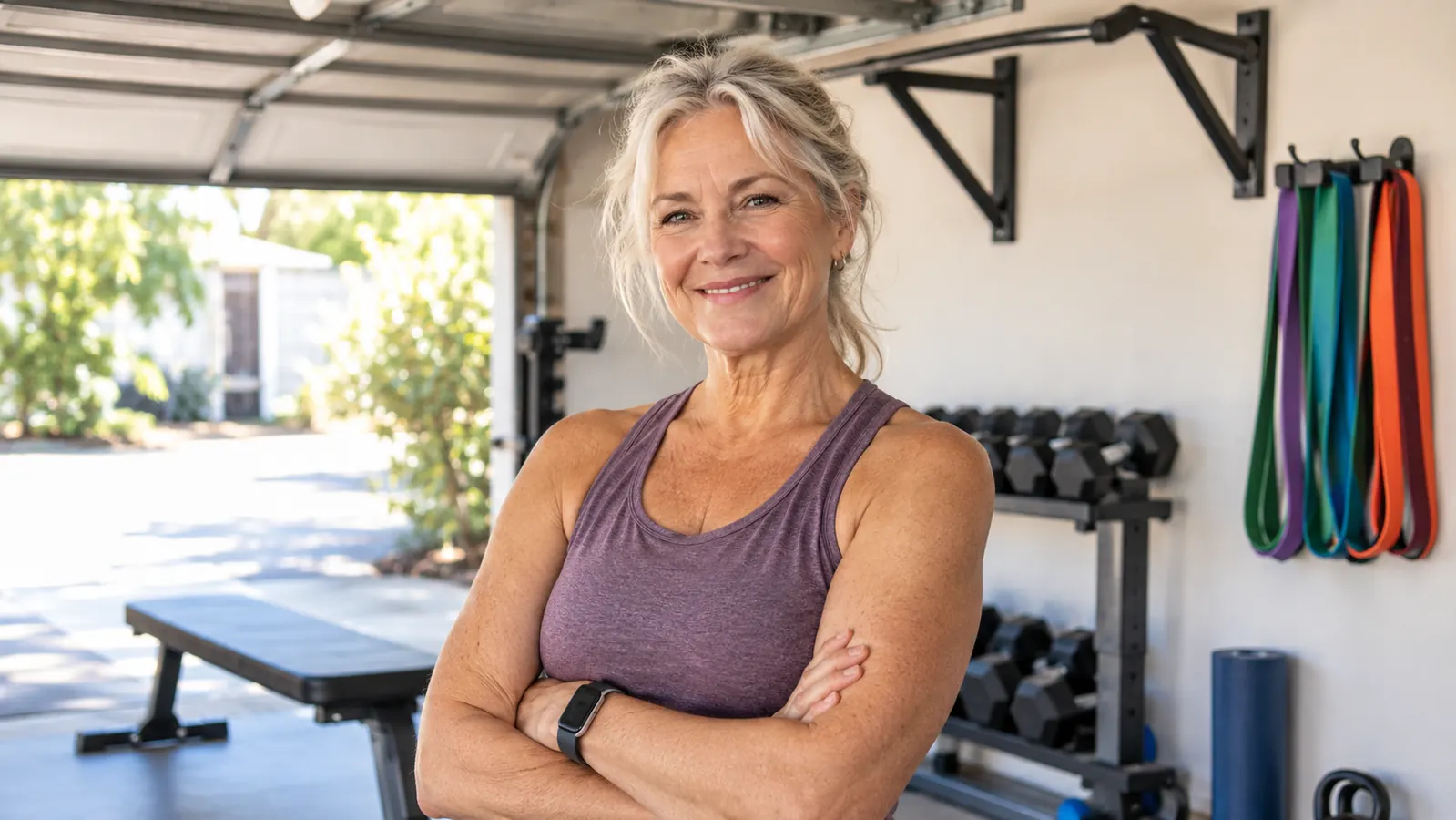
I turned 58 in April, and somewhere around that birthday I finally admitted something to myself: my pull-up bar had become a very expensive coat rack. I could still do the dumbbell work in my garage gym three mornings a week, and I could still walk the hills with Glenn most evenings. But the pull-ups I used to knock out as a high school track coach? Not anymore. My right knee stiffens up if I sit too long, and my lower back complains after a long day of yard work. I needed a way to keep pulling strength without pretending I was 35. That is why I bought the Sanakma resistance bands in May, and why I have used them nearly every training day since.
Six months later, I can tell you exactly what these bands did for me, what they did not do, and where the marketing oversells. Short version: they are the best money I have spent on my garage gym in years. Longer version is below, with all the caveats.
The Quick Verdict
A genuinely useful five-band set that turned my pull-up bar from a coat rack back into a training tool. Not magic, not a full gym replacement, but honest equipment that does what it claims.
Amazon Check Today's Price →The set that got my pull-up bar off the coat rack
Five resistance levels, a door anchor, two foam handles, three carabiners, a storage bag, and an exercise guide. If you have a door frame and a hook, you have a gym.
Amazon Check Today's Price on Amazon →How I've Used It
The Sanakma set includes five pull-up bands in different thicknesses, a door anchor, two foam handles, three carabiners, an exercise guide, and a storage bag. The bands are natural rubber, and the whole thing weighs 2.8 pounds. That last number matters more than you think, because the bag lives on a hook in my garage and comes with me to the high school track when I help out with the team.
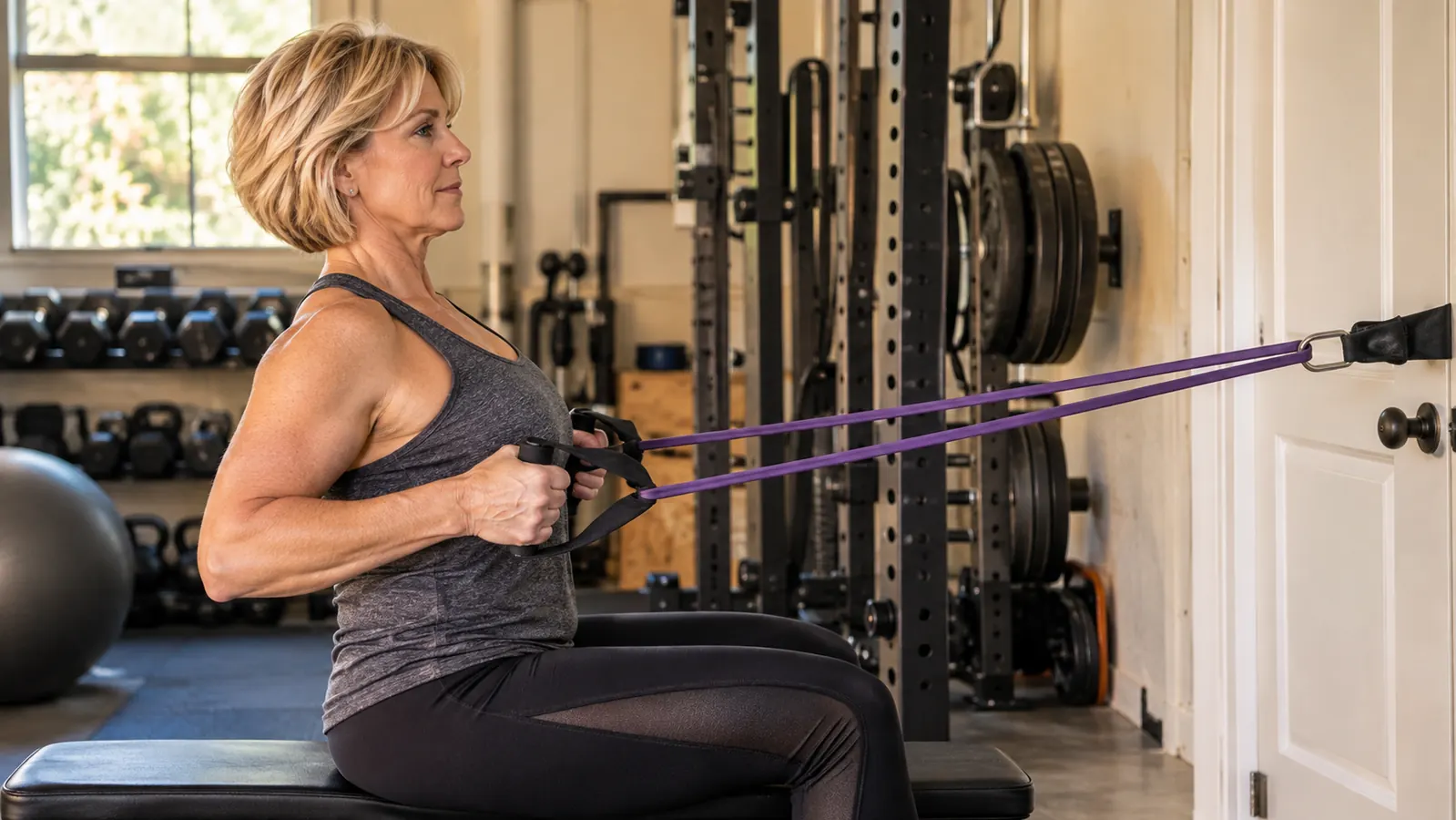
My routine has been steady since May. Three mornings a week, after my dumbbell work, I use the heaviest band over the pull-up bar for assisted pull-ups. I started on the green band and worked down to the purple one, which is where I am now. On the same days, I put the door anchor in the door from the garage into the house and do seated rows and presses. The yellow and red bands with the foam handles are my warm-up: light band work to wake up my shoulders before I touch a dumbbell.
The first time I set it up, I made a beginner's mistake. I looped the green band over the pull-up bar and let go of the free end while it was still stretched, and it whipped across the garage and smacked the wall next to my dumbbell rack. No damage, but it taught me the two rules I have followed since: never let go of a band under tension, and always check that the loop is seated flat on the bar before you step in. I made a second mistake the same week with the door anchor, clipping the carabiner to the wrong loop so the band came loose on the first rep. Both fixes took about ten seconds. I wrote the rules on the exercise guide with a pen, and neither mistake has happened since.
I also take the bands on the road. They are compact and light enough that I have used them in a hotel room twice, once at my sister's place in Knoxville, and once in the backyard when the garage was too hot in August. The door anchor works on any door that closes properly, which has been every door I have tried.
Six months in, still hanging on the hook
This is the set I reach for on training days and pack when I travel. If you want the same five levels, door anchor, and handles, the current price is on Amazon.
Amazon Check Today's Price on Amazon →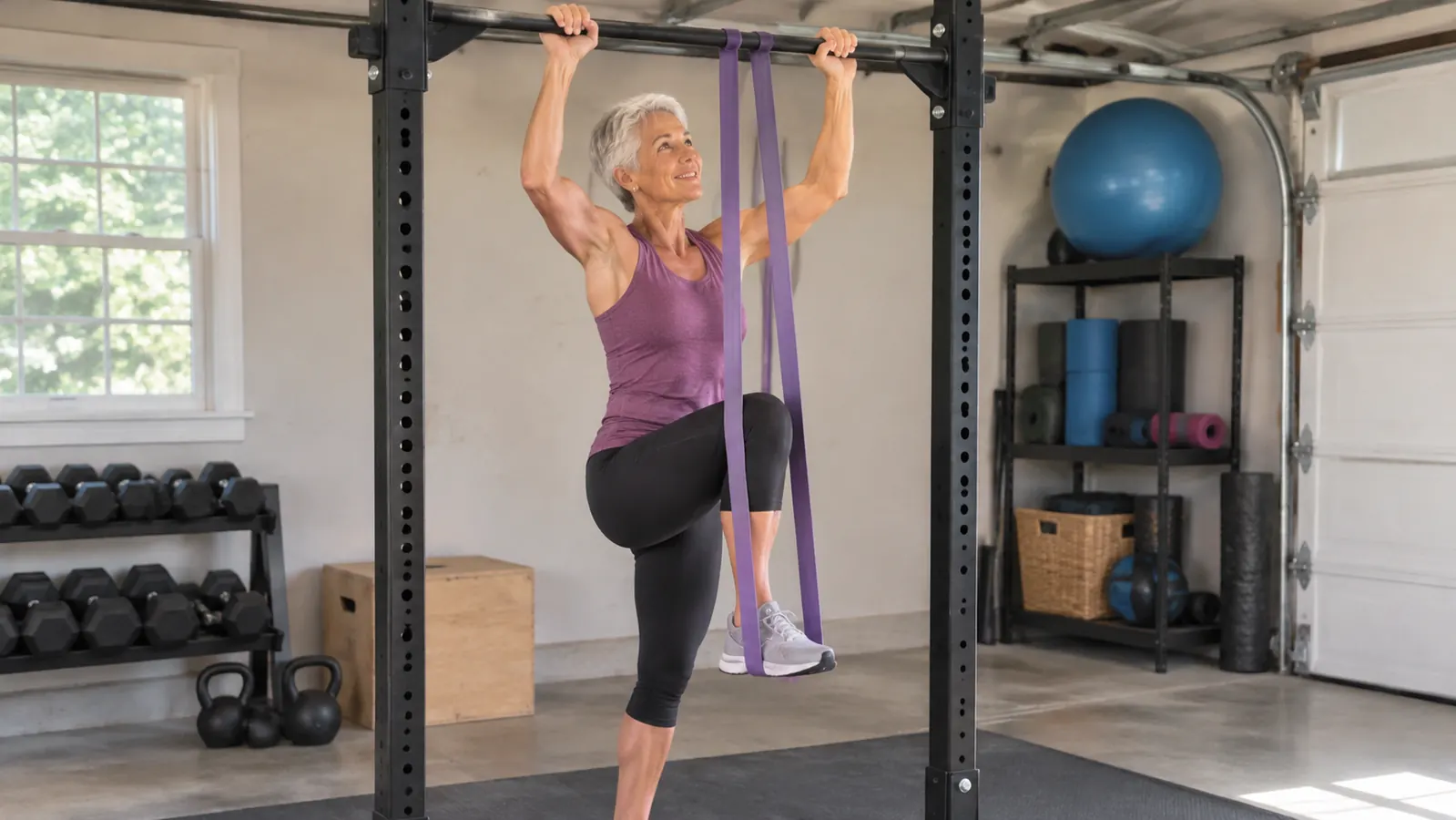
What the Five Resistance Levels Actually Feel Like
The five bands in this set are color coded by thickness. The yellow band is 0.3 inches thick and gives roughly 5 to 15 pounds of resistance. The red band is 0.5 inches and roughly 15 to 35 pounds. The black band is 0.9 inches and roughly 25 to 65 pounds. The green band is the heaviest in the set, and the purple band is the one I have worked down to. I am not going to pretend the pound ratings are precise, because resistance bands do not work like a stack of plates. The tension ramps up the further you stretch, so the numbers are a starting point, not a guarantee.
What I can tell you from real use: the yellow band is almost too light for me now, but it is perfect for shoulder warm-ups and for the first few minutes of a session. The red band is my go-to for rows and presses. The black band gets the occasional set of band presses. The green band, the heaviest, is the one I started my assisted pull-ups on in May, and it still hangs on the hook for the days I am tired and need a little more help, or for when Glenn finally lets me talk him into trying a pull-up.
The color coding matters more than I expected. When I am half awake at 6:30 in the morning, I do not want to guess which band is which. The thickness difference is obvious at a glance, and because I keep the bands in the storage bag in the same order every time, I can grab the right one without thinking.
I started on the green band, the heaviest, in May. By November I was on the purple. That is the whole review in one sentence.
The Door Anchor: The Most Useful Piece in the Bag
I was skeptical of the door anchor at first. It looks like a small piece of webbing with a loop, and I assumed it would either slip or damage the door frame. Six months in, it has done neither. I put the anchor in the door from the garage into the house, close the door, and clip a band to the loop with a carabiner. The seated row from that setup has become a regular part of my routine, and it gives me a pulling movement that dumbbells do not quite replicate.
The anchor works because the band pulls against the closed door, not against the hinge or the frame. I have used it in three different doors now, and the only one that gave me any trouble was a hollow interior door at my sister's place, which flexed a little under heavy tension. On solid doors, it is rock solid. I have never had it slip out mid-rep, and I have never seen a mark on the door frame.
One warning: the anchor needs a door that closes flush. If your door has a big gap at the top or bottom, the anchor can slide. Check it before you load up a heavy band, and you will be fine.
One morning in September I timed myself out of curiosity. From walking into the garage to finishing three sets of seated rows and two sets of band presses, it took 22 minutes, including setup. That is the whole argument for this kind of equipment at my age: I can get an honest upper body session done before my coffee is ready, and the only thing to put away is the bag on its hook. The anchor has also survived the one thing I worried about most. In August, when the garage hit ninety degrees by nine in the morning, I moved the setup to the door between the kitchen and the back porch. Same anchor, same bands, same result. The kitchen door is the one we use a dozen times a day, and it still closes and latches exactly as it did in May.
Assisted Pull-Ups: The Reason I Bought Them
The honest reason I bought this set was the assisted pull-up. I have a pull-up bar bolted to the ceiling of my garage, and for two years it was a coat rack. I could not do a single unassisted pull-up, and I was tired of pretending that was fine. The Sanakma bands fixed that in one session.
The setup is simple: loop the band over the pull-up bar, step into the bottom loop with one foot, and pull. The band takes some of your weight off at the bottom, where you are weakest, and gives you the least help at the top, where you are strongest. That is exactly how assisted pull-up machines work, and it is why the movement feels natural instead of awkward.
I started on the green band, the heaviest, in May. By November I was on the purple band, which is a meaningful step down in assistance. I still cannot do a full unassisted pull-up, and I am not sure I ever will at 58. But I am doing real pull-ups with real form, and I can do more of them than I could in May. That is a win I can measure.
I keep a small tally on a scrap of paper taped to the wall next to the pull-up bar. May: green band, three assisted pull-ups, barely. June: green band, three sets of five. August: purple band, three sets of four. November: purple band, three sets of eight. The numbers are not impressive on their own, but they are moving in the right direction at 58, and that is the point. The morning I wrote down eight reps, I stood there for a minute and looked at the paper. Progress on paper looks small. In the body it does not feel small. I also learned that the band wants to twist as you pull, so I take a second to set the loop flat under my foot before each set. That small habit has saved me from a lot of awkward, off-balance reps.
What Held Up and What Did Not
The natural rubber bands have held up well. I have used them at least three times a week for six months, and I have not seen a crack, a tear, or a permanent stretch. The foam handles are still comfortable, and the carabiners still clip smoothly. The storage bag is thin, but it does its job. The exercise guide is basic, but it shows the main movements clearly enough for someone who has not used bands before.
What did not hold up? Nothing on the bands themselves, but the door anchor webbing has a little fraying on the edge where it rubs against the door. It is cosmetic, not structural, and it has not gotten worse in the last two months. I also wish the set included a printed card with the resistance levels on it, because I have to remember which color is which. The guide has the chart, but I do not always have the guide in the garage with me.
The other honest limitation is that bands are not dumbbells. They are great for pulling movements, warm-ups, and assisted bodyweight work, but they will not replace my dumbbells for heavy squats or presses. I use them as a complement, not a replacement, and that is the right way to think about them.
The bands have also survived some abuse that was not in the plan. In July, I left the purple band draped over the pull-up bar for three days in a row, and the garage got hot enough that the dumbbells were warm to the touch. The band was fine. I have washed the whole set once, in warm water with a little dish soap after a dusty week of yard work, and hung them over the bar to dry overnight. They looked new the next morning. One carabiner has been dropped on the concrete floor more times than I can count and has never popped open on me. The storage bag zipper snagged once on the edge of the bag, but it freed itself and has worked fine since. That is the whole list of complaints after six months.
What I Liked
- Five resistance levels cover everything from warm-ups to assisted pull-ups
- Door anchor works on any solid door and has never slipped on mine
- Light and portable: the whole set weighs 2.8 pounds and packs into the storage bag
- Natural rubber bands have held up to six months of regular use without cracking
- Foam handles stay comfortable through a full warm-up
- Cheaper than a gym membership and takes up almost no space
Where It Falls Short
- Resistance numbers are approximate, not precise like a dumbbell stack
- Door anchor webbing shows minor fraying after six months
- Exercise guide is basic and does not include a quick reference card for resistance levels
- Bands cannot replace heavy dumbbell work for lower body
Who This Is For
If you are over 40, training at home, and have a pull-up bar that has become a coat rack, this set is for you. It is also for anyone who travels and wants a gym that fits in a bag, anyone who wants to add pulling work without buying a lat pulldown machine, and anyone who needs a light warm-up option before heavier work. The Sanakma set is the rare piece of equipment that is useful on day one and still useful six months later.
Who Should Skip It
If you already have a full set of resistance bands with handles, or if you train exclusively with heavy free weights and have no interest in assisted pull-ups, you do not need this. If you are looking for a complete replacement for a gym, this is not that either. And if you want precise, repeatable resistance like a plate-loaded machine, bands will frustrate you. Buy this for what it is: a versatile, portable, honest tool that complements what you already do.
Six months of pull-ups I could not do in April
The Sanakma resistance bands are the most useful addition I have made to my garage gym all year. If you want the same five levels, door anchor, and handles, check the current price on Amazon.
Amazon Check Today's Price on Amazon →