
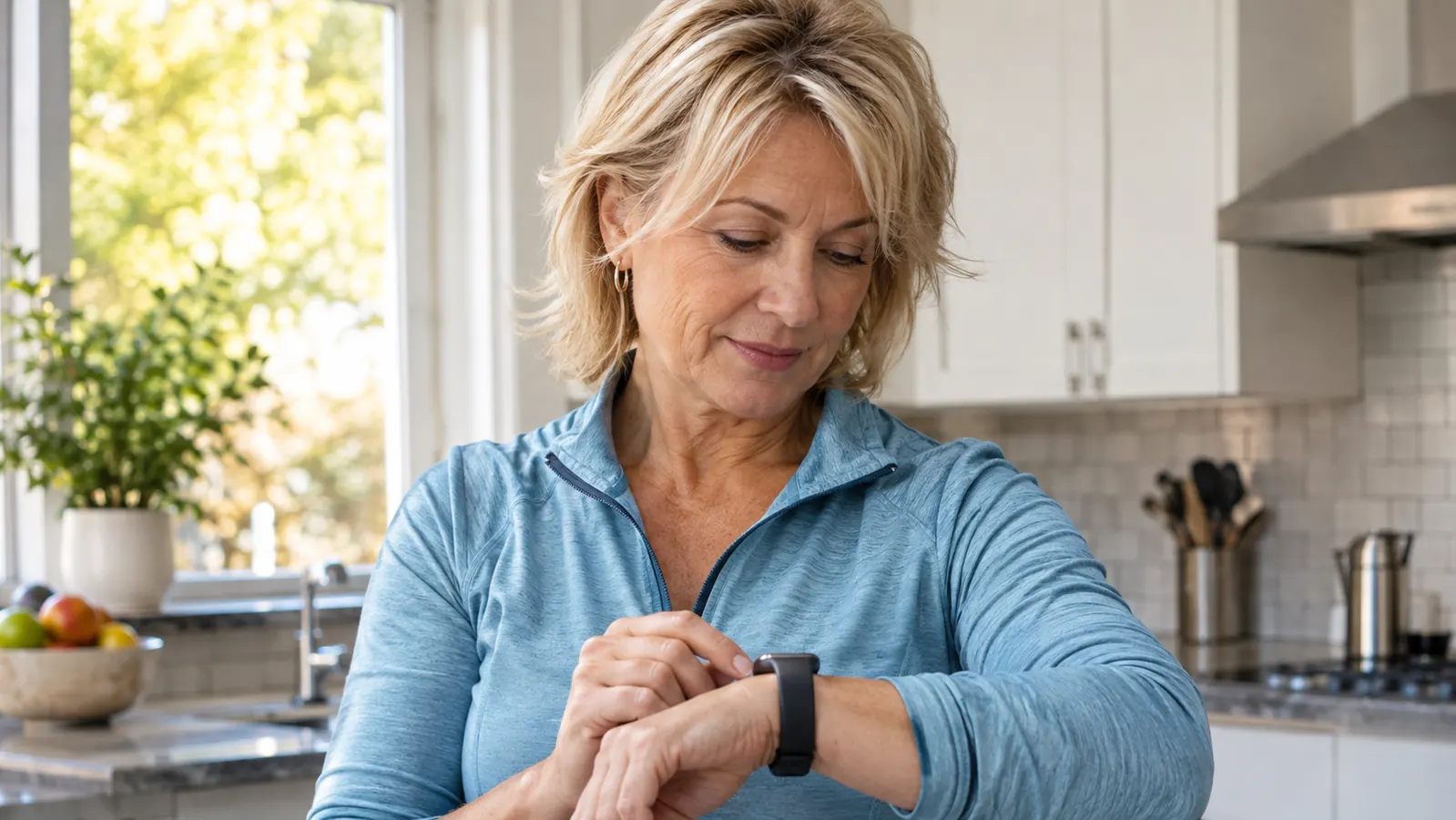
I bought the Fitbit Charge 6 in May 2026, mostly because I wanted one number I could trust after a hard workout. I am 58, I still lift three mornings a week in the garage, and I walk hills most other days. My right knee lets me know when I have pushed too hard, and my lower back does the same after a long day of yard work. What I did not want was another gadget that beeped at me all day. What I got was a tracker that, worn day and night, quietly tells me when to go and when to back off.
This guide is not about chasing perfect scores. It is about the small routine I settled into over six months: how I read the Fitbit Charge 6 in the morning, how I use it on hill walks, and how I use the sleep numbers to decide whether to lift heavy or take the walk easy. If you are over 40, training a few days a week, and tired of guessing whether you are recovered, this is the routine that worked for me.
The tracker I have worn every day and night since May
The Fitbit Charge 6 tracks steps, heart rate, sleep, and recovery signals in one slim band. I charge it about once a week and never think about it the rest of the time.
Amazon Check Today's Price on Amazon →Step 1: Wear It Day and Night for Two Weeks Before You Trust Anything
The biggest mistake I see people make with a new tracker is judging it on day three. The Fitbit Charge 6 needs a baseline. For the first two weeks I wore it constantly, charged it during my evening shower, and did not change a single thing about my routine. I did not try to hit a step goal. I did not adjust my sleep. I just let it watch.
That baseline is what makes everything else work. Once the tracker has two weeks of your normal sleep and activity, the morning numbers mean something. Before that, they are just random readings. If you skip this step, you will spend the first month chasing noise instead of learning anything.
The first week nearly ended it. On May 12, my second full day wearing the Charge 6, the Sleep Score said 74 after a night I thought was fine. Three days later it said 91 after a night I barely slept. I almost put the tracker in the drawer and went back to guessing, the way I had for years. But I had told myself I would give it two full weeks, so I did. By the end of the second week the noise settled into a pattern I could actually read: mid 80s on nights after hill walks, high 70s after leg days, and a drop into the low 70s on the nights I stayed up past ten watching a game. That pattern, not any single score, was the first useful thing the tracker told me. That two week rule felt slow at the time, and it is the reason I still trust the numbers today.
The Charge 6 is water resistant, so I never worried about it on sweaty hill walks or in the rain. The silicone band is comfortable enough that I forgot it was there, which is exactly what you want in something you wear to bed.
Step 2: Read the Sleep Score in the Morning, but Read the Trend, Not the Single Night
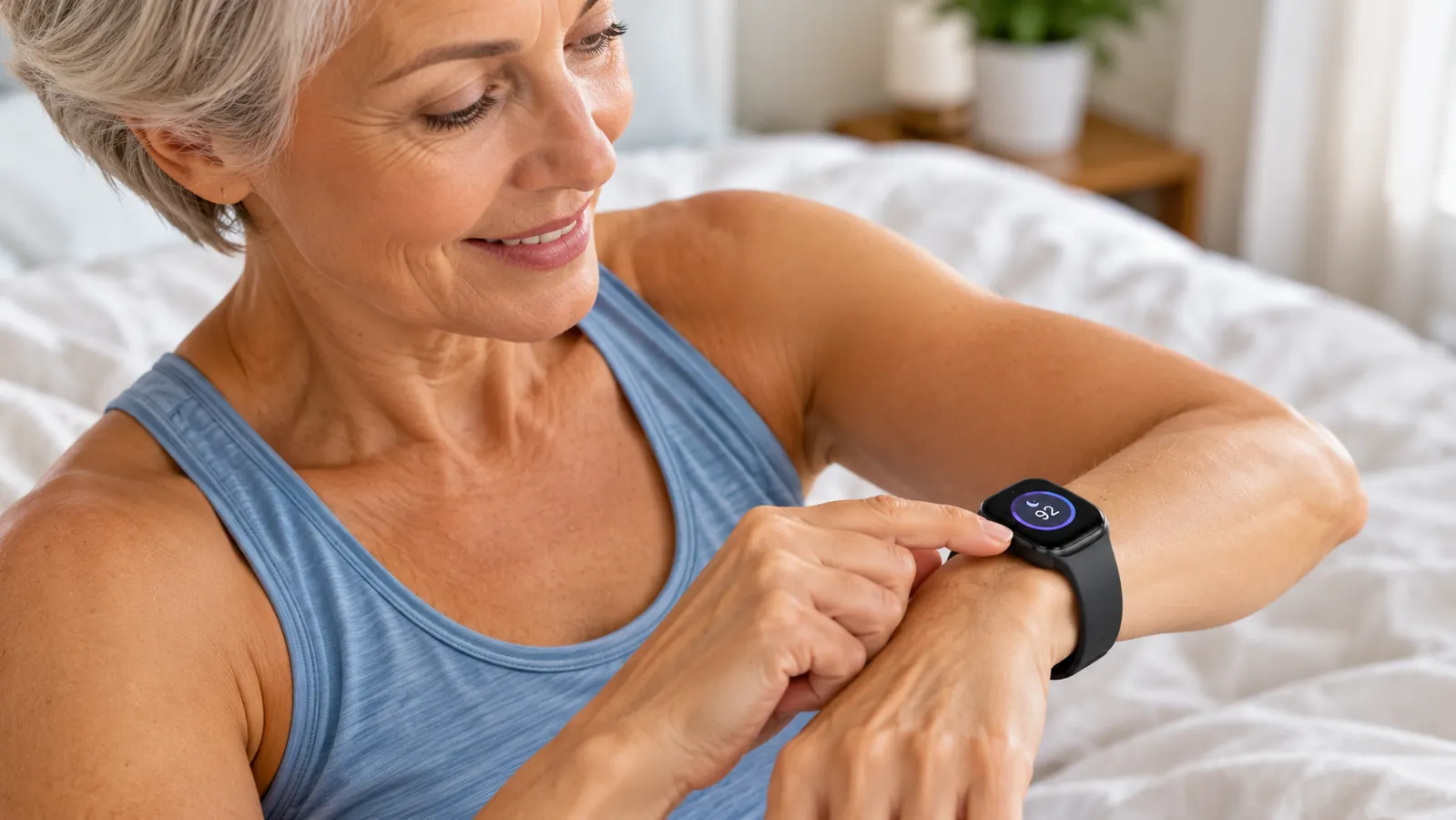
Every morning I look at the Sleep Score on the Fitbit Charge 6 before I do anything else. It is a single number that pulls together how long I slept, how much deep and REM sleep I got, and how restless the night was. I have learned to look at it the way I look at the weather: one rainy day does not mean the week is ruined.
A single bad night means I take the hill walk a little easier. Three bad nights in a row, or a score that keeps dropping while my sleep schedule has not changed, means I skip the heavy dumbbells and do a lighter session instead. That is the whole trick. The number is not a grade. It is a nudge.
One stretch in July taught me to watch the trend instead of the single night. We had two weeks of 90 degree days, and I moved my hill walks to early morning to beat the heat. My Sleep Score stayed in the low 80s, which is normal for me, but the restless minutes kept creeping up. The Charge 6 showed I was awake or fidgeting more than usual even though I thought I was sleeping fine. I started pointing the ceiling fan away from the bed and pulling the curtains tighter against the streetlight. Within a week the restless minutes were back where they had been. I would not have caught that without the numbers, because I felt fine the whole time. That is when I stopped treating the Sleep Score as a grade and started treating it as a clue. One bad night is weather. Three in a row is climate, and climate is worth changing something about. The fix was small, and that is the point. Recovery is usually a dozen small fixes, not one big one.
I charge the Fitbit Charge 6 about once a week, so the sleep tracking never gets interrupted by a dead battery. The display is easy to read in the dark without being bright enough to wake me fully, which matters when you check it at 3 AM.
Step 3: Use Heart Rate on Hill Walks to Find Your Easy Pace
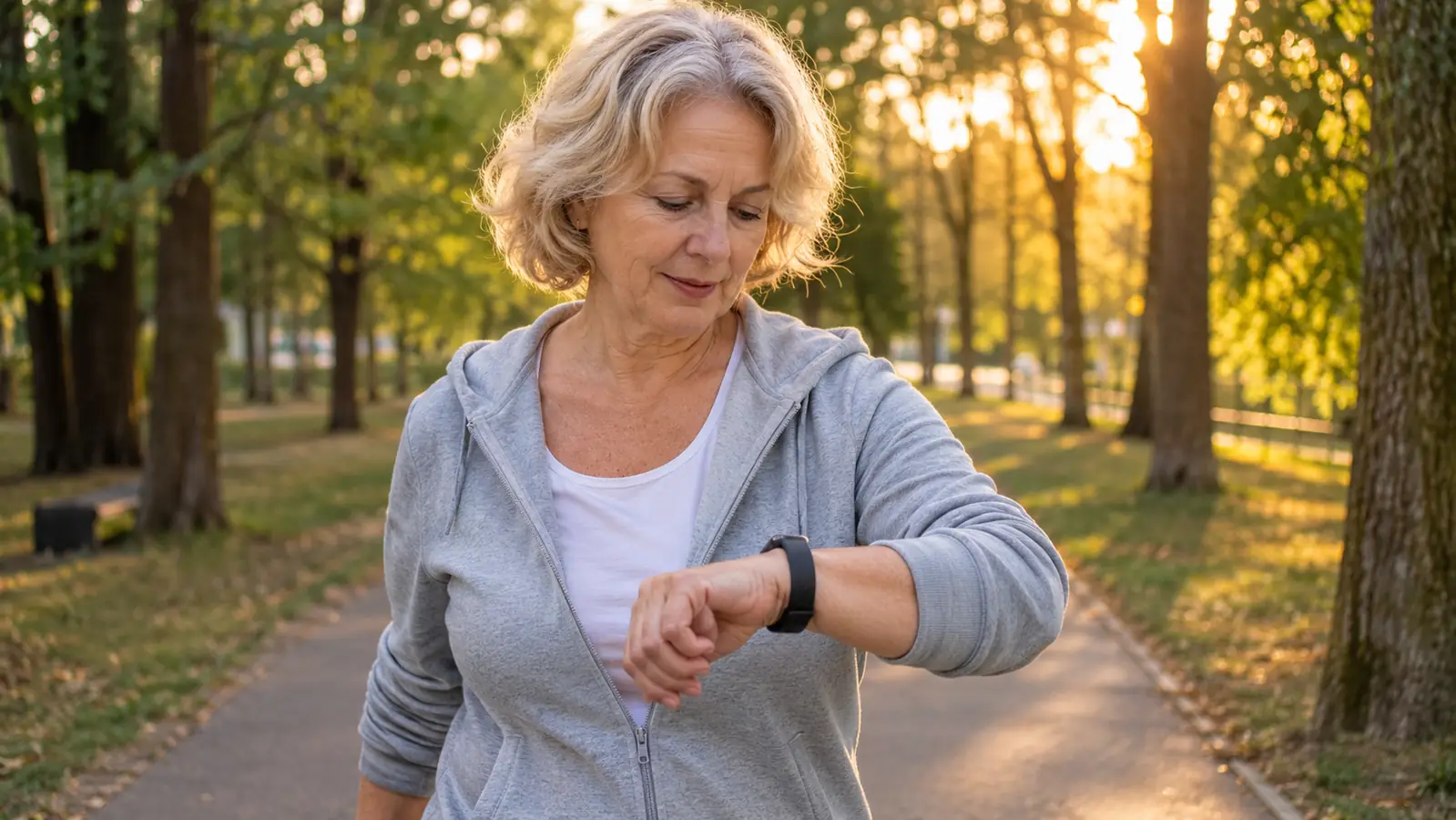
On the days I am not lifting, I walk hills around Chattanooga with my husband Glenn. I used to walk at whatever pace felt right, which meant some days I was pushing harder than I meant to. The Fitbit Charge 6 shows heart rate in real time on the display, so I can see exactly where I am.
My rule is simple. Most hill walks should stay in the zone where I can still talk without gasping. When the heart rate on my wrist creeps higher, I slow down and let it drop. That one habit changed more about my recovery than anything else I do. I stopped finishing every walk feeling like I had just raced the hill.
The first time I really used the heart rate display was on the hill behind our house in mid May. On the steep part near the top, the Charge 6 showed 152 beats per minute, which for me is closer to a sprint than a stroll. I had been walking that hill three times a week for a year and thought it was my easy day. I started backing off whenever the number crept past 135, and the walk got easier without getting shorter. Glenn noticed before I said anything. He asked if I was slowing down for him. I told him I was finally slowing down for me. That one change, keeping the pace easy enough to talk, did more for how my knee felt the next morning than any warm up I have ever tried. It took me a few weeks to trust that slower was working, because my pride wanted the faster pace. The data won. I still walk the same hill, but now I walk it at a pace my body can recover from.
The Charge 6 has built-in GPS, so on the days I want to know my route and pace, I do not need to carry my phone. For a person my age, that is the difference between a tracker I use and a tracker I charge in a drawer.
Step 4: Let the Daily Readiness Number Tell You When to Back Off
The Fitbit Charge 6 gives me a Daily Readiness score each morning. It pulls together my sleep, heart rate, and activity from the last few days and tells me whether my body is ready for a hard session or would be better served by an easy one. I do not treat it as a command. I treat it as a second opinion.
On mornings when the score is low and my right knee is stiff, I do the lighter workout. On mornings when the score is high, I feel it in my legs anyway, so I take it easy regardless. The number is most useful on the days I feel fine but should not push, which is exactly the day I used to push anyway.
The day that sold me on the Daily Readiness score was a Thursday in late August. The number said 38, which is low for me, but I felt fine. My legs were not sore, my knee was not stiff, and I had slept seven and a half hours. Every instinct from thirty years of coaching said do the workout anyway. I compromised and did a lighter session with the dumbbells, maybe 70 percent of my normal weight. That night my lower back tightened up anyway, the same back that complains after long days of yard work. I woke up the next morning grateful I had not gone heavier. The tracker saw something I could not feel, and that is the whole value of a readiness score for someone my age. On the mornings when the score is high and I feel good, I do the heavy session and the tracker confirms what I already knew. The low days are the ones that earn their keep.
This is the part of the routine that took me the longest to trust. I was a track coach for years, and my instinct is to override the numbers and do the work. The Fitbit Charge 6 does not argue with me. It just shows me the data, and after six months, the data has been right more often than my instinct.
Step 5: Keep a Simple Routine and Ignore the Rest
The Fitbit Charge 6 tracks a lot: steps, calories, Active Zone Minutes, 40 plus exercise modes, ECG, contactless payments, and more. I use almost none of it. My routine is three numbers: the Sleep Score in the morning, heart rate on the hill walks, and the Daily Readiness score when I am deciding how hard to train.
That is the whole system. I do not chase streaks. I do not try to close all the rings. I do not compare my numbers to anyone else's. I wear the tracker day and night, I read the three numbers that matter to me, and I adjust the day accordingly. It took about a month to stop fiddling with the settings and settle into that rhythm. I tried doing more with it at first, checking every screen and chasing every goal, and that lasted about a week before it felt like a second job. Cutting back to three numbers is what made the tracker stick.
The Fitbit Charge 6 is not a coach and it is not a doctor. It is a mirror. If you are honest about what you see, it will help you train smarter at 58 than you did at 30. If you ignore it, it will just sit there on your wrist, which is also fine. It is a tool, and like any tool, it only works if you pick it up.
What Else Helps
The tracker is one piece of my evening wind-down, not the whole thing. After a hard leg day I still use the massage gun on my calves, and on hill walk days I stir creatine and collagen into my morning coffee. In the evening I take magnesium glycinate before bed. None of that is medical advice. It is just the routine that helps me sleep and recover, and the Fitbit Charge 6 gives me a way to see whether any of it is working.
The Fitbit Charge 6 does not argue with me. It just shows me the data, and after six months, the data has been right more often than my instinct.
Start your own two-week baseline tonight
Wear the Fitbit Charge 6 day and night, read the Sleep Score in the morning, and let the Daily Readiness number tell you when to back off. That is the whole routine.
Amazon Check Today's Price on Amazon →