
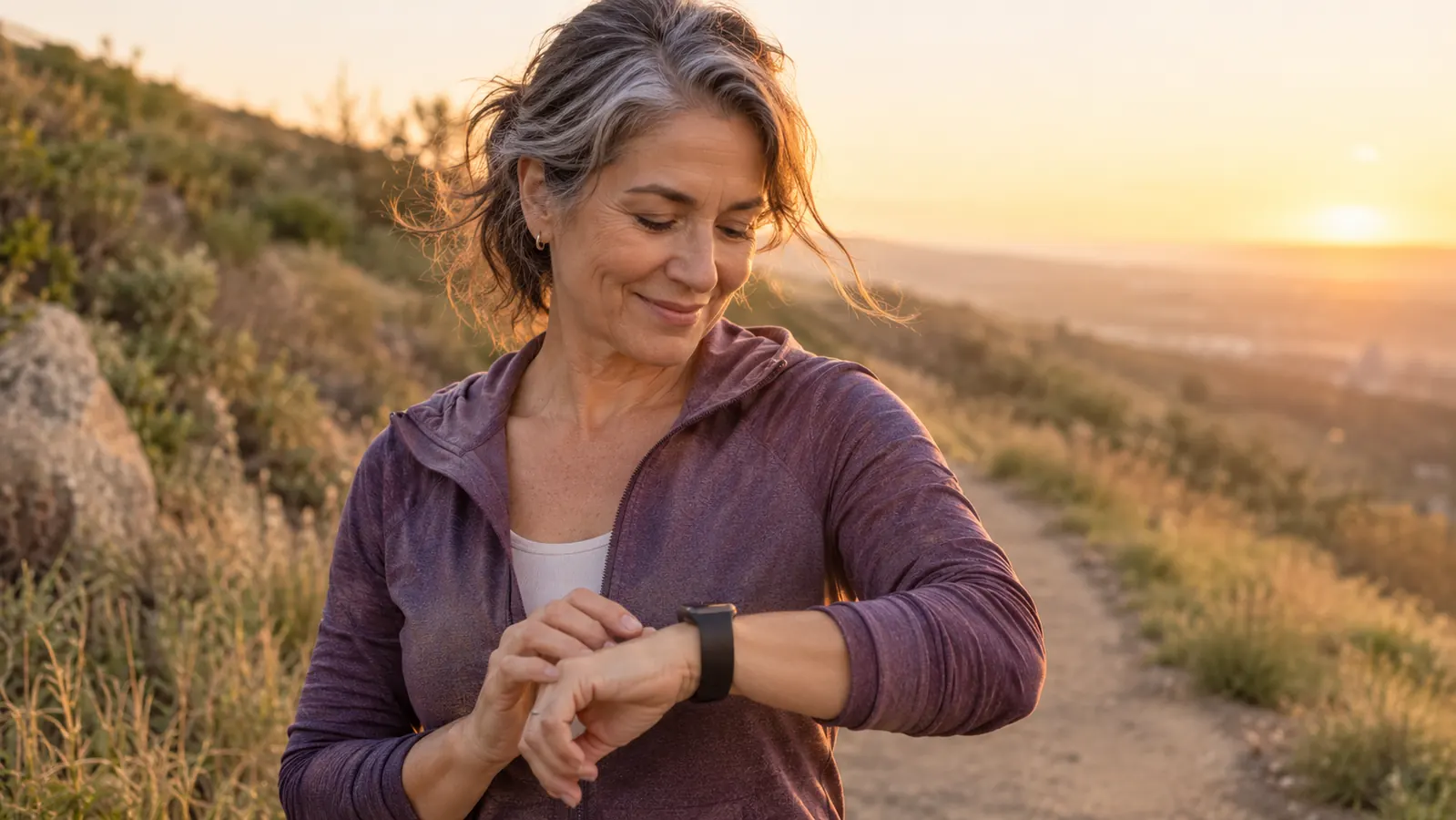
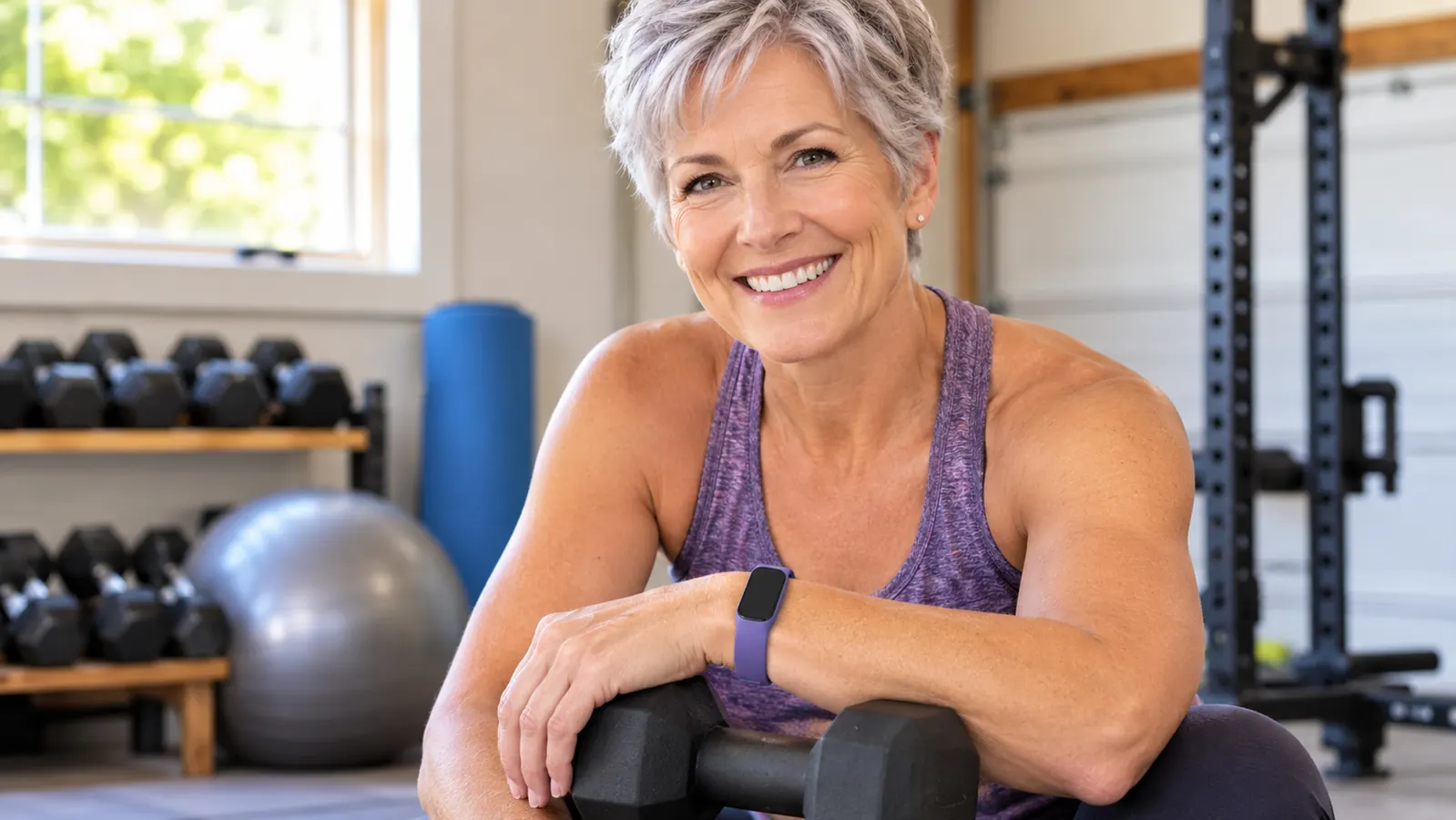
I am Renee Pellerin, 58, a retired high school track coach in Chattanooga, Tennessee. I have worn the Fitbit Charge 6 day and night since May 2026. I lift three mornings a week in my garage, walk hills most evenings with my husband Glenn, and play pickleball on Saturdays. I bought the Fitbit Charge 6 because I wanted a record of what I actually do, not another screen demanding my attention. I look at steps, heart rate on the hill walks, and the Sleep Score in the morning. I charge it about once a week. I do not pay for a subscription; the readiness number comes from the six months of Fitbit Premium that came with the tracker. Six months in, I have opinions.
The Fitbit Charge 6 is the first fitness tracker I have owned. I coached track for decades and watched athletes wear them, but I never wanted one for myself. At 58, with a stiff right knee and a tight lower back, I did not need a gadget to tell me I was getting older. I needed something that would show me what my body was doing on the hills, in the garage, and at night. That is a different job, and the Fitbit Charge 6 does it.
The Quick Verdict
Tracks what I care about, battery lasts about a week, and the Sleep Score is the most useful part for a 58-year-old lifter. The screen is small and the band is plain, but it does not nag.
Amazon Check Today's Price →Six months in, I would buy it again.
I have worn the Fitbit Charge 6 day and night since May 2026. It tracks the three things I care about, the battery lasts about a week, and it does not nag. If that sounds like what you are looking for, check the current price.
Amazon Check Today's Price on Amazon →How I've Used It
I wear the Fitbit Charge 6 on my left wrist, day and night. It came with a silicone band, and I have not swapped it. I put it on after my shower in the morning and take it off only to charge it, usually Sunday evening while I watch television. It charges in about an hour, and I put it back on before bed. The screen is an LCD, and it is small. I read steps, heart rate, and the Sleep Score on it. I do not use contactless payments or the ECG. I do not use the GPS on every walk because my phone is usually in my pocket anyway. I have used the GPS on a few longer hill walks and it has been fine. The Fitbit Charge 6 tracks a lot of things I do not look at. I look at three: steps, heart rate on the hills, and the Sleep Score in the morning. That is the whole job I gave it, and it does that job well.
The first thing I noticed is that the Fitbit Charge 6 is not loud. It does not buzz at me to close rings or keep a streak. I set it up, put it on, and it mostly stays out of the way. For a person my age who does not need another thing demanding attention, that is a feature. It tracks calories, Active Zone Minutes, Daily Readiness, and sleep. I look at Active Zone Minutes sometimes, mostly to see how much of a hill walk counted. I do not chase the number. I do not let it boss me. I am 58 years old. I have been coaching track since before some of my athletes' parents were born. I do not need a wristwatch to tell me when to rest. I need a record of what I actually do, and that is what it gives me.
The heart rate on the hill walks has been the most useful part. Glenn and I walk most evenings. We are not fast. We are consistent. When we get to the top of the long hill, I glance at my wrist and see how hard I am working. Some evenings it is higher than I would have guessed. Some evenings it is lower. One evening in late August, Glenn and I pushed up the long hill behind the old high school and I watched the number climb to 142, which surprised me because we were not moving fast. A few nights later, after a hard leg day, the same pace stayed under 120. That gap told me more about recovery than any feeling in my legs could. I started checking the display at the same spot every walk, the oak tree at the top of the hill, so the comparisons meant something. By October I could guess the number before I looked, and I was usually within a few beats. Over six months, that has taught me more than any single number. I have learned that my easy pace is easier than I thought and my hard pace is harder than I thought. At 58, you cannot always feel that reliably. You need a number. The Fitbit Charge 6 gives me that number without making a fuss about it.
The sleep tracking is the part I did not expect to like. I have never been a great sleeper. I wake up, check the time, go back to sleep, and wake up again. The Sleep Score in the morning gives me a number that roughly matches how I feel. When it says my sleep was restless, I usually remember a restless night. When it says I slept well, I usually feel like I slept well. In July, it flagged three restless nights in a row. I could not explain it until I realized I had started having coffee after dinner on the nights before my early-morning lifts. I cut that out, and the scores settled back to my normal range within a few days. I also noticed that my Sleep Score runs about ten points higher on nights when Glenn and I get our walk in, which is reason enough to keep the evening walks going through the fall. It is not a medical measurement. It is a mirror. I have stopped arguing with it and started using it. If the score is low two nights in a row, I go to bed earlier. That is the whole intervention, and it has helped more than I expected.
The battery is the practical detail that matters most. I charge the Fitbit Charge 6 about once a week. I have never had it die mid-walk. I have never had to pack a charger for a weekend trip. I charge it Sunday evening while I watch television and do not think about it again until the next Sunday. For someone who has owned smartwatches that needed charging every night, this is the difference between wearing a tracker and babysitting a gadget. I will take the once-a-week charge every time.
What Six Months Taught Me About the Numbers
The screen is small and the band is plain. I will say that plainly because it is true. The Fitbit Charge 6 has an LCD display, and it is not a big bright screen. I read it fine outdoors. I read it fine in the dark. I do not read long messages on it because I do not need to. It shows me numbers, and the numbers are what I want. The silicone band has held up through six months of sweat, rain, and a Tennessee summer. It does not irritate my skin. It does not look fancy. It looks like a tool, and I use it like a tool.
The Fitbit Charge 6 knows when I am on a treadmill or an elliptical. I have used it on the walking pad in the spare bedroom on bad-weather days, and it picks up the activity without me telling it. One rainy Tuesday in September, I did 35 minutes on the walking pad with the incline where I usually set it, and the Charge 6 logged it as a walk without me touching anything. On pickleball Saturdays, I glance at the heart rate line after the first game and I can see exactly where the warm-up ended and the real work began. That is a small thing, but it means I do not have to remember to start and stop a timer. I have forgotten to start timers my whole life. This removes that whole category of forgetting. I have used it on the hills and on the pickleball court. It has never missed a pickleball game. It counts the steps, shows the heart rate, and does not complain about my serve.
The Daily Readiness score is something I check but do not obey. Some mornings it tells me I am ready for a hard session. Some mornings it tells me to take it easy. I listen to it the way I listen to my right knee. I nod, I consider, and then I decide. I am not 25. I do not need a score to tell me whether to lift. I need a score to remind me that recovery is part of training, not the opposite of training. The Fitbit Charge 6 does that. It is a gentle, persistent reminder.
The Fitbit Charge 6 is water resistant. I have worn it in the rain. I have worn it while washing dishes. I have not worn it swimming because I do not swim. I have worn it through a Chattanooga summer, which means a lot of sweat. It has not complained.
What I Do Not Use (and Why That Is Fine)
I have not used the contactless payments. I have not used the ECG. I have not used the turn-by-turn directions from Google because I know where I am walking. I used the GPS again on purpose in October, on a six-mile walk out to the greenway and back, mostly to double-check the distance. It logged the route, and the distance matched the mileage markers on the path closely enough for me. I have not used it since because my phone is in my pocket anyway, but it is good to know it works when I want it. I do not want to sound like I tested every feature, because I did not. I tested the features I care about, and the ones I did not use are still there for someone younger or busier than me. The Fitbit Charge 6 is a multisport tracker with 40+ exercise modes. I use maybe four of them. That is fine. I would rather have a tool with features I ignore than a tool without the ones I need.
Here is what I have come to appreciate after six months: the Fitbit Charge 6 does not try to be the center of my day. It sits on my wrist, records what I do, and waits for me to look. I look in the morning for the Sleep Score. I look on the hills for my heart rate. I look at the end of the day for my steps. That is the whole relationship, and it is a good one. I have owned gadgets that demanded more. I have returned most of them. This one stays.
What I Liked
- Battery lasts about a week on a single charge.
- Sleep Score in the morning roughly matches how I feel.
- Heart rate on hill walks is consistent and easy to read at a glance.
- Comfortable enough to wear day and night, including in a Tennessee summer.
- LCD screen is readable outdoors and in the dark.
- Does not nag with streaks or rings.
- GPS works well on longer walks when I use it.
- Silicone band has held up through six months of sweat and rain.
- Tracks pickleball and walking pad sessions without me telling it.
- Daily Readiness score is a useful reminder, not a boss.
- Charges in about an hour.
- Light enough to forget I am wearing it.
Where It Falls Short
- Screen is small, especially if you are used to a phone.
- Band is plain silicone and does not look fancy.
- Sleep data is an estimate, not a medical measurement.
- Daily Readiness score can be confusing if you take it too seriously.
- I do not use most of the 40+ exercise modes.
- Contactless payments and ECG are features I will probably never touch.
- GPS drains the battery faster when I use it.
- It is not a smartwatch, so you cannot reply to messages from your wrist.
The Fitbit Charge 6 does not nag. It records, and it lets me decide. That is exactly what I wanted.
Who This Is For
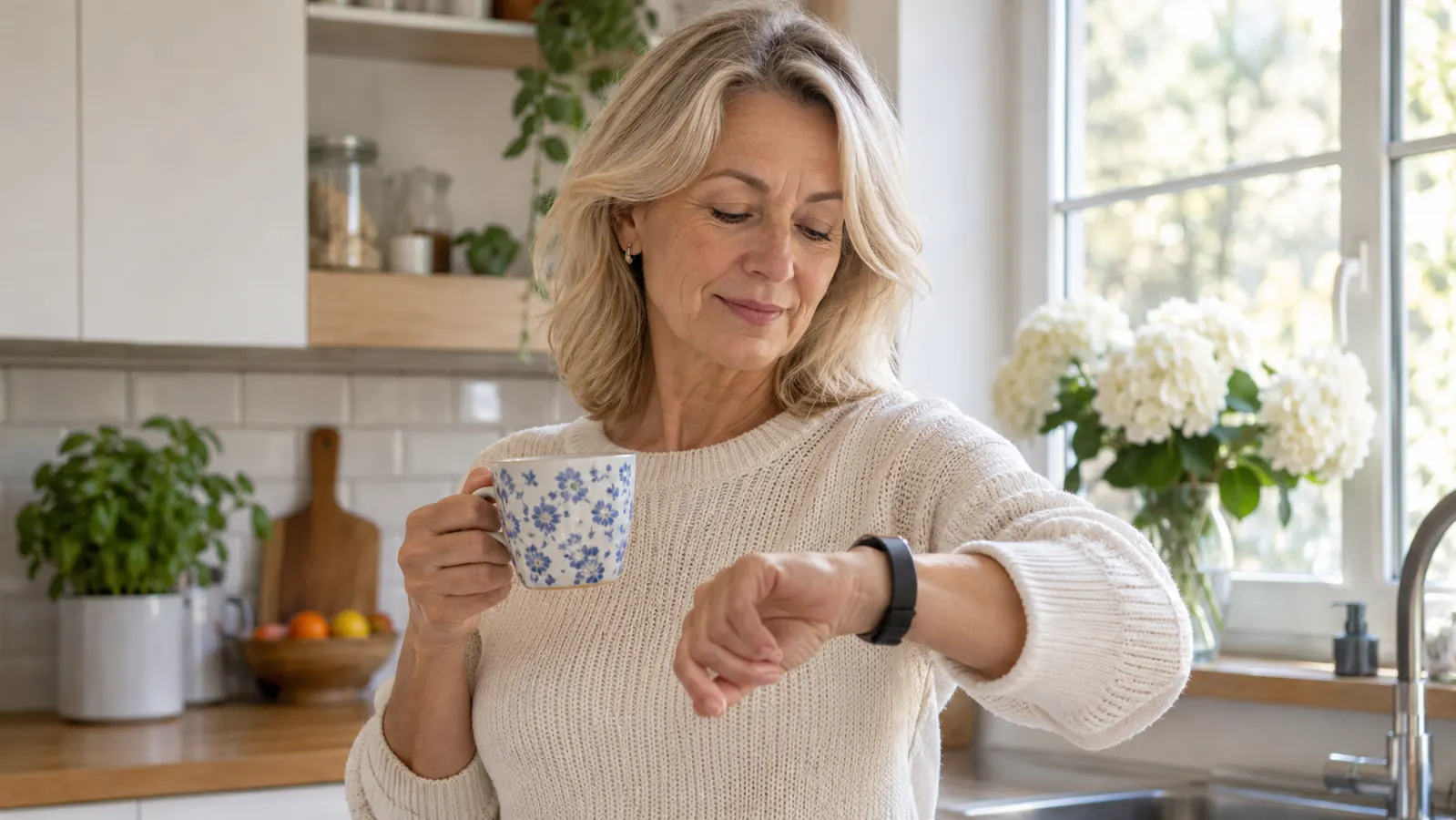
The Fitbit Charge 6 is for people like me. People past 40 who are still moving. People who lift three mornings a week and walk hills in the evening. People who want to know their heart rate on the hill without stopping to take a pulse. People who want to see a Sleep Score in the morning and use it as a gentle nudge toward an earlier bedtime. People who want a tracker that lasts about a week on a charge so they are not tethered to a charger. People who do not want another screen demanding attention. People who want a record of what they actually do, not a lecture about what they should do. If that is you, the Fitbit Charge 6 is worth a look.
Who Should Skip It
Skip the Fitbit Charge 6 if you want a big bright screen with apps and messages. Skip it if you want to reply to texts from your wrist. Skip it if you expect a fitness tracker to make you fit, because it will not. It will show you your numbers, and then you have to do the work. Skip it if you are the kind of person who will obsess over every fluctuation in the Daily Readiness score, because it is an estimate and it will sometimes be wrong. Skip it if you want a medical device, because this is not one. I am 58 years old. I have a stiff right knee and a tight lower back. I have been coaching track for decades. I know what my body feels like. What I did not know, until I wore the Fitbit Charge 6 for six months, was what my body actually does when I am not thinking about it. That is what this tracker gave me. It did not change my training. It changed what I know about my training. That is a quieter, more useful thing.
The record is the hard part. This keeps it.
If you are past 40 and still moving, you already know the hardest part is not the workout. It is the record. The Fitbit Charge 6 keeps that record without asking for much in return.
Amazon Check Today's Price on Amazon →