
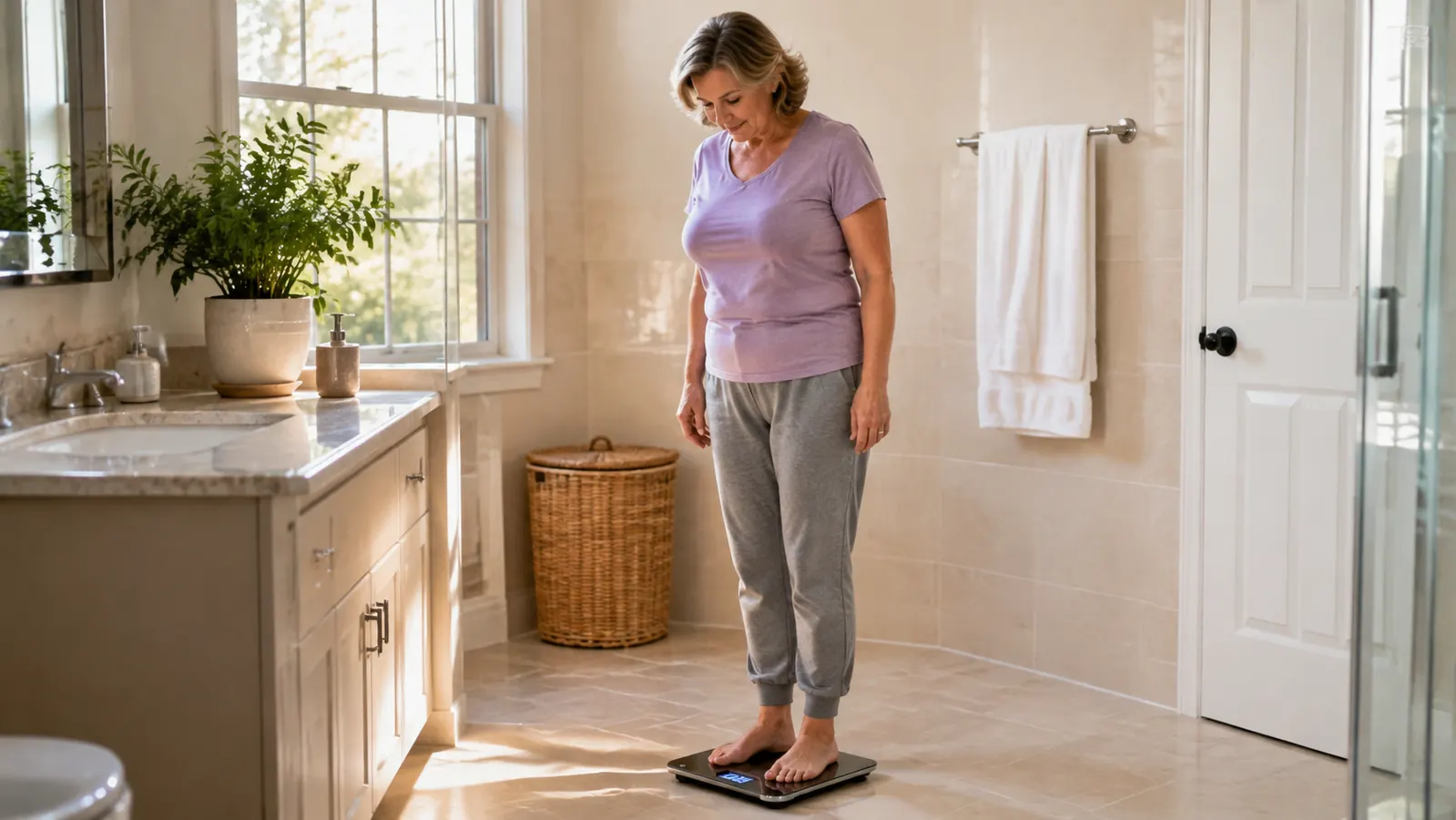
I bought the Gdncbm smart scale in May because I was tired of guessing. I am 58, I lift three mornings a week in my garage, and I wanted to know whether the work was doing anything beyond what I could feel. The old bathroom scale told me weight, and weight alone does not tell you much when you are trying to hold on to muscle. The Gdncbm promised more, so I gave it a spot in the master bathroom and a Monday morning slot in my routine.
Six months later, I have a clear picture of what this scale does well, what it does not do, and what the listing does not mention. This is the honest version, the one I would give a friend at the pickleball courts.
I have used cheaper scales that only measured through the feet, and I have used the tape measure and calipers method. The Gdncbm sits somewhere between those and a lab test, which is exactly where a home scale should sit. Here is what six months of Monday mornings have taught me.
The Quick Verdict
A body composition scale that earns its place if you want a weekly trend you can watch over months. Treat every reading as an estimate, use it the same way every week, and it will tell you more than any plain scale.
Amazon Check Today's Price →A Monday Morning Number Worth Trusting
The Gdncbm smart scale has been in my bathroom since May, and the trend in the Unique Health app has told me more than the mirror has. If you train and want to watch muscle and body fat move over months, this is the scale I would buy again.
Amazon Check Today's Price on Amazon →How I've Used It
The scale sits on the tile floor in the master bathroom, out of the way but not hidden. I step on it once a week, Monday morning before breakfast, wearing the same light clothes and standing in the same spot. I do not weigh myself daily. I learned years ago that daily numbers bounce around and do nothing but create noise.
The first Monday in May, I set the scale on the tile floor, checked that it was level, and stepped on with my bare feet. The LED display lit up immediately and the reading settled in a few seconds. I had expected some fiddling with the app before the first reading. There was none. The reading just appeared in the app on my phone.
After the reading settles on the LED display, I open the Unique Health app and look at the trend. The app keeps the history, so I can see where I was in May and where I am now. I watch muscle mass and body fat over months, not days. I call those readings estimates, because that is what they are.
I bought it in May, so I have about six months of Monday morning data. That is long enough to see patterns and short enough to remember what I was doing when the pattern changed.
The scale does not take up much room. It is a flat platform, so it slides under the edge of the cabinet when I am not using it. That matters in a bathroom that is not oversized. It is also sturdy enough that I do not think about it when I step on. It just sits there and does its job.
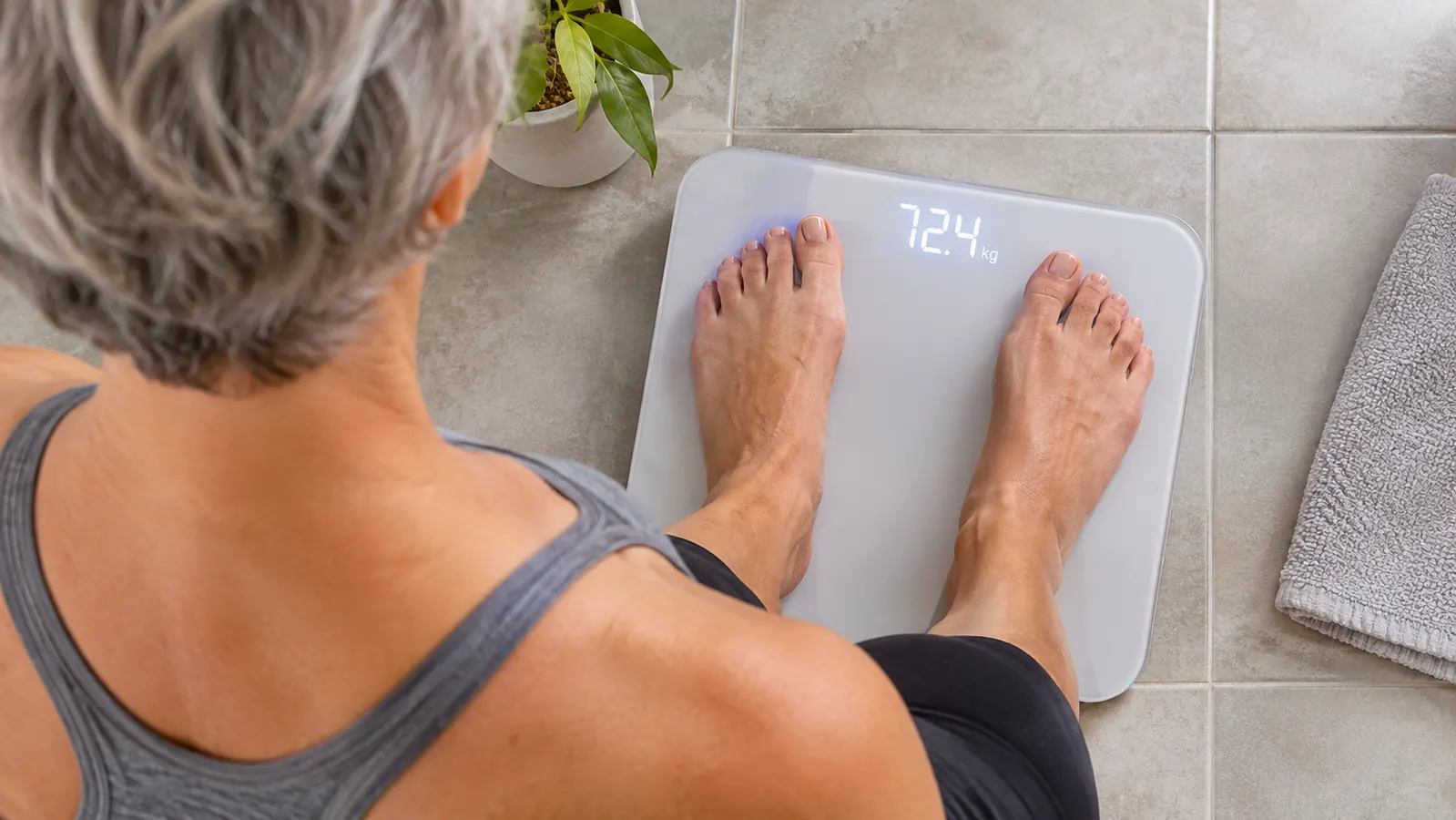
What the 8 Electrodes Actually Do
The Gdncbm uses eight electrodes for its body composition readings. That is the detail that separates it from the cheaper scales that only measure through your feet. With eight points of contact, the scale takes readings across your limbs, so the numbers for your arms and legs are not just guesses based on your lower body.
Before I bought the Gdncbm, I tried a cheaper foot-only scale for a week. The muscle mass number it gave me changed by four pounds from one morning to the next, which made no sense. I sent it back. That experience is why I read the Gdncbm manual carefully before my first full reading, to make sure I stood the way the manual showed and let my weight settle evenly.
I am not going to pretend I understand the full engineering. What I understand is the difference it makes in practice. The scale reports 56 body composition measurements, from body fat and muscle mass to bone mass and BMI. I do not look at all 56. I look at the two or three that matter to a 58-year-old who wants to keep muscle while she loses a little fat.
The practical difference shows up in the arm and leg numbers. On a foot-only scale, the numbers for your upper body are calculated from your lower body, which means they are really a guess. With the Gdncbm, the eight electrodes take readings across your limbs, so the scale has actual information from your arms and legs to work with. I notice it most in the muscle mass reading, which tracks with how my strength work has been going.
The weight reading itself is accurate to 0.1 pounds, which is more precision than I need, but it means the scale is consistent. When the number moves, I trust that it moved. The capacity goes up to 400 pounds, so it will not complain about anyone in my house. The LED display is bright and easy to read without my glasses.
The Unique Health App and My Monday Routine
The scale is only half of the product. The other half is the Unique Health app, and honestly, the app is where the scale earns its keep. The scale syncs each measurement to the app, and the app keeps the history. Without the history, a body composition scale is just a scale with extra numbers.
My routine is simple. Monday morning, before breakfast, I step on the scale, wait for the reading to settle, and let it sync. Later, with coffee, I open the app and look at the trend line. I am not looking for a single good reading. I am looking at the shape of the line over the last month and the last three months.
The app does not need much from me. The readings show up on their own, and the history builds itself. That matters, because a tool I have to fight with is a tool I will stop using.
I will be honest about one thing: the app is not flashy. It does not cheerlead or send me notifications to step on the scale. It just stores the numbers and draws the trend. For me, that is exactly right. I do not need a device telling me how I am doing. I need a device that quietly keeps the records so I can check them when I want.
The app also keeps the history in one place, so I can scroll back to May and see the whole arc of the summer. That continuity is worth more than I expected.
What Nobody Tells You About Body Composition Scales
Here is the part the listing does not lead with. A body composition scale does not measure your body fat the way a medical scan does. It estimates. The eight electrodes take readings across your limbs and use those readings to calculate how much of you is fat, muscle, and bone. That estimate is useful, but it is still an estimate.
That means the numbers bounce around more than you expect. If I step on the scale after a long hill walk, I am dehydrated, and the readings shift. If I step on after a big dinner, they shift the other way. None of that is the scale being broken. It is the scale being honest about what it can and cannot see.
One Saturday in July, after two hours of pickleball in the heat, I stepped on the scale out of curiosity. The body fat reading was nearly two points lower than Monday's. I was not suddenly leaner. I was dehydrated. The next Monday, back in my normal routine, the number returned to where the trend line said it should be. That was the day I stopped trusting single readings.
The fix is routine. Same day, same time, same conditions. That is why I use Monday morning before breakfast. The single readings still wobble a little, but the trend line smooths out, and the trend line is the part I trust.
The other thing nobody tells you is that the scale will not change anything by itself. It reports. It does not train for you, and it does not cook your dinner. The value shows up over months, when you can look back and see that the work you have been doing is moving the numbers in the direction you wanted.
There is also a learning curve to reading the numbers. The first time I saw my body fat percentage, I had to remind myself that this was an estimate taken through the skin, not a measurement from a lab. The scale was not wrong. I was just expecting a level of precision it was never designed to deliver. Once I adjusted my expectations, the scale became much more useful.
The scale cannot tell me my exact body fat percentage. It can tell me which way the trend is moving, and over six months, that has been worth more than any single number.
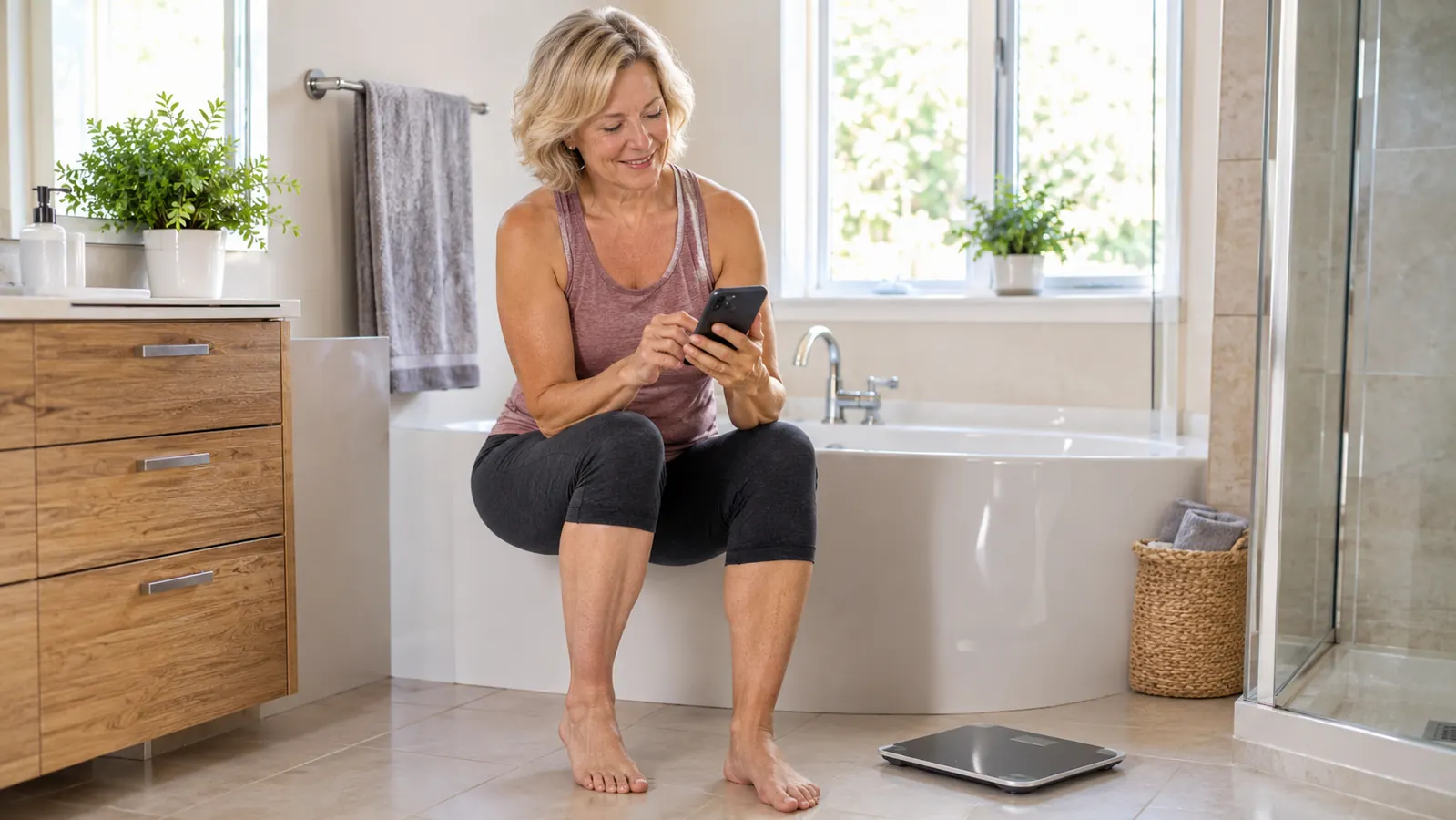
The Numbers I Actually Trust
After six months, I trust two things from this scale. The first is the weight reading, because 0.1 pound accuracy on a stable platform is hard to argue with. The second is the direction of the body composition trends over months. My body fat trend has moved down since May, and my muscle mass trend has held steady or crept up. I did not need a specific number to know that is the direction I wanted.
I do not trust the daily readings, and I do not trust any single measurement from any single morning. Too much depends on water, food, and the phase of my week. But a line drawn through six months of Monday morning readings? That line has told me the truth, and it has kept me consistent with my training in a way the mirror never did.
I also trust the scale's consistency. The readings do not drift. If I step on twice in a row, the second reading matches the first. For someone who wants to track change over time, consistency matters more than absolute accuracy, because the change is what you are actually measuring.
I will give you an example of how I use the data without letting it run my life. When the trend line moved in the right direction through the summer, I kept doing exactly what I was doing. When it flattened out in the fall, I did not panic. I looked at my training and noticed I had been skipping the heavier dumbbell days. The scale did not fix that. It pointed at it.
The First Month Was the Hardest Part
I will tell you something that surprised me. The hardest part of owning this scale was not the scale. It was me. For the first few weeks, I stepped on every morning, because the new toy effect was strong, and I watched the numbers bounce around. One Monday the body fat reading would drop, the next Monday it would bounce back up, and I would wonder what I had done wrong.
Nothing was wrong. I was just feeding the scale inconsistent data. Some mornings I had coffee first. Some mornings I had walked the hills the evening before. Some weeks I was carrying extra water. Once I locked in the Monday morning routine, before breakfast, before coffee, the noise settled down and the trend line started to mean something.
The morning that finally fixed my routine was a Thursday in late May. I had coffee before I weighed myself, and the reading was a full pound and a half above Monday's. That was the moment I understood the scale was not the problem. I wrote the words coffee first on a sticky note and put it on the bathroom mirror. I have not weighed myself after coffee since.
That is the part nobody puts in the listing. A body composition scale asks for a commitment from you before it gives you anything back. The scale does its part. You have to do yours.
Looking back, I am glad I stuck with the routine. If I had judged the scale on its first two weeks, I would have called it erratic and put it in the closet. The scale was not erratic. I was. Give it a month of consistent use and the picture changes completely.
What I Liked
- Eight electrodes measure across your limbs, not just through your feet
- Weight readings are consistent and accurate to 0.1 pounds
- The Unique Health app keeps the history so you can watch trends over months
- 56 body composition measurements, from muscle mass to bone mass
- 400 pound capacity and a flat platform that is easy to step on
- Bright LED display that is easy to read
Where It Falls Short
- Every body composition reading is an estimate, not a medical measurement
- Single readings bounce around with hydration and time of day
- The app is essential, so the scale is only useful if you will use the app
- It takes a few weeks of consistent use before the trend means anything
- You have to commit to a routine or the data is just noise
Who This Is For
This scale is for someone like me, someone who trains consistently and wants to watch the results in a way the mirror cannot show. It is for people who will use it the same way every week and who like seeing a trend line build over months. If you are over 40 and trying to hold on to muscle while you lose fat, the direction of the trend matters more than any single reading, and this scale gives you that direction.
It also helps if you like data. I am the kind of person who keeps a training log and writes down my walk times, so a scale that keeps its own records fits naturally into my week. If you are the same way, you will get more out of this scale than someone who just wants a weight number.
Who Should Skip It
Skip it if you want a medical-grade body fat measurement, because no consumer scale will give you that. Skip it if you will weigh yourself every day and stress over the ups and downs, because the daily noise will drive you crazy. And skip it if you just want to know your weight, because a plain scale will do that with less fuss. The Gdncbm earns its place when you use the app and watch the trend. If that is not how you work, save yourself the bother.
One more group should think twice: anyone who will share the scale with family members and then compare readings. Body composition numbers are personal and they bounce around, so comparing your muscle mass to your spouse's is a game nobody wins. Use the scale for your own trend and let everyone else do the same.
The Scale I Still Step On Every Monday
Six months in, the Gdncbm smart scale is still part of my week. If you want to watch muscle and body fat move in the right direction over months, this is the one I would buy again.
Amazon Check Today's Price on Amazon →