
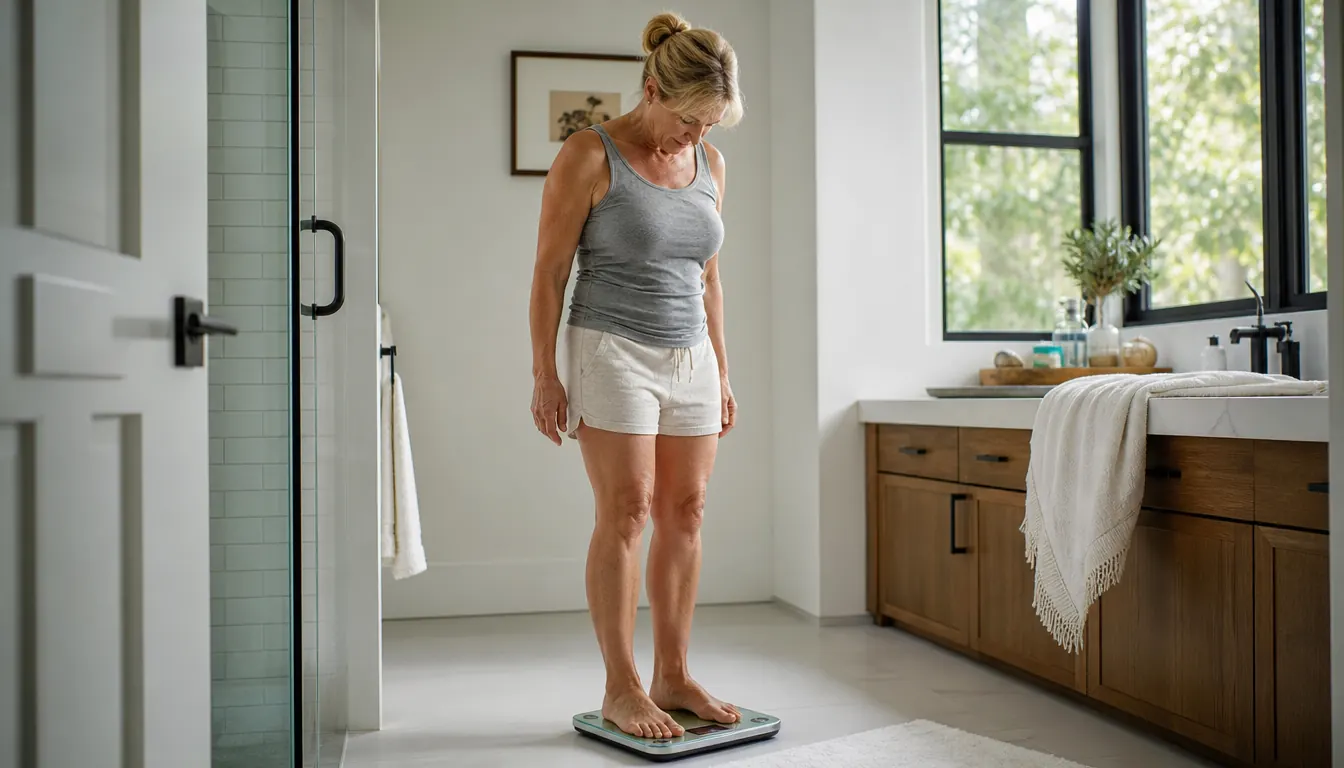
Monday morning, before breakfast, same spot on the bathroom tile. That has been my routine with the Gdncbm smart scale since May, and six months in, I have a clear picture of what it does well and where it will not do the thinking for you. I am Renee, 58, a retired track coach who still lifts three mornings a week in the garage and walks the hills around Chattanooga most evenings. I bought the Gdncbm smart scale because I wanted one number I could trust and a few body composition readings I could watch over months, not because I expected a gadget to change my training.
What I found surprised me a little. The scale is honest, the app is simple, and the readings have been steady enough that I stopped second-guessing them by week three. But it took me a while to learn what the numbers actually mean, and that is the part most reviews skip.
The Quick Verdict
A precise, no-nonsense body composition scale that rewards patience. Weigh yourself weekly, watch the trend, and ignore the daily noise.
Amazon Check Today's Price →A Scale That Tells You More Than Weight
The Gdncbm smart scale tracks weight, BMI, body fat, muscle mass, and bone mass with 0.1 lb precision. If you want one reliable number plus a longer view, this is the scale I kept.
Amazon Check Today's Price on Amazon →How I've Used It
The Gdncbm sits on the floor of the master bathroom, and I step on it once a week, Monday morning before breakfast. Same time, same conditions, same bare feet. I read the numbers in the Unique Health app on my phone and I do not look at them again until the next Monday. That rhythm matters more than any feature on the box. I keep it against the wall under the towel rack, out of the way but easy to reach. The flat platform is wide enough that I do not have to line up my feet carefully, which matters at 6:15 on a Monday morning.
The scale itself is a flat platform with a 400 pound weight capacity and an LED display. It reads in pounds, and the readout accuracy is 0.1 lbs, which is tighter than any scale I have owned. The 8-electrode design means it measures through both hands and both feet, so the body composition numbers are not just a guess based on my height and weight. The first time I used it, I stood there longer than I expected, waiting for the reading to settle. It did not wobble or flicker. The number came up clean and stayed put, and the app had it before I had even put my socks on.
I weigh in once a week, not every day. At 58, my weight moves around for reasons that have nothing to do with training: salt, sleep, the heat, a long day in the yard. Daily numbers would drive me crazy. Weekly numbers, taken the same way every time, show me a trend I can actually use. The second Monday in July proved the point. The reading was up nearly two pounds from the week before, and I had not changed a thing in training. What I had done was spend Saturday at a cookout and skip my evening hill walk because the heat was brutal. The next Monday it was back where it had been. Weighing daily, I would have spent a week wondering what I was doing wrong.
What the Numbers Actually Tell You
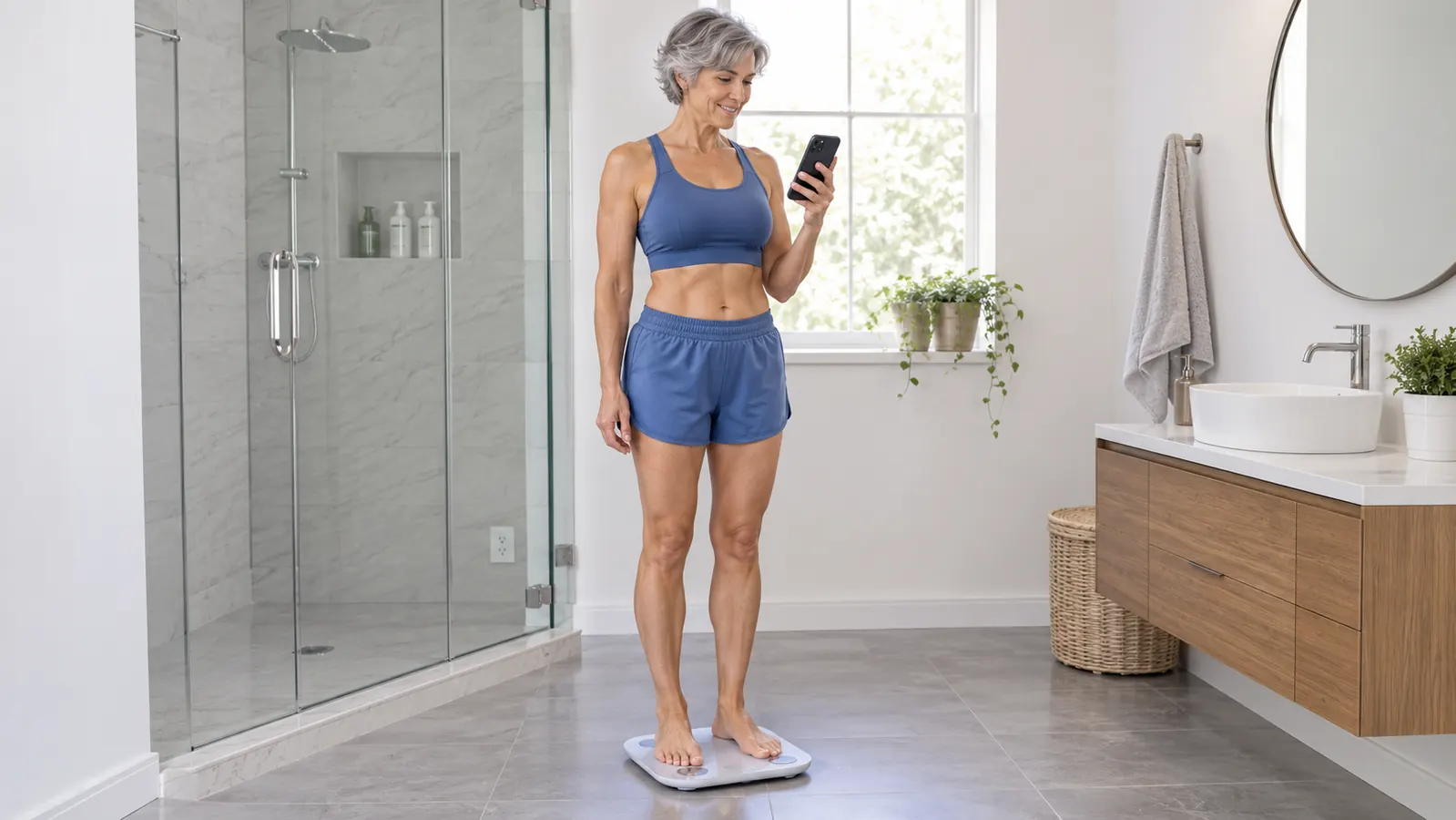
After six months, here is what I trust and what I treat as an estimate. The weight reading is the most reliable number on the scale. I have tested it against the doctor's office scale and it agrees within a pound. The body fat, muscle mass, and bone mass readings are consistent from week to week, which is exactly what you want from a trend, but I do not treat them as a medical measurement. In late September I had my annual physical, and I brought the scale's numbers with me. My doctor was not interested in the body fat percentage, but she did look at the weight trend and said it was useful to see six months of consistent readings rather than one number from that morning.
The Gdncbm uses 8-electrode contact technology for full-body measurement across limbs, and the app lists 56 body composition measurements. I do not look at all 56. I look at weight, body fat, and muscle mass, and I watch how those three move together over months. When my muscle mass crept up while my body fat stayed flat, that told me the strength work was doing something. That is the kind of signal a plain scale cannot give you. The clearest example came between August and October. My weight barely moved in those eight weeks, but the app showed my muscle mass edging up and my body fat edging down, small shifts each Monday that added up to a real change. A plain scale would have told me I was stuck.
The BMI reading is the one I ignore. BMI does not know that I lift weights, and it never will. The scale calculates it from height and weight, and for a 58-year-old woman with a fair amount of lean mass, it is not a useful number. I mention it because the app shows it prominently, and I do not want you to waste six months learning what I learned. I checked it once, out of curiosity, and the number made me laugh. Then I went back to the numbers that matter.
The weight reading is the most reliable number on the scale. The body composition numbers are for watching trends over months, not for diagnosing anything.
The Unique Health App: Simple, and That's the Point
The Gdncbm syncs through the Unique Health app, and I will be honest: I did not expect to like the app. Most health apps try to do too much. This one shows me the measurement, keeps a history, and gets out of the way. When I step on the scale, the reading appears in the app within a few seconds, and I can see the last several Mondays as a line on a chart. The first time I opened it, I was ready to be annoyed. Instead I found a screen with the date, the weight, and the body composition numbers, and a simple chart underneath. No ads, no badges, no notifications asking me to log my water.
The app is where the trend lives, and the trend is the whole point of owning this scale. A single Monday reading is noise. Ten Monday readings, taken the same way, are information. The app makes it easy to see which direction things are moving without me having to write anything down. I like that the chart keeps the same scale from week to week, so a small movement does not look dramatic. When my weight dipped in early September after a stretch of hot weather and lighter meals, the chart showed it as a gentle slope, not a cliff. That kept me from overreacting to a blip.
I cannot tell you much about the advanced sections of the app because I do not use them. I am not interested in 56 measurements or in logging every meal. I open the app on Monday morning, look at the trend, and close it. If you want a scale that turns weighing yourself into a hobby, this one can do that. If you want a scale that quietly keeps a record, it does that even better. The one thing I did add was the history view, which shows every Monday since May in a list. Scrolling through it is oddly satisfying, like a training log that writes itself.
Six Months of Monday Weigh-Ins: What Changed
The first month was the hardest, not because the scale was difficult but because I had to resist the urge to step on it every day. I had just started a new routine: strength work three mornings a week, hill walks most evenings, creatine in my coffee, and a protein shake after lifting. I wanted to see results immediately, and the scale was not going to show them to me that fast. I actually tried weighing every day for the first week, just to see what would happen. The numbers bounced around by a pound and a half from one morning to the next, and by Friday I had talked myself into believing the creatine was making me gain fat. That was a silly week, and it is exactly why I switched to Mondays.
By month two, I settled into the Monday rhythm and stopped checking between weigh-ins. That was when the scale became useful. My body fat percentage moved down slowly, my muscle mass moved up slowly, and my weight stayed roughly the same. If I had only looked at the number on a plain scale, I would have concluded that nothing was working. The Gdncbm showed me that my body was changing even when the scale weight was not. The July heat meant some of my evening walks got cut short, and the August readings showed it: a small dip in muscle mass that I could trace to two weeks of lighter sessions. By September, with the walks back to normal, the number recovered.
Six months in, the trend is clear and the scale has not given me a single reading that made me question whether it was broken. The 0.1 lb precision means I can trust the small movements, and the consistency from week to week tells me the 8-electrode system is doing its job. The one time I did wonder was a Tuesday in August, when I stepped on out of habit before I caught myself. The reading was a pound off from Monday, which made sense, but it also reminded me why I keep a single day. One morning a week, same spot, same conditions. That is the whole system.
Where It Falls Short
No review is honest without the cons, and the Gdncbm has a few. The first is the app setup. Getting the scale connected to the Unique Health app took me a few tries on the first day, and I am not someone who enjoys fiddling with the connection. I tried pairing it twice before I realized the app wanted me to stand on the scale while it searched, which is not something the instructions made obvious. Once I did that, the connection took about ten seconds. It has connected reliably ever since, but the first ten minutes are not the smoothest part of the experience.
The second is the BMI display. The scale shows BMI alongside weight and body composition, and for anyone who lifts, that number is misleading. It is not the scale's fault, it is the nature of BMI, but I wish the display let me hide it.
The third is that the scale only measures what you bring to it. It cannot tell you why your numbers move. When my weight went up for two weeks in a row, the scale did not know I had eaten more salt than usual or that I had skipped a couple of hill walks. It just reported the number. That is not a flaw in the scale, it is a limitation of any scale, but it is worth saying. The week Glenn and I drove to Nashville for a long weekend, I did not weigh in at all. Monday came and went and the scale sat unbothered. The next Monday the app simply had a gap in the chart. I liked that it did not nag me about the missed week.
What I Liked
- 0.1 lb readout accuracy, the most precise scale I have owned
- 8-electrode design measures through hands and feet, not just the soles
- Tracks body fat, muscle mass, bone mass, and BMI in the Unique Health app
- 400 pound capacity and a flat platform that is easy to step onto
- Weekly trend view shows changes a plain scale cannot
Where It Falls Short
- App setup took a few tries on day one
- BMI is prominent and misleading for anyone who lifts
- Readings are estimates, not a medical measurement
- You have to supply the patience; the scale will not motivate you
Who This Is For
The Gdncbm smart scale is for someone who wants more than a weight number and is willing to weigh in consistently. If you train regularly, whether that is lifting, walking, or pickleball on Saturdays, the body composition trend will show you changes that a plain scale hides. If you are the kind of person who likes a simple record of progress without a complicated app, this scale fits. If you are over 40 and doing any kind of strength work, the muscle mass trend is genuinely useful. It is the difference between guessing and knowing whether the work is paying off.
It is also for anyone who wants a scale that is precise without being fussy. The 0.1 lb accuracy and the 400 pound capacity mean it handles a wide range of body types, and the flat platform is easy to step onto even on a sleepy Monday morning. I have had mine for six months and it has never needed a second thought.
Who Should Skip It
Skip the Gdncbm if you are not going to weigh in consistently. A scale that measures 56 body composition values is wasted if you step on it once a month. You need a routine, even a simple one like mine, to get value from the trend data. A scale cannot create a habit. If you are not already the kind of person who weighs in on a schedule, this one will not turn you into one.
Skip it if you are looking for a medical device. The Gdncbm gives estimates, not diagnoses. I am careful to treat the body fat and muscle mass numbers as useful trends, not as something my doctor would rely on. And if you are the kind of person who will obsess over a daily reading, a simpler scale might be better for your peace of mind. I weigh once a week on purpose.
Six Months of Mondays, One Reliable Number
The Gdncbm smart scale has earned its spot on my bathroom floor. If you want a precise scale with a simple app and a trend you can trust, check the current price on Amazon.
Amazon Check Today's Price on Amazon →