
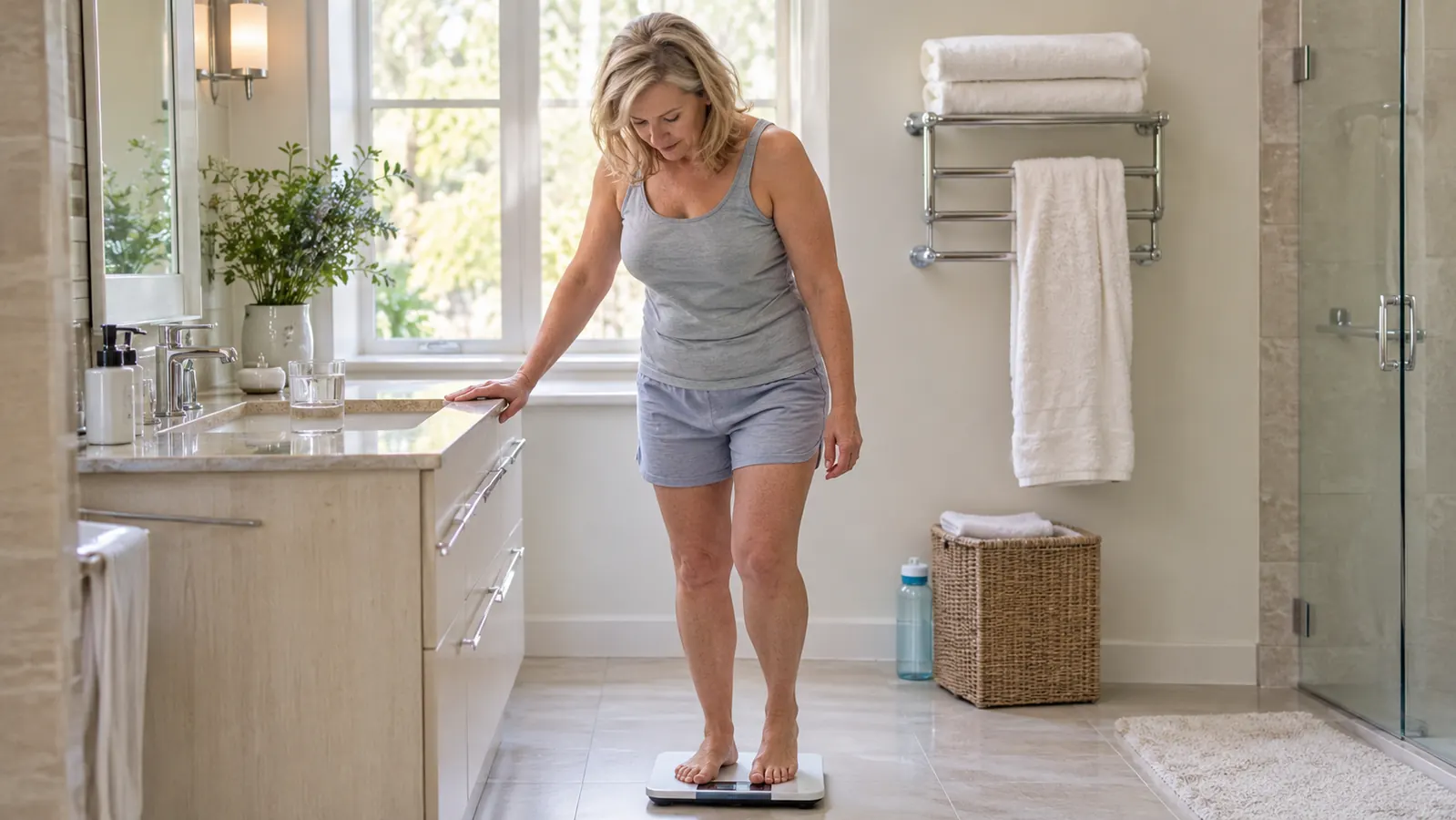
Somewhere around 45, the scale stopped telling me the whole story. Weight went down and my clothes fit the same. Weight went up and I could not tell if it was the weekend or my legs. I am 58 now, I lift three mornings a week in the garage, and I wanted a number that meant something. So I spent a few months with the Gdncbm 8-electrode smart scale, and I ran it head to head against the old 4-electrode scale that had been in our bathroom for years.
Short answer: the Gdncbm is the scale I kept on the bathroom floor, and the 4-electrode scale moved to the guest bathroom. The extra electrodes are not a gimmick if you care about where your weight is coming from. But they are also more than most people need. Here is the honest difference, and who should pay for it.
Why I Spent Months on This Comparison
I have been the person who steps on the scale every morning and lets one number run the day. I stopped doing that a few years ago. Now I step on once a week, Monday before breakfast, and I read the trend in the app, not the single reading. The question was whether the Gdncbm's 8-electrode setup would tell me anything the old 4-electrode scale could not.
A typical 4-electrode scale measures from the feet, so it reads the lower body well and estimates the rest. An 8-electrode scale reads each limb separately, which is why the Gdncbm lists 56 body composition measurements. That is the whole difference in one paragraph. Everything else is what the app does with the numbers.
I put both scales in the master bathroom for a month and stepped on them back to back every Monday morning. The weights agreed within a tenth of a pound. The body fat numbers did not. The 4-electrode scale gave me a number that moved around with water and salt. The Gdncbm gave me a number that moved around too, but the limb readings were steadier, and the app showed the direction over time. That is when I stopped caring about any single reading.
| Gdncbm 8-Electrode | Typical 4-Electrode Scale | |
|---|---|---|
| Price | Higher upfront cost, one-time purchase | Usually costs less, and a plain scale costs even less |
| Measurement detail | 8 electrodes read each limb; 56 body composition measurements | 4 electrodes read foot to foot; whole-body numbers are estimates |
| App tracking | Syncs to the Unique Health app and keeps a trend over months | Most have no app; you write the number down |
| Weight capacity | 400 pounds | Lower on most models |
| Precision | 0.1 lbs with a high-precision sensor | Good enough for a daily weight number |
| Simplicity | 56 numbers to ignore if all you want is weight | Step on, read the number, done |
| Best for | Active adults who want to watch muscle and fat over months | People who want a reliable weight and nothing else |
Where Gdncbm Wins
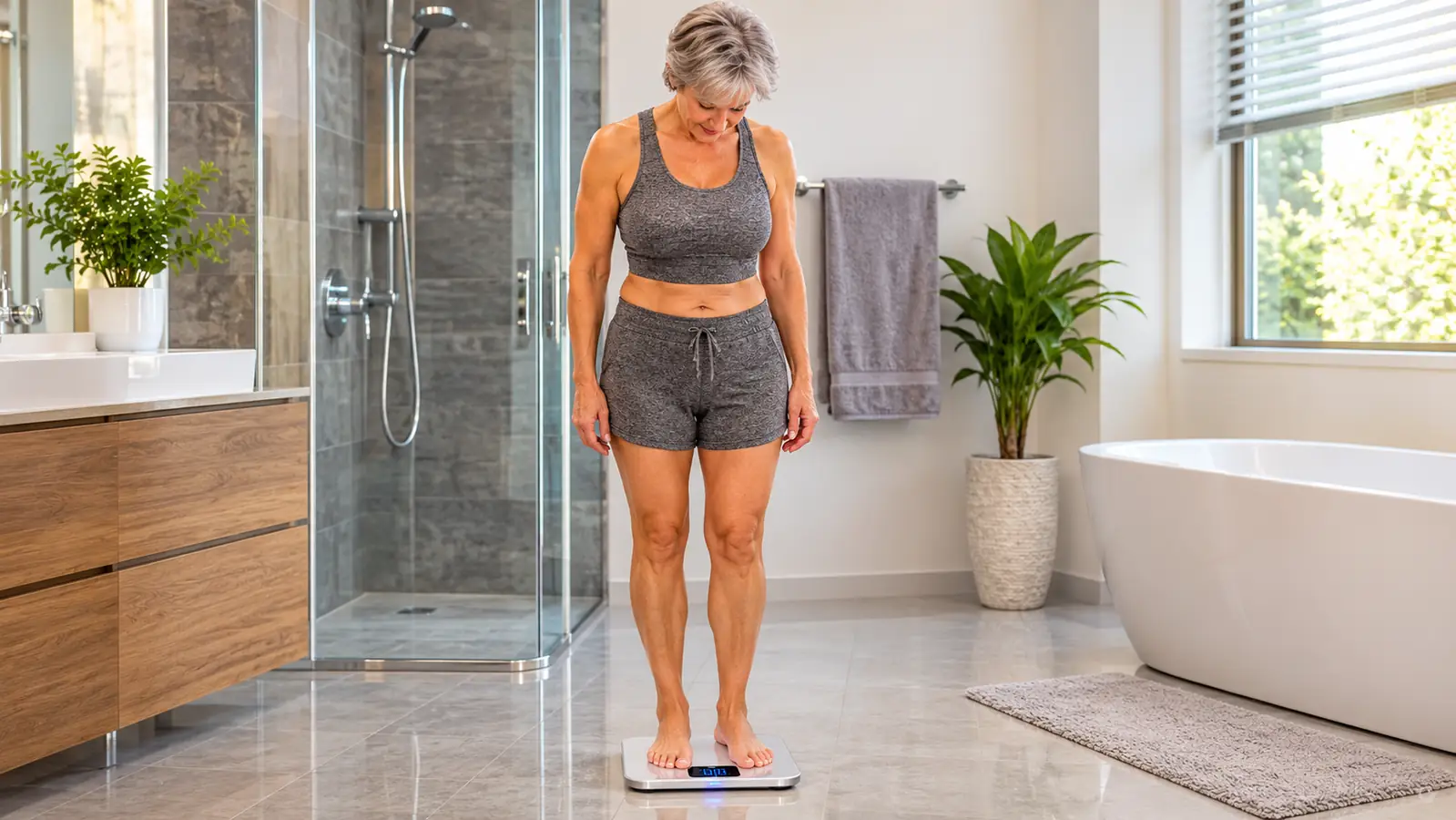
The biggest difference is the limb-by-limb reading. The Gdncbm gives 56 body composition measurements, and the two I actually look at are muscle mass and body fat. With the old 4-electrode scale, I got a body fat number that was really a lower-body estimate dressed up as a whole-body number. The Gdncbm reads each arm and each leg, so when my strength work changes my arms or my legs, the scale can see it in the limb readings, not just in a guess.
The second difference is the trend. The Gdncbm syncs to the Unique Health app, and the app keeps a curve instead of a list of numbers. I step on Monday morning, and I look at where the line has been for two or three months, not where it is today. That is the only way I can use a scale without letting it run my week. The old scale had no app. I wrote numbers in a notebook for a while, and then I stopped.
The third difference is the hardware. The Gdncbm reads to 0.1 lbs with a high-precision sensor, and it handles up to 400 pounds. The LED display is easy to read in the morning before I put my glasses on. The old scale was fine, but the numbers were smaller and the capacity was lower. When you are weighing one person, that does not matter. When the scale is in a shared bathroom, it does.
The app is plain, and I mean that as a compliment. It shows the measurements and the trend, and it gets out of the way. No pop-ups, no nagging. That matters to me more than it should, because I have used apps that felt like they were working harder to sell than to track.
Where a 4-Electrode Scale Wins
Let me be fair. The 4-electrode scale wins on price, and it wins on simplicity. Most 4-electrode scales cost less than an 8-electrode scale, and a plain scale costs even less than that. If the only number you want is your weight, you should not pay extra for electrodes you will never think about. The old scale does that one job fine, and it has for years.
The 4-electrode scale also wins on noise. The Gdncbm hands you 56 measurements. That is a lot of numbers to ignore. Some people will look at bone mass and start worrying about something no bathroom scale can diagnose. I call the readings estimates, because that is what they are. If you are not the kind of person who can let a body fat percentage sit there without reacting to it, the simpler scale is the kinder choice.
The 8-Electrode Scale I Kept on the Bathroom Floor
If you train and you want to watch muscle mass and body fat over months instead of chasing a daily weight, the Gdncbm is the one I kept. It reads each limb, syncs to the Unique Health app, and handles up to 400 pounds.
Amazon Check Today's Price on Amazon →Who Should Buy Which
Buy the Gdncbm if you are doing anything that changes your body and you want to see it. I lift three mornings a week, I walk hills, and I play pickleball on Saturdays. I am not trying to get shredded at 58. I am trying to keep muscle mass as I get older, and the scale gives me a rough monthly line on whether I am holding it. The readings are estimates, not a medical measurement, and I would say the same to anyone.
Buy a 4-electrode scale if you want one reliable number and nothing else. If you weigh in, write it down or forget it, and move on with your day, the extra electrodes are wasted on you. There is no shame in that. Most people do not need 56 measurements. They need a scale that does not lie about their weight, and a 4-electrode scale does that.
If you are on the fence, ask yourself one question. Will you look at the trend line in the app a month from now? If the answer is yes, the Gdncbm is worth the difference. If the answer is no, save the money and get the simpler scale. I say that as someone who kept the Gdncbm. The scale only helps if you use what it gives you.

What the 56 Measurements Actually Mean
Fifty-six sounds like a lot, and it is. The scale reports body fat, BMI, bone mass, muscle mass, and a long list of segment readings for each arm and each leg. I use maybe four of them. Muscle mass, body fat, weight, and the trend lines for the first two. The rest are there if I want them, and mostly I do not.
Here is what matters for someone my age. Muscle mass is the number I care about most, because muscle is what keeps you moving when you are 58 and your right knee complains on hill days. The Gdncbm tracks it the same way every week, so the direction of the line tells me more than the number itself. If the line drifts down over three months, I add a set to my strength work. If it holds, I keep doing what I am doing.
The One Thing That Surprised Me
I expected the 8-electrode scale to be fussy. I thought I would have to stand in exactly the same spot every time and redo the reading if I shifted my weight. It is not like that. I step on, the LED display lights up, and the reading is done. The app syncs in the background, and I can look at it later or not at all.
What surprised me more is that the readings stayed consistent. I weigh in on Monday mornings before breakfast, and the numbers do not bounce around the way the old scale's body fat reading did. I still call them estimates, because that is what any bathroom scale gives you. But an estimate that stays steady is useful. An estimate that jumps around is just noise.
How I Use Mine on Monday Mornings
Monday morning, before breakfast, I step on the Gdncbm in the master bathroom. I do not look at the number on the display for more than a second. I open the Unique Health app, and I look at the trend line for muscle mass and body fat over the last few months. Then I put the phone down and go about my day.
That routine is the whole reason the app matters. The scale itself is a flat platform with an LED display. The app is where the scale earns its place on the floor. I wear a Fitbit Charge 6 on my wrist, and the scale fills a different job. The Fitbit tells me about my day. The scale tells me about my months.
Glenn does not use the scale, and that is fine. It is mine, it sits in the master bathroom, and I am the one who reads the trend. The guest bathroom has the old 4-electrode scale for anyone who wants a plain weight. That division of labor has worked for months, and it is the honest answer to which scale wins: they do different jobs.
What I'd Tell a Friend
If we were sitting at my kitchen table, I would say this. The Gdncbm is worth it if you will actually look at the trend, not the daily number. If you will not open the app, the extra electrodes are wasted money. If you will, the scale gives you a monthly picture of muscle and fat that a 4-electrode scale cannot. I kept the Gdncbm in the master bathroom and moved the old scale to the guest room. That is my honest vote.
And one more thing. Do not buy any scale, including this one, expecting it to diagnose anything. I am not a doctor, and I do not give medical advice. I use the Gdncbm to watch the direction of my muscle mass and body fat over months, and that is all it is good for. If a number looks off, the answer is a doctor's office, not a bathroom floor.
Here is the last thing. Do not buy a scale because it has more numbers than the next one. Buy it because you will use the numbers. That is the whole argument, and it is the same at 40 as it is at 58.
The Scale I Kept, Not the One I Boxed Up
The Gdncbm 8-electrode scale reads each limb, tracks 56 measurements, and syncs to the Unique Health app so you can watch the trend instead of the daily number. That is why it stayed on my bathroom floor.
Amazon Check Today's Price on Amazon →