
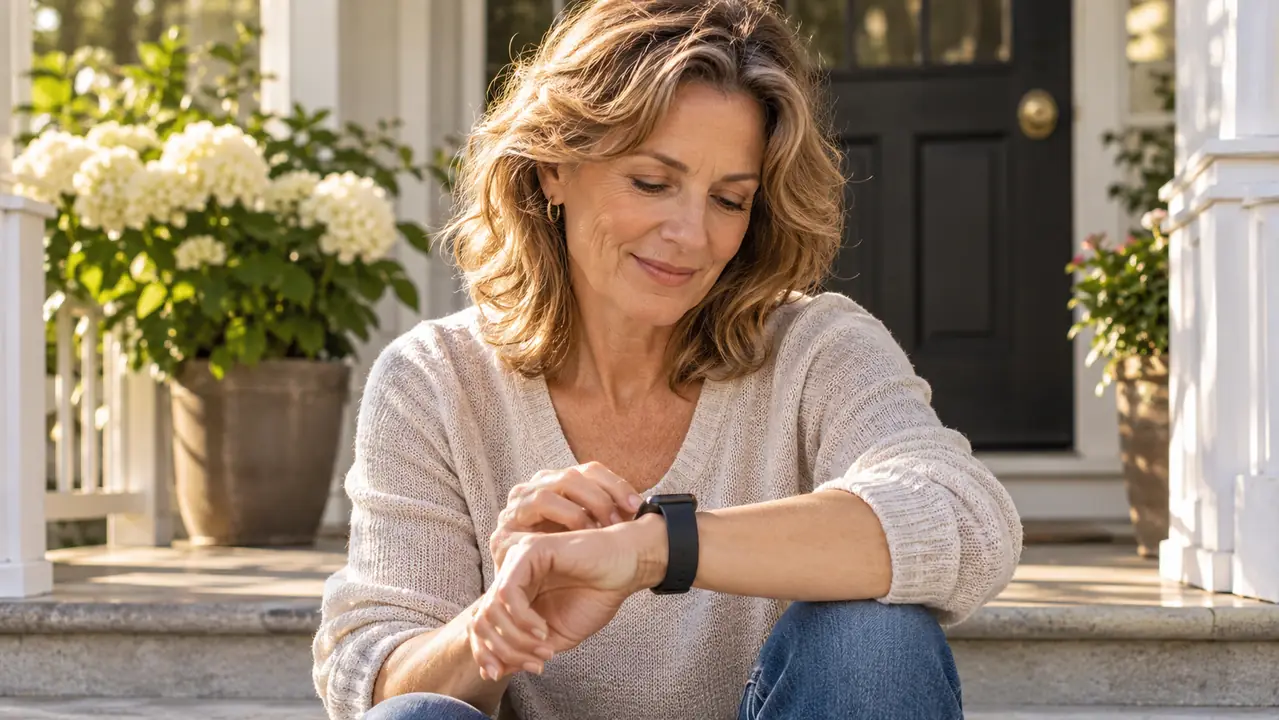
I bought the Fitbit Charge 6 in May because I wanted to stop guessing about my days. Not because I needed a coach on my wrist. I spent thirty years coaching high school track in Chattanooga, and I know what overtraining looks like in other people. It turns out I am slower to recognize it in myself. The band does not care about my credentials. It only cares about what I actually do.
The band is small and light, with a silicone strap and a case that is stainless steel or metal. I wear it day and night. I charge it about once a week. I look at three things: my steps, my heart rate on the hill walks, and the Sleep Score in the morning. I do not pay for a subscription. I do not need one.

The first time it got my attention was a Tuesday in late July. I had done my three morning strength sessions that week, walked the hills with Glenn two evenings in a row, and then spent the afternoon on yard work. That evening the band showed a low Daily Readiness score. I almost ignored it. I remember thinking, 'I feel fine.' I was not fine, exactly. I was just used to pushing through.
The next morning the Sleep Score was lower than usual, and I felt it. Not dramatically. Just a heaviness that made the first hill feel steeper than it should. That was the moment I understood what the little band was actually doing. It was not telling me to push harder. It was telling me to sit down.
I have never used the contactless payments or the ECG. Those are not why I bought it. I bought it for the quiet parts: steps, heart rate, sleep, and the readiness number that shows up when I wake up. It is not a medical device. It is a mirror with a battery.
I read about the Charge 6 for a while before I bought it. The reviews were good, but I wanted to see for myself whether a tracker would change anything at my age. I am 58. I have been coaching since my twenties. I do not need a gadget to tell me how to run a practice. I need one that reminds me to stop. That is a harder job than it sounds.
The Fitbit Charge 6 did not tell me to work harder. It told me to sit down, and that turned out to be the more useful message.
A quiet check-in, not a coach
If you are over 40 and your training routine has started to feel like a second job, the Fitbit Charge 6 is a simple way to check in with yourself. I have worn mine since May. See what it shows you.
Amazon Check Today's Price on Amazon →Here is what a normal day looks like now. I wake up, glance at the Sleep Score, and go make coffee. After breakfast I do not stare at the numbers. I check my step count in the afternoon if I have been inside too long. On hill walks I keep an eye on my heart rate, mostly because I am curious how the same route feels on different days. That is the whole routine. Simple works.
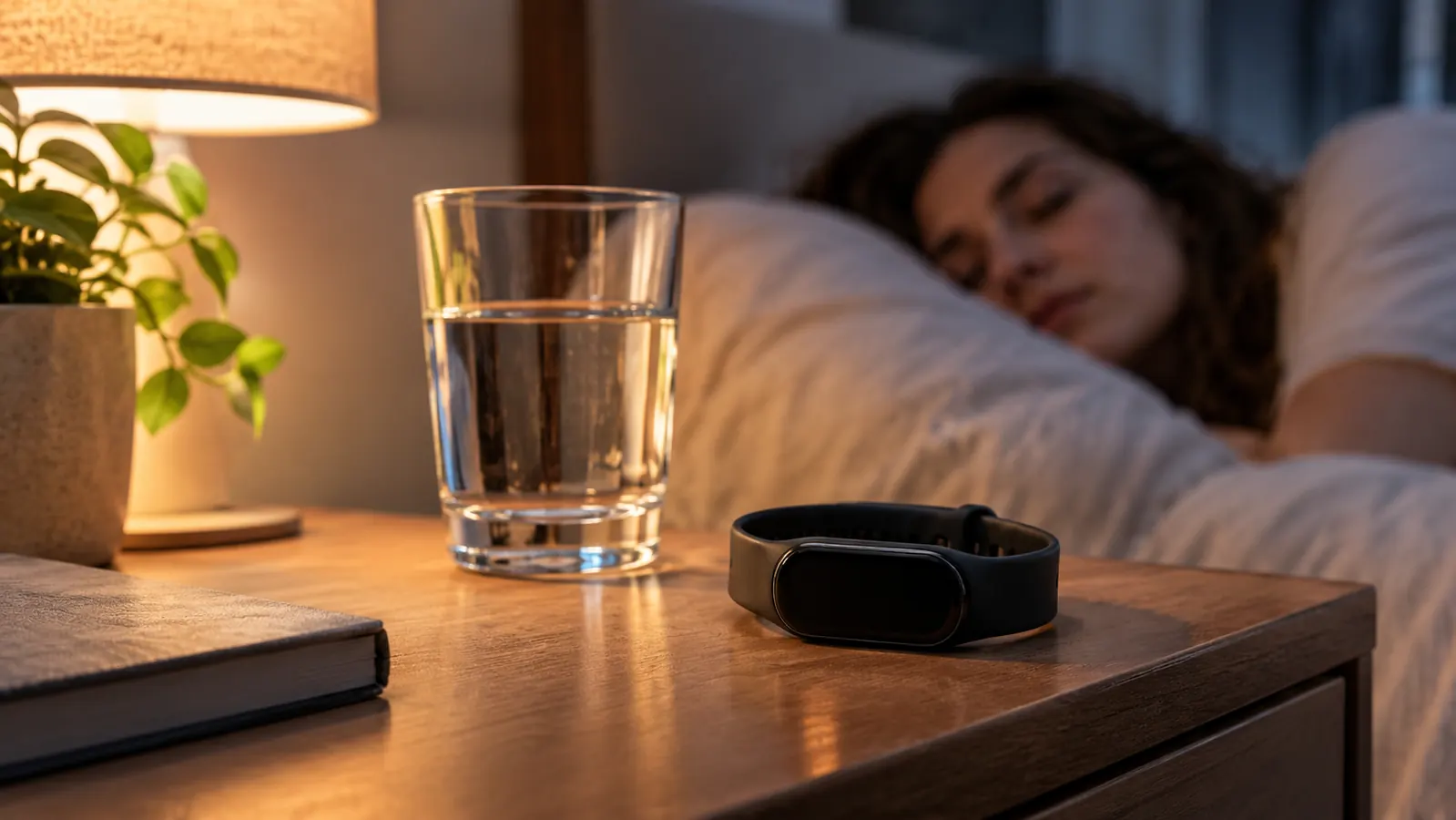
The rest lesson stuck. Last month I had a Saturday with pickleball in the morning and a long walk with Glenn in the evening. By dinner I could feel the day in my lower back. The next morning the readiness number was low, so I took a real rest day. I sat on the porch, read, and let my right knee complain without doing anything about it. The following morning the numbers were back to normal. I cannot prove the band caused any of that. I can tell you I listened, and listening is the part I had been missing.
What I tell people is this: it is a tracker, not a doctor. It will not fix a stiff right knee or a tight lower back. It will not replace a warm-up or a good night's sleep. What it does is show patterns. After a few weeks you start to notice that hard days show up in the morning numbers. That is useful information. It does not tell me what to do. It just holds up the week and lets me decide.
I also like that it does not care what kind of day I am having. It is there for strength sessions, hill walks, pickleball, yard work, all the same. I just wear it and look later. For someone who spent a career watching a stopwatch, that is a nice change.
It is water resistant, which matters in Tennessee summers. I have worn it through plenty of sweat and a few surprise showers. The battery has not been a problem. I charge it about once a week, usually while I am sitting on the porch with my coffee. That is the whole maintenance routine. No fuss, no reminders, no extra steps. I like that about it.
What I'd Tell You If We Were Sitting at My Kitchen Table
If you were sitting at my kitchen table, I would tell you that you probably do not need another thing that yells at you. You need something that quietly shows you what your week looked like. The Fitbit Charge 6 does that. It is not complicated. It is a small band with a screen that tracks steps, heart rate, sleep, and readiness, and it made me rest when I needed it. Glenn does not wear one. He does not need it. I do. I have worn mine since May, and I plan to keep wearing it. That is the whole story.
Let it show you your week
I have worn the Fitbit Charge 6 since May, and it is still the first thing I put on in the morning. If that sounds useful, check today's price on Amazon.
Amazon Check Today's Price on Amazon →