
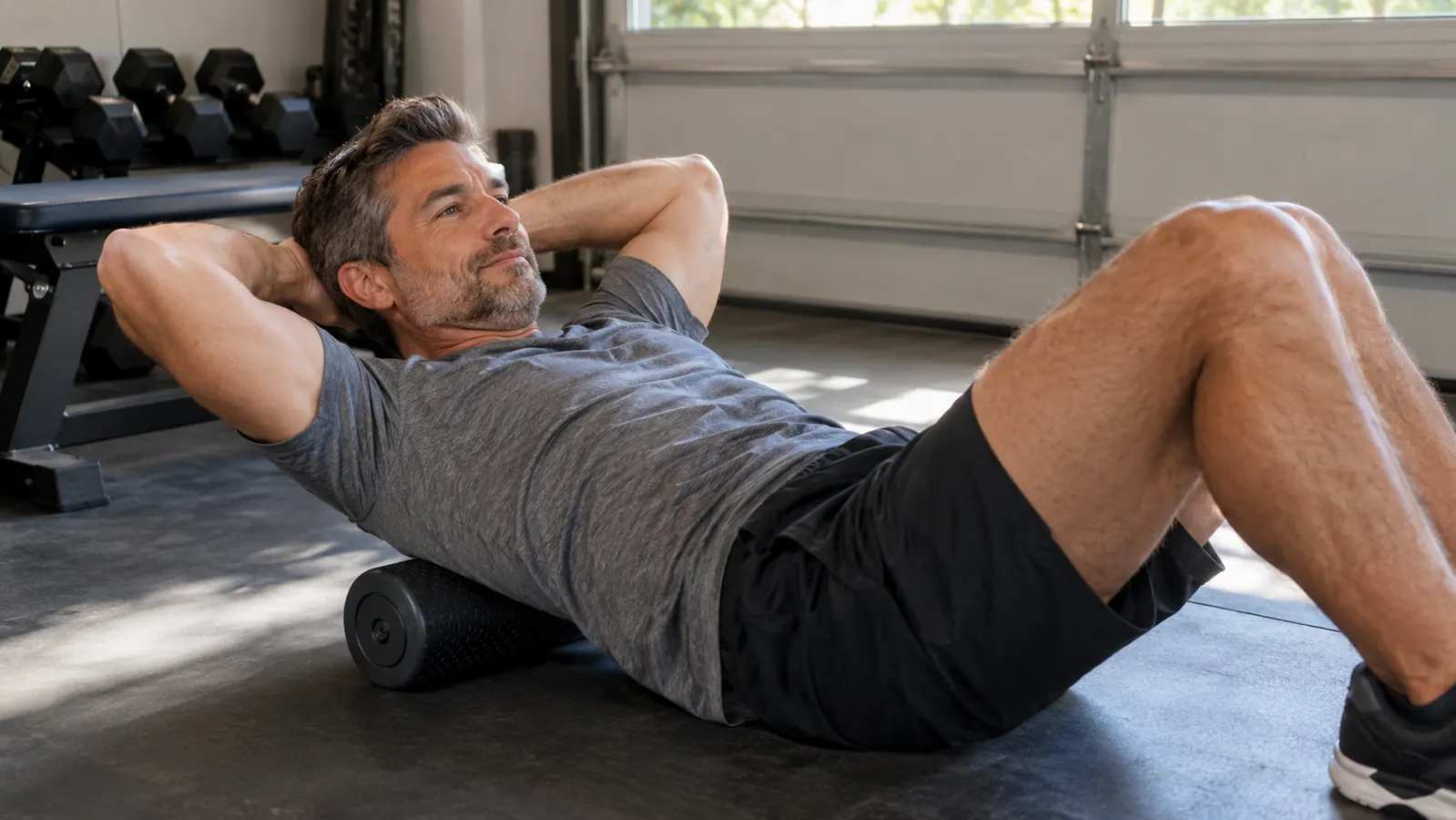
My garage floor has a permanent dent in it now. That dent is exactly the shape of the TriggerPoint Grid, and it got there because I have spent the better part of a year lying on top of that roller four or five evenings a week. I am Doug Pellerin, 58, a retired high school track coach in Chattanooga, and I did not set out to write a long-term review. I set out to loosen a stiff right knee and a lower back that complains after yard work. The Grid was the tool I kept reaching for, so after about eleven months I figured I owed it an honest write-up.
This is not a medical opinion. I am not a doctor and I do not play one in my garage. This is one retired coach telling you what a year of regular use felt like, what held up, what did not, and who I think should buy one.
The Quick Verdict
The TriggerPoint Grid is the rare recovery tool that earns its place in a daily routine. It is firm enough to actually work on tight calves and a cranky lower back, the multi-density surface rolls smoothly, and after a year of hard use mine still looks and feels almost new. It will not fix an injury, but it is the best all-around foam roller I have used.
Amazon Check Today's Price →The foam roller I have used four nights a week for a year
If you want the same multi-density roller that survived a year of garage-floor abuse, the TriggerPoint Grid is worth a look. Check today's price on Amazon and see if it fits your routine.
Amazon Check Today's Price on Amazon →How I've Used It
My routine is boring on purpose. Three mornings a week I do dumbbell work in the garage, a bench, a pull-up bar, nothing fancy. The other days I walk hills with Carol, my wife, and on Saturdays we play pickleball. The roller comes out in the evening, after training or after a long walk, usually while I am watching something on my phone.
I use the TriggerPoint Grid for about ten minutes at a time. I start with my calves, one leg at a time, then my hamstrings, then my glutes, then my upper back. On days when my right knee feels stiff, I spend extra time on the quad and the side of the thigh. On days when my lower back is tight from yard work, I roll the glutes and hips more than the back itself. That is the routine I have kept for about eleven months now.
I also use it as a balance tool. Standing on the Grid with one foot while I hold the wall for support is a cheap way to work on ankle stability, and it is harder than it looks. That is not in the instructions, but it has been good for me.
The consistency is the part that took me the longest to get right. Before the Grid I tried a lacrosse ball, which worked on the glutes but slid away every time I put real weight on it. I also tried a smooth foam roller from a big box store, and it felt fine for two weeks, then softened in the middle until it was doing nothing. The Grid stuck because it does not slide and it does not flatten. On a typical evening I set a ten-minute timer on my phone, start on the calves, and work my way up. When the timer goes off I am usually on my upper back. If my right knee is stiff, I add five minutes on the quad and the side of the thigh. That is the whole routine, and it has not changed in eleven months. Boring routines are the ones you actually keep.

What the Grid Actually Is
The TriggerPoint Grid is a 13-inch foam roller with a surface that is not smooth. It has a pattern of raised nodules and channels arranged in a grid, which is where the name comes from. The idea is that the multi-density surface lets the roller press into muscle tissue without flattening out the way a soft, smooth roller does. The outer layer is firm, the inner core is denser, and the surface texture is meant to mimic the feel of a therapist's hands or fingertips.
I have owned smooth foam rollers before, the cheap kind you can buy at a big box store. They feel fine for the first two weeks, then they soften and compress where you roll the most. The TriggerPoint Grid has not done that. After a year of use, the surface still has the same firmness and the same texture. I can see light wear on the ends where it has rubbed against the garage floor, but the rolling surface itself is unchanged.
The 13-inch length is a deliberate choice. A full-length roller is better for lying on with your whole spine supported, but it is awkward to travel with and harder to control on one leg. The Grid is short enough to use on a single calf or hamstring, and long enough to use on your upper back if you position it right. It is also hollow, so it is light. I have carried it to the track, to the gym, and on a couple of road trips.
The construction is worth understanding before you buy, because it changes how you use it. The surface is a repeating pattern of raised squares and channels, and the channels are the part that matters. When you roll slowly, the tissue presses into the channels and the pressure spreads out. When you roll fast, the pressure stays on the raised parts and feels much more direct. I did not understand this at first. I rolled fast, the way you would roll out dough, and it felt okay but not great. When I slowed down and let the roller sit on a tight spot for five or ten seconds, the difference was immediate. The Grid is built for slow work, not fast work, and that took me a few weeks to learn. Once I learned it, my sessions got shorter and more useful.
A Year of Rolling: What I Noticed
The first thing I noticed was that the Grid is firm. Not punishing, but firm. The first few sessions I had to ease into it, especially on my calves. That is a good thing in a foam roller. A roller that feels plush on day one is usually a roller that does nothing by day thirty. The Grid gave me a deep, specific pressure right away, and it has not changed.
The second thing I noticed was that my right knee felt better on days when I rolled the quad and the side of the thigh. I am careful not to overstate this. I am 58, I coached on a track for decades, and my knee is not going to feel like it did when I was 30. But the stiffness that used to greet me in the morning is noticeably less when I roll consistently. When I skip a few days, it comes back. That pattern has been consistent enough that I trust it.
The third thing I noticed was that the Grid does not do much for my lower back directly. Rolling the back itself feels fine, but the real relief comes from rolling the glutes and hips. That is not a flaw in the roller. It is just how my body works. If you buy this expecting to roll your lower back and have it fix everything, you may be disappointed. If you use it on the muscles that attach to the pelvis, you may get the relief you were looking for.
One day in late August stands out. I had spent the morning hauling bags of mulch from the truck to the flower beds, then the afternoon helping Carol in the garden, and by dinner my lower back was complaining in a way I recognized. I skipped the back entirely and spent a full fifteen minutes on the glutes and hips, slow and patient, letting the Grid sit on each tight spot until it let go. The next morning I was stiff, but the sharp ache was gone. That is the most honest thing I can say about this roller after a year: it does not fix you in the moment, but it takes the edge off the next day. I have repeated that experiment enough times now to trust the pattern. The days I skip the roller, the ache comes back by the second morning. That cause and effect has been the most useful thing I learned all year.
The real relief for my lower back came from rolling the glutes and hips, not the back itself. That is the honest part of this review.

Build Quality and Durability
I am hard on equipment. My garage is not climate controlled. It gets hot in Tennessee summers and chilly in the winter, and the Grid has lived on the floor the whole time. I have dropped it, leaned on it, stood on it, and rolled on it hundreds of times. The surface has not cracked, peeled, or softened. The ends show some scuffing from contact with the concrete, but that is cosmetic.
The TriggerPoint Grid is also easy to clean. I wipe it down with a damp cloth and a little soap every couple of weeks, and it looks almost new. The texture does not trap dust the way a smooth roller can. I appreciate that, because a recovery tool you are afraid to get dirty is a recovery tool you stop using.
One honest complaint: the Grid is firm enough that it can be uncomfortable on bony areas. If you roll directly on your spine or on a joint, you will not enjoy it. That is true of any firm roller, but it is worth saying. You have to learn where to use it and where to avoid it. The instructions that come with it show basic positions, but the learning curve is real.
I have also tested the durability in ways that were not planned. In the spring I took the Grid on a road trip, three days in the trunk of the car in Tennessee heat, then a few nights on a hotel carpet and a relative's porch. It came home with a couple of new scuffs on the ends and no damage to the rolling surface. I have loaned it to a neighbor who wanted to try one before buying his own, and it survived a week of his heavy use too. The only thing I have noticed after a year is that the raised squares have polished down slightly where my back rolls the most, like a well-worn leather seat. The firmness and the texture are still there, which is more than I can say for any smooth roller I have owned.
What I Liked
- Multi-density surface stayed firm and effective through a year of near-daily use
- 13-inch length handles single-leg work and upper back work without being awkward
- Hollow core keeps it light enough for a duffel bag or the trunk of a car
- Textured surface is easy to clean and does not trap dust
- Doubles as a balance tool for ankle work
Where It Falls Short
- Firm enough to be uncomfortable on bony spots until you learn where to avoid
- Does little for the lower back directly; the relief comes from the glutes and hips
- Real learning curve: fast rolling does almost nothing, slow rolling is the whole game
- Too firm as a first roller if you are brand new to foam rolling
Who This Is For
The TriggerPoint Grid is for people who actually use recovery tools, not people who buy them and let them gather dust. If you train regularly, if you walk a lot, if you have tight calves or hamstrings or a lower back that complains after yard work, this roller is worth your money. It is especially good for people over 40, because the muscles get tighter as we age and a firm, consistent roller becomes more valuable, not less.
It is also for people who travel. The 13-inch length fits in a duffel bag, and the hollow core keeps it light. I have taken it to a hotel gym and used it on the carpet after a long drive. That alone made it worth the space in my bag.
It also works as a warm-up tool before training, which I did not expect. On cold mornings, five minutes on the calves and hamstrings before I pick up dumbbells makes the first set feel easier. I started doing that in the fall, and it has become part of my garage routine. The Grid is not a substitute for warming up properly, but it is a good way to start.
Who Should Skip It
If you are new to foam rolling and want something soft and forgiving, the TriggerPoint Grid may be too firm at first. A smooth, low-density roller is a better starting point. If you have a diagnosed injury, a recent surgery, or a condition that makes deep pressure risky, talk to a professional before you roll on anything this firm. I am not a doctor, and I do not want anyone reading this to skip that conversation because a retired track coach on the internet said a roller felt good.
I would also say this: if you are not going to use it, do not buy it. A foam roller only works if it becomes part of a routine. The Grid is a good tool, but it is not magic. It will not fix a bad training plan, a bad diet, or a bad night of sleep. It is a piece of the puzzle, not the whole puzzle.
One more group: if you already own a firm roller that you use regularly, the Grid may not be a big enough step up to justify buying. It is a better roller than most, but it is still a foam roller. If your current one works and you use it, keep using it.
Still on my garage floor after a year
The TriggerPoint Grid is the roller I reach for four nights a week. If that sounds like the kind of tool you would actually use, check today's price on Amazon.
Amazon Check Today's Price on Amazon →