

Most evenings, after the last dumbbell is back on the rack and Carol has headed inside, I spend ten minutes on the floor of my garage with a foam roller. It's not dramatic. It's not something you'd post about. It's just part of the wind-down, the way brushing your teeth is part of going to bed. But at 58, it's the difference between waking up stiff and waking up ready for the day.
I coached high school track in Chattanooga for thirty-one years. I watched teenagers roll out on everything from PVC pipe to the expensive stuff, and I always figured it was a young person's habit, something for kids whose muscles recovered overnight anyway. Then I retired. My right knee started reminding me about all those years standing on a track, and my lower back complained after every long afternoon of yard work. That's when a friend at the gym handed me his TriggerPoint Grid and told me to try it for a week.
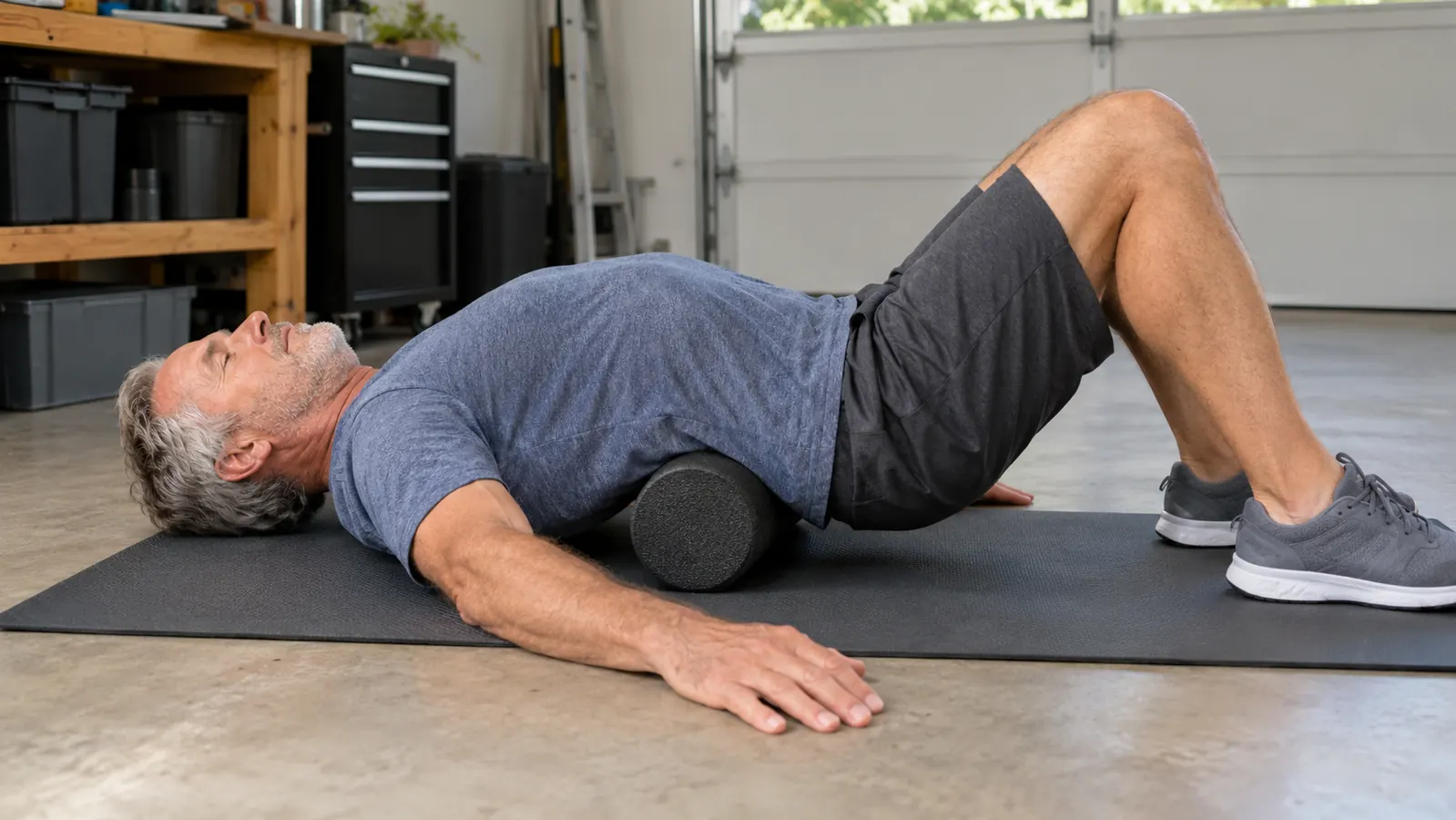
I'll be honest: I came to this late and skeptical. A foam roller looks like a piece of plumbing with a label on it. My plan was to test the TriggerPoint Grid for a few weeks, take some notes, and probably go back to just stretching on the porch like I'd always done. I've tested enough gear over the years to know that most of it ends up in a closet.
That was about two months ago. The TriggerPoint Grid is still on my garage floor, and it's the first thing I reach for after training. Not because it fixed anything dramatic. Because it makes the next morning better, and at my age, that's the whole ballgame. A tool that does one thing reliably is worth more than a shelf of gadgets that promise everything.
I want to be clear about what this article isn't. It's not a medical claim. I'm a retired coach, not a doctor, and I don't give medical advice. It's just one guy's honest notes on a piece of gear that has become part of my evening wind-down, and why I think it might earn a spot in yours.
The real test wasn't how I felt right after rolling. It was how my right knee felt the next morning when I stood up from the kitchen table.
Two Months In, It's Still the First Thing I Reach For
If your body complains a little more than it used to, the TriggerPoint Grid is a simple place to start. It's the roller that stayed in my garage when everything else ended up in a closet.
Amazon Check Today's Price on Amazon →My routine is boring on purpose. Three mornings a week I lift in the garage, and after I finish, I roll out my lower back and the outside of that right leg for about five minutes. Not hard. Just steady pressure and slow passes while I breathe. Some evenings, when my back is tight from yard work, I do it again before bed as part of the wind-down. Five minutes, twice a day on the days I need it. That's the whole routine.

The Grid has a firm core with a textured surface, and the texture is what sold me. The raised sections are firm enough that you feel them working, but they're not so aggressive that I spend the whole time bracing. I've tried rollers that felt like a brick wrapped in carpet. I've tried smooth ones that might as well have been a pool noodle. This one sits in the middle, and the middle is where I want to be.
What has it done for me? I can't give you a medical verdict, and I'm not going to try. What I can tell you: my right knee doesn't announce itself in the mornings the way it used to. My lower back loosens up faster after yard work. And I've stopped dreading the first few steps after a long car ride. None of that is dramatic. All of it is real.
The other thing I like is that it's simple. No cords, no app, no instructions to memorize. I unroll it, I use it, I lean it against the wall. At my age, the recovery gear that gets used is the recovery gear that doesn't ask anything of you. The TriggerPoint Grid doesn't ask anything of me.
It's not a cure for anything, and I want to say that plainly. If you're in real pain, go see a professional. But as a piece of the evening ritual, as something that makes the next day a little easier, it has earned its spot. I've had mine for two months and I plan to keep using it. That's the highest compliment I can give any piece of gear.
What I'd Tell You If We Were Sitting at My Kitchen Table
I'd tell you this: you don't need the fanciest recovery setup. You need something you'll actually use, and you need to use it regularly. The TriggerPoint Grid is simple enough that I reach for it without thinking, and that consistency matters more than any single session. Start with five minutes. Be patient. Let it be boring, because boring is what makes it stick. And if you're over 40, if your body complains a little more than it used to, this is a reasonable place to start. It's not going to fix everything. But it might make tomorrow morning a little easier, and that's a good enough reason to give it a try.
Start With Five Minutes Tonight
You don't need a complicated routine. You need a roller you'll actually use. The TriggerPoint Grid is the one I reach for every session, and it's worth a look if you're tired of stiff mornings.
Amazon Check Today's Price on Amazon →