
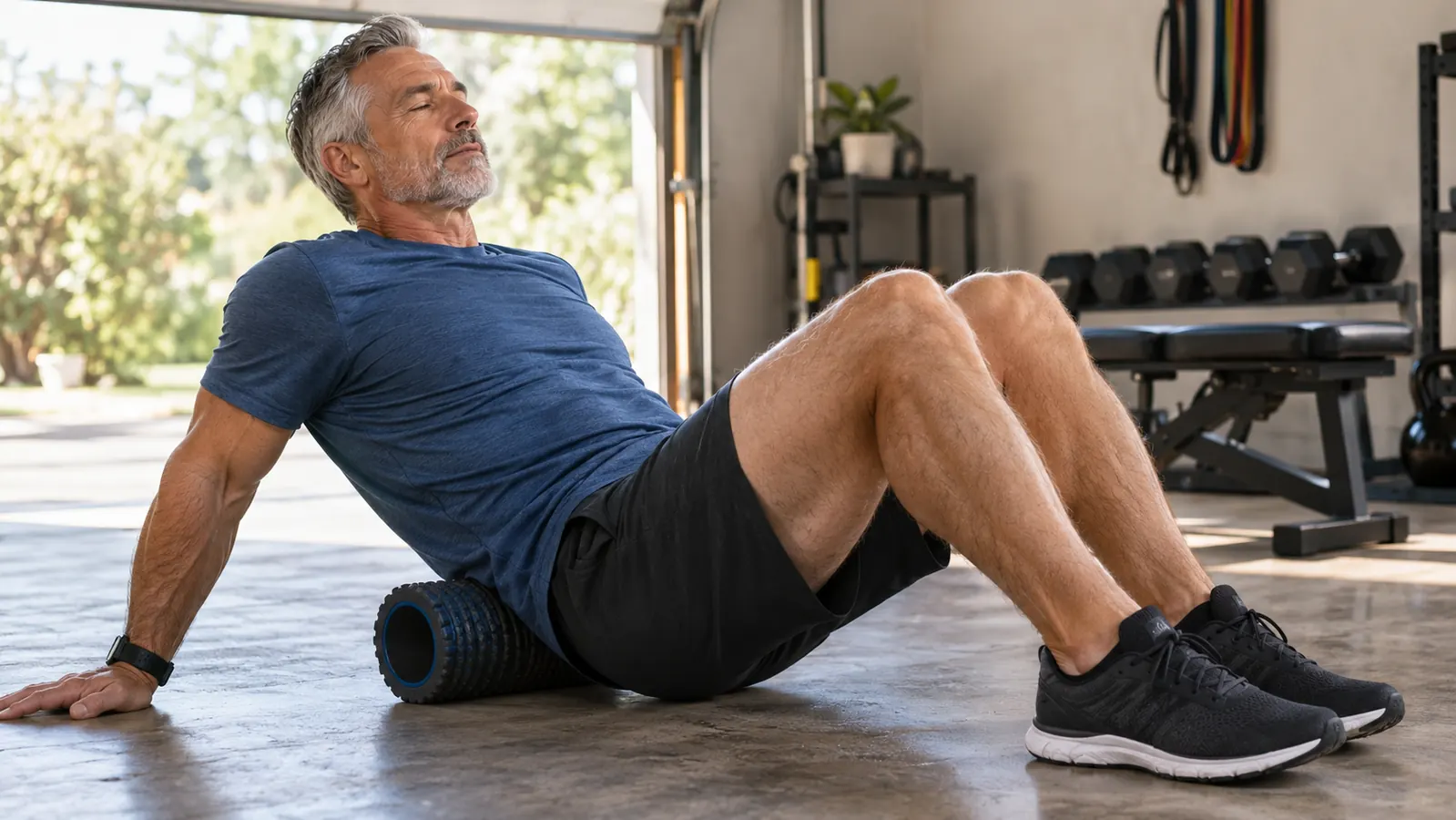
I'll be honest with you. I bought the TriggerPoint Grid foam roller because my lower back was talking to me after every garage session, and I was tired of hearing it. I'm Doug, 58, and I still lift three mornings a week in Chattanooga. I also walk hills with my wife Carol most evenings. The back tightness wasn't dramatic. It was just there, a dull ache that showed up after yard work and hung around longer than it used to.
What nobody tells you about a foam roller is that it looks too simple to do anything. It's a cylinder of foam with some texture on it. I rolled my eyes at the whole category for years. Then a friend at the gym left his TriggerPoint Grid on the floor one morning, I tried it for two minutes, and I felt something shift. So I bought one. This is what six weeks of daily use actually looked like.
The Quick Verdict
A solid, well-built roller that does what it promises if you use it consistently. It won't fix a bad program or a bad mattress, but for daily maintenance it earned a permanent spot in my garage.
Amazon Check Today's Price →Your lower back doesn't need a dramatic fix. It needs five minutes of consistent maintenance.
The TriggerPoint Grid is the roller I reach for most mornings after training. It's firm enough to actually work, and the multi-density surface means I can ease into it or bear down depending on how my back feels.
Amazon Check Today's Price on Amazon →How I've Used It
My routine is embarrassingly simple. After my three morning lifts, I sit on the garage floor with the roller under my lower back, just above my hips, and I roll slowly. Not fast, not aggressively. The instructions that come with the TriggerPoint Grid say to move about one inch per second, and that sounds slow until you try it. It's slower than you think, and it's the right speed. I time myself with the clock on the wall above my bench. The first morning I tried it, I went too fast, maybe three inches per second, and it felt like nothing. Just friction and a little surface burn. So the next day I forced myself to slow down and count one Mississippi between each inch. That changed everything. The slow speed is what lets the nubs actually sink in instead of sliding over the top of the muscle.
I also use it on my right knee, which has been stiff since my coaching days. I was a high school track coach for a lot of years, and my right knee has never quite forgiven me. With the roller, I'll do a few passes along the outside of my thigh and the quad area, holding on the tight spots for twenty or thirty seconds. That part feels less like a massage and more like a very patient dog leaning into a scratch. It's not relaxing at first. It's work. The first time I tried to hold still on a knot near my right hip, I lasted about eight seconds before I had to move. By week three I could sit there for the full thirty seconds and actually breathe. I didn't time it with a stopwatch. I just counted in my head, and the counting gave me something to do while the pressure built.
I kept a rough log for the first month. Not a scientific one, just a notebook where I rated my lower back tightness on a scale of 1 to 10 every morning. Week one, I was usually around a 6 or 7, especially after yard work. Week three, more like a 4 or 5. Week six, I was mostly at a 3. I can't prove the roller did all of that. But the only thing I changed was adding five minutes of rolling after my lifts. I should also say that week two was not a straight line. There were three days where I woke up at a 6 again, and I nearly stopped logging because it felt like the whole thing was a waste. Then I realized those were the days after I had done a lot of bending over in the garden, and the roller wasn't going to undo all of that in one night. The trend over six weeks was what mattered, not the day to day.
What the Grid Surface Actually Does
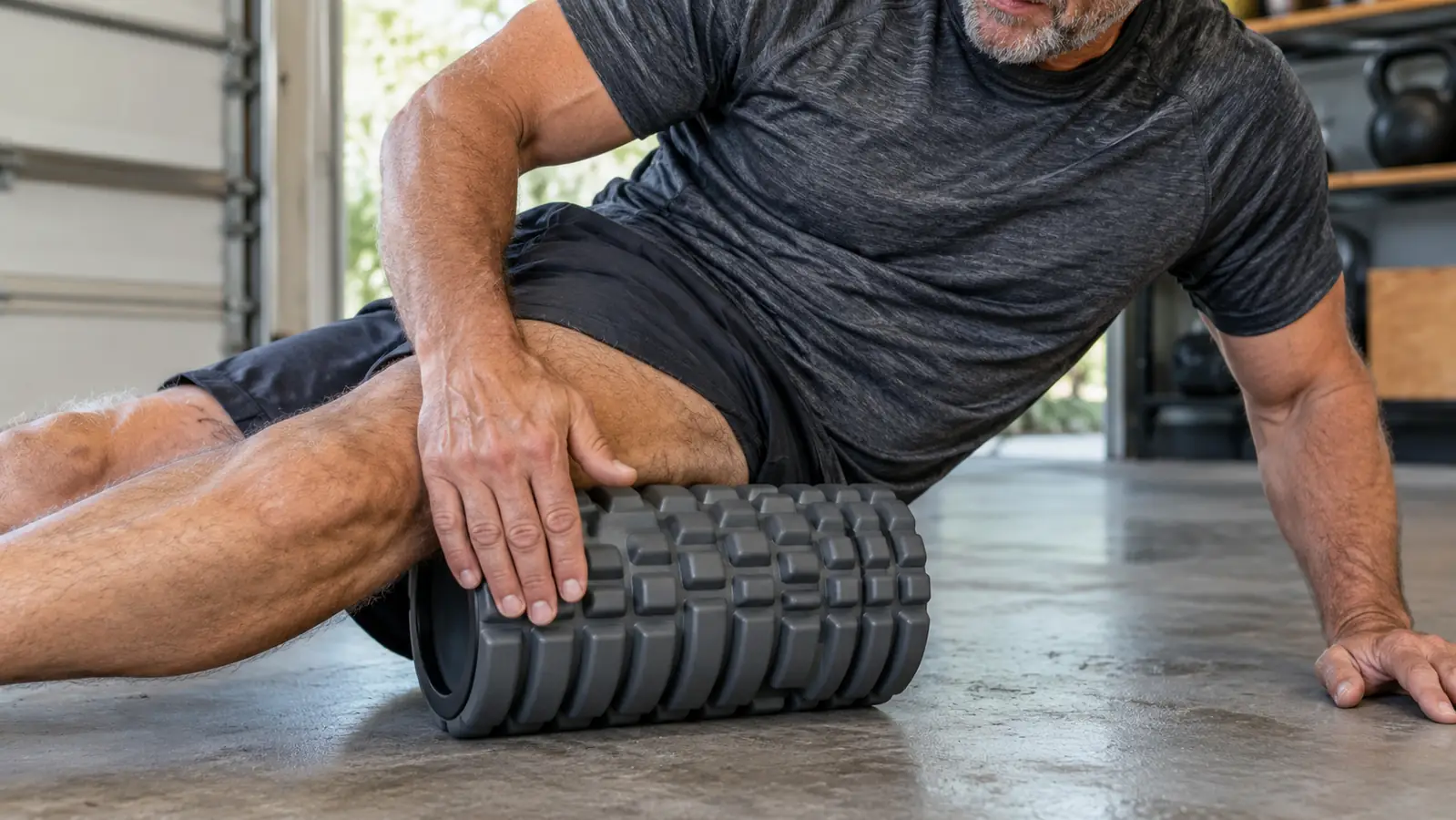
The TriggerPoint Grid has a surface that looks like a waffle iron crossed with a topographical map. There are firm raised nubs in the center and a smoother, less aggressive texture on the edges. That design isn't just for looks. The center gives you a deeper, more targeted pressure when you want it, and the edges let you work a tight area without going straight to pain. I tested this on purpose one afternoon. I rolled my left calf with the center for about a minute, then switched to the edge on the right calf. The center left a deeper, more noticeable sensation, the kind that makes you pay attention. The edge was gentler, almost soothing. Same roller, same speed, completely different feel. That range is what makes the Grid versatile enough for a whole-body session.
I read somewhere that the multi-density surface is meant to mimic a thumb or an elbow, and honestly, that's about right. The center nubs feel like a firm thumb pressing into a knot. The edges feel like the side of a hand. You can roll with the center when your back is really tight, then rotate to the edge when you want to dial it back. Having that choice is what makes the Grid feel like a tool instead of a torture device. A friend of mine who comes over on Saturdays for pickleball tried it once and immediately complained that the center was too aggressive. I told him to flip it ninety degrees and use the edge. He did, and he lasted a full five minutes. That little trick is worth remembering.
The other thing I noticed is that the firmness is just right for someone my size. I'm not a small guy, and I've used softer foam rollers that collapse under my weight. The Grid doesn't collapse. It holds up, which means the pressure comes from the roller doing its job, not from me grinding into the floor. I weigh about 210 on a heavy week, and when I put my full weight on the center of this roller, it gives maybe a quarter of an inch. That firmness is what lets me work a tight spot without having to brace myself awkwardly. With a softer roller, I found myself pressing down with my hands to get any real pressure, which made my shoulders tight. With the Grid, I just shift my weight and let gravity do the work.
The only thing I changed was adding five minutes of rolling after my lifts. My back tightness went from a 6 or 7 most mornings to a 3.
What Nobody Tells You
First, it hurts a little at the start. Not a bad hurt, but a real one. If you've never rolled before, the first few sessions will feel like you're pressing on a bruise you didn't know you had. That goes away after about a week. Your body gets used to the pressure, and the spots that felt sharp start to feel like regular muscle. I remember the exact moment I noticed the change. It was a Tuesday, about nine days in, and I put the roller under my lower back and expected that familiar wince. It didn't come. The nubs still pressed in, but it felt like pressure, not pain. I actually laughed out loud in the garage because I had been bracing for something that wasn't there anymore.
Second, it's not a massage. A massage is something that happens to you. This is something you do to yourself, and it requires a little effort and a little patience. I've had people tell me they bought a foam roller and used it twice and then it became a very expensive doorstop. I get it. If you're not willing to put in five minutes a day, this won't do anything for you. I almost became one of those people. The first weekend I owned it, I used it Saturday morning and then Sunday I skipped because we went to my sister's for lunch and I didn't feel like rolling when we got home. Monday morning my back felt tighter than it had all week. That was the honest lesson: the roller works on the days you use it, and it does nothing on the days you don't.
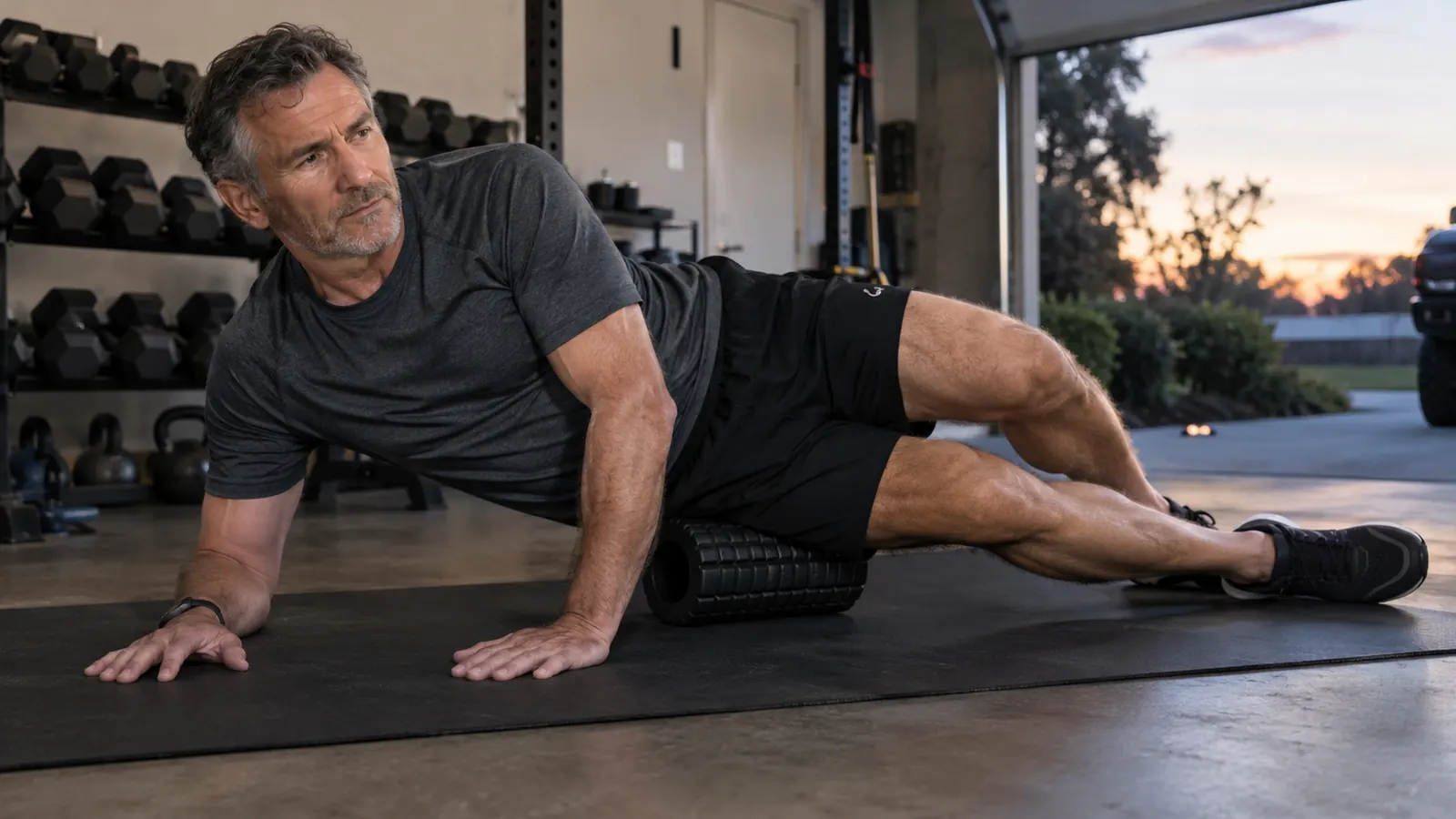
Third, the floor matters. I use mine on a concrete garage floor, and it works fine. But on a hard floor, you'll feel every seam and pebble through the roller. A yoga mat under it makes a big difference. I started using a cheap exercise mat under mine, and it made the whole thing more comfortable. I also learned that carpet is not automatically better. My wife Carol has a thin rug in the den, and I tried rolling on it once. The roller sank into the rug just enough to dull the pressure, and I found myself pushing harder to get the same effect. The mat on the concrete floor was actually the sweet spot. Firm enough to support the roller, soft enough to keep my back from complaining about the cold concrete.
The Tradeoffs
The TriggerPoint Grid is 13 inches long, which is shorter than some full-length rollers. For my purposes, that's fine. I use it mostly on my back, my thighs, and my calves, and 13 inches covers all of those. If you want to roll your entire back in one long pass, a longer roller might be better. But for me, the shorter size is easier to store and easier to control. I keep mine on a shelf above my dumbbells, and it fits without hanging over the edge. When I use it on my back, I can reach the ends easily and guide the pressure where I want it. With a longer roller, I always felt like I was wrestling the thing instead of using it.
It's also firm. Really firm. If you like a soft, squishy roller that feels like a pool noodle, this is not that. The firmness is the point, but it's also the thing that might make you put it away after one use. Start slow, use the edges, and give yourself a week to adapt. I gave my neighbor the same advice and he still winced the first time. But he came back the next week and told me the second session was noticeably easier. That has been my experience too. The adaptation is real, and it happens faster than you expect.
And it's not a cure for anything. I want to be clear about that. I'm not a doctor, and I'm not going to tell you that a foam roller will fix your back. What I can tell you is that my lower back feels better on the days I use it, and that's been consistent for six weeks. That's enough for me. I also noticed that it didn't do much for my knee stiffness. The knee is a joint, and rolling the muscles around it felt good, but it didn't change the way the knee itself felt when I walked down stairs. That's not a knock on the roller. It's just a reminder that a piece of foam has a job, and the job is muscle maintenance, not orthopedic repair.
What I Liked
- Firm, multi-density surface that offers both deep and gentler pressure
- Well-built and stable, doesn't collapse under body weight
- 13-inch size is easy to control and easy to store
- Simple to clean and durable enough for daily use
- Works for back, legs, and calves without needing multiple tools
Where It Falls Short
- Firm surface can be uncomfortable for beginners
- Requires a mat or softer floor for comfort
- Shorter than full-length rollers, so not ideal for full-back passes
- Does nothing if you don't use it consistently
Who This Is For
If you're an active adult over 40 who lifts, walks, gardens, or does anything that makes your back and legs tight, the TriggerPoint Grid is worth a look. It's especially good for people who want a simple, no-screen recovery ritual that takes five minutes and doesn't require an app or a subscription. If you're willing to be patient for a week while your body adapts, this roller will probably earn a permanent place on your garage floor. I'd also say it's good for people who travel, because 13 inches fits in a duffel bag without much fuss. I took mine to my sister's place over Thanksgiving and used it on her hardwood floor with a folded bath towel underneath. It worked fine. That kind of flexibility is what I value in a recovery tool.
Who Should Skip It
Skip it if you're looking for a massage experience, or if you want something soft and plush. Skip it if you have a serious injury and you're hoping a foam roller will fix it, because that's a conversation for a professional, not a piece of foam. And skip it if you know you won't use it more than twice. I've seen too many expensive doorstops. If you're the kind of person who already owns a lacrosse ball and a massage gun and never touches either one, this roller will probably end up the same way. It only works if it becomes part of your routine. For me, that meant putting it next to my gym bag so I couldn't miss it. If you need that kind of nudge, this roller can be that nudge, but only if you actually pick it up.
Six weeks in, I reach for the TriggerPoint Grid more than any other recovery tool I own.
If you want a firm, durable roller that makes daily maintenance easy, this is the one I'd buy again. Check today's price on Amazon and see if it fits your routine.
Amazon Check Today's Price on Amazon →