
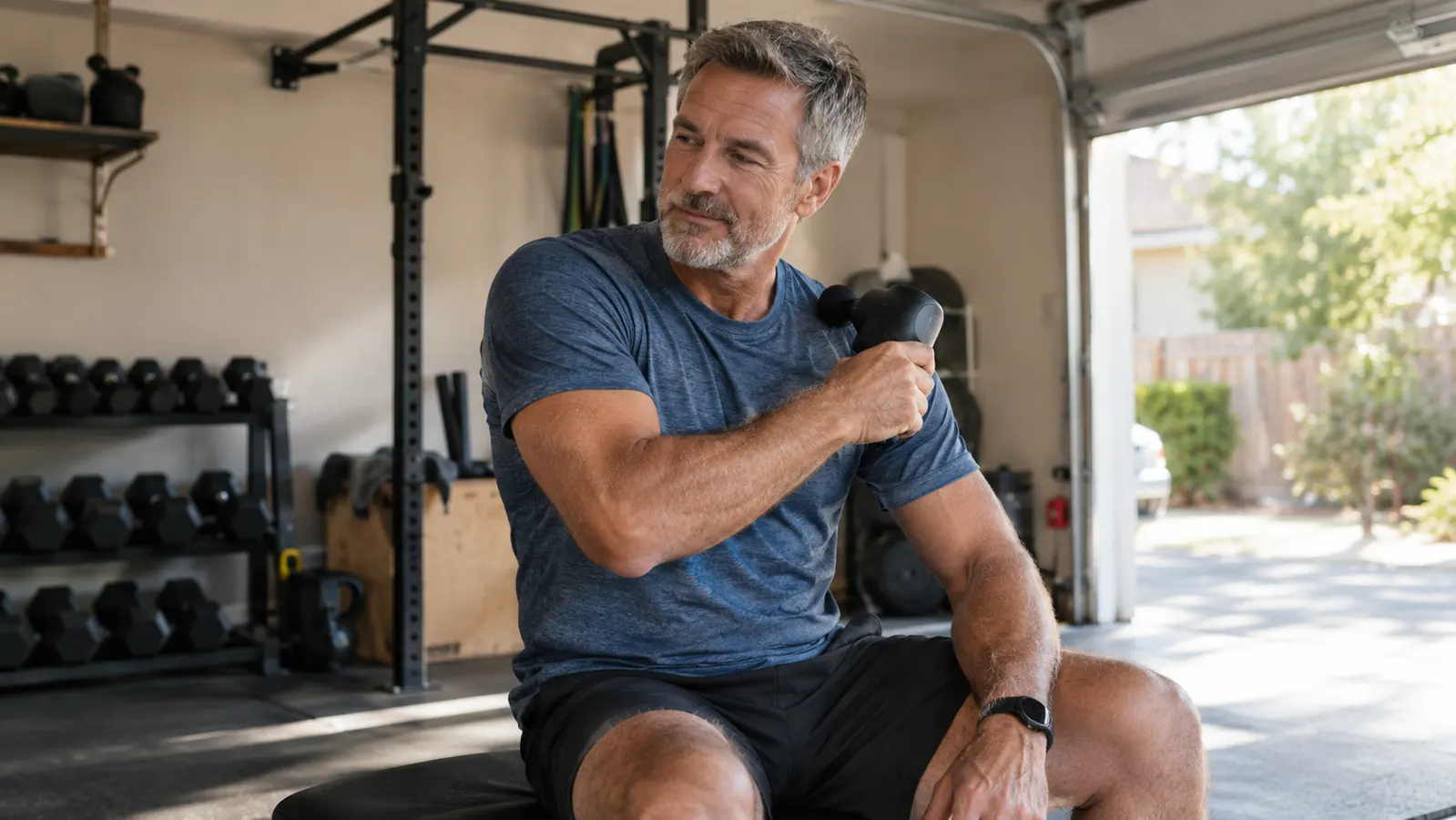
Two hours after a hard lift, the work is done but the body keeps talking. The hamstrings tighten. The lower back, which was fine an hour ago, starts to complain. The right knee, the one I wore out coaching on a track for thirty years, gets stiff if I sit too long. That used to be my evening. I would finish my sets in the garage, come inside, and spend the night trying to find a comfortable position on the couch. Then I started using the Opove M3 Pro 2 massage gun after lifting, and the evenings changed.
I am not a doctor and I am not going to tell you what to do with your body. I am a retired track coach who still lifts three mornings a week in the garage, walks hills with my wife Carol most evenings, and plays pickleball on Saturdays. I am also 58, which means I recover slower than I did at 40 and I have learned to respect that. What follows is the exact routine I have settled on after about two months of using this gun after lifting. It takes about ten minutes. It is not complicated. That is the point.
The massage gun I reach for after every lift
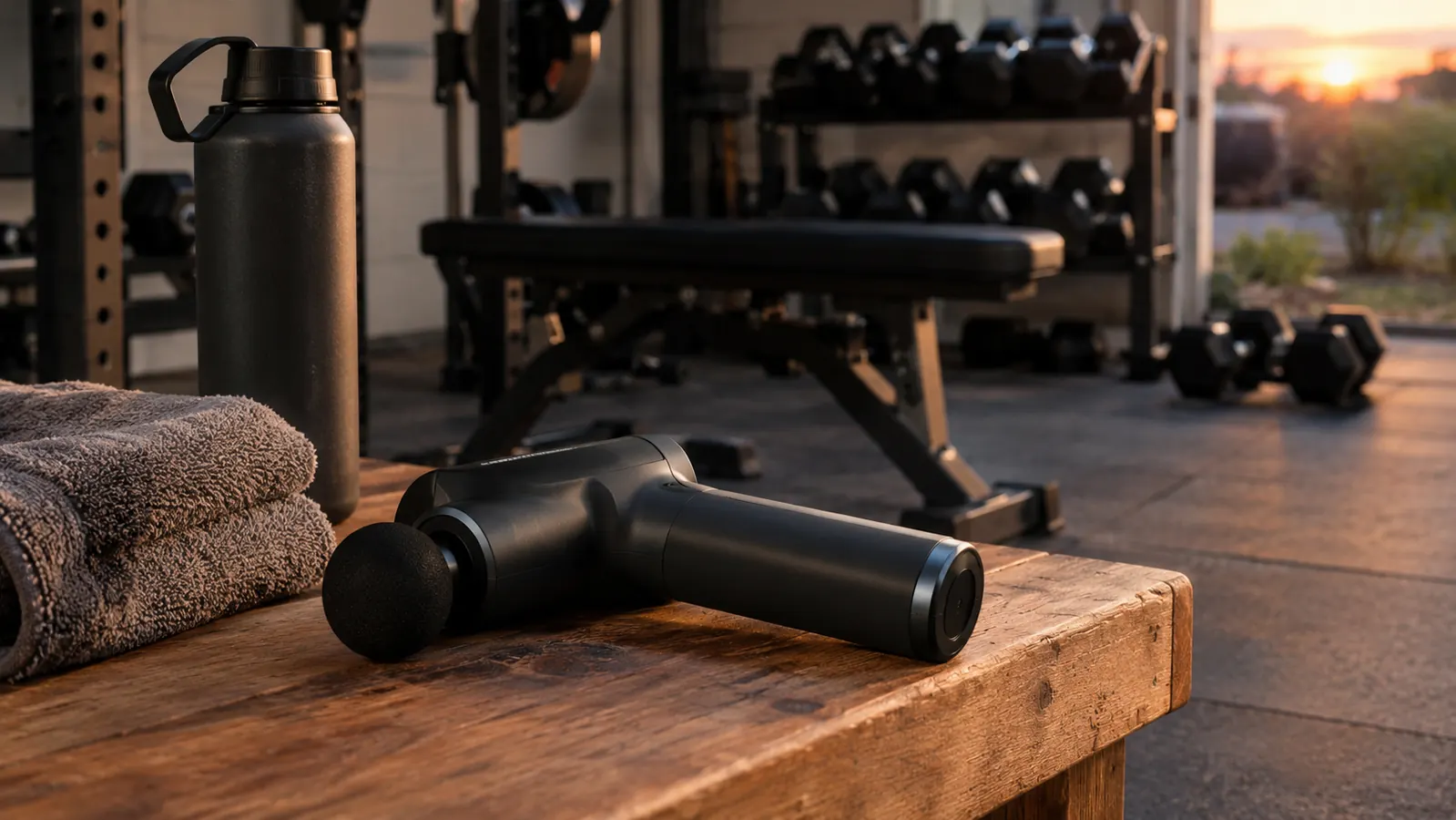
The Opove M3 Pro 2 is the recovery tool that sits on my garage bench. It is simple to run, the battery lasts through a week of sessions, and it has enough power to actually do something about a tight back. Check today's price on Amazon to see where it lands.
Amazon Check Today's Price on Amazon →Why a Massage Gun Instead of Just Stretching
I stretched for years. I still do. But stretching never seemed to reach the deep tightness in my lower back, the kind that shows up after a long day on my feet or a hard session in the garage. A massage gun works on a different layer. It is not a replacement for stretching. It is an addition, and it reaches places my hands and a foam roller never quite got to.
A friend of mine has a big-name massage gun, the kind you see in every physio studio, and he let me try it once. It worked, but it was heavy and loud, and it felt like more machine than I needed. The Opove M3 Pro 2 is lighter, quieter, and easier to handle one-handed. That matters when you are using it on your own back after a session.
The Routine I Use After Every Lift
The mistake most people make with a massage gun is treating it like a jackhammer. You do not need to beat the muscle into submission. You need to give it a reason to let go. The routine below is built around moving the head slowly, staying on each area just long enough, and never pushing into pain. If something hurts, I back off. That rule has served me well.
Step 1: Give Yourself Ten Minutes Before You Start
The first step does not involve the gun at all. After my last set, I put the dumbbells down, take a few deep breaths, and drink a glass of water. I used to grab the gun immediately, still breathing hard, and it never felt right. The muscles are already tight from work. Jumping on them right away just adds more input when they are trying to settle down.
Now I wait about ten minutes. I put the weights away, wipe down the bench, fill my water bottle. By the time I sit down with the gun, my heart rate is back to normal and my muscles have started to relax on their own. The gun does better work on a muscle that is already starting to let go than on one that is still clenched from the last set.
This is also the moment I set the gun to a lower speed. The Opove M3 Pro 2 has a dial that is easy to find without looking, which matters when your hands are tired. I start on the low end and only move up if the muscle asks for it.
Step 2: Start With the Big Muscles and the Lowest Speed
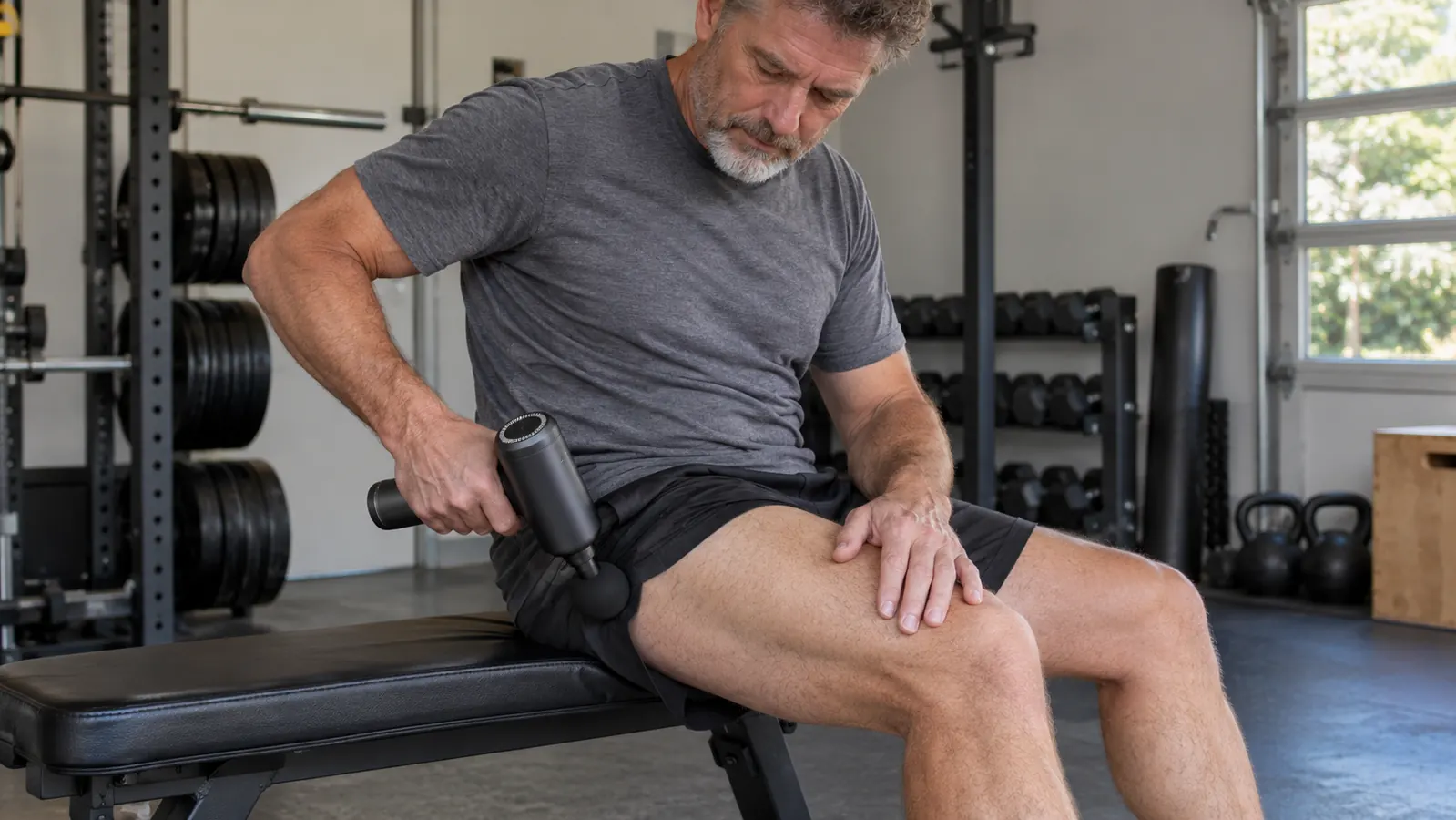
I work in a simple order: quads, glutes, then lower back. Those are the muscles that carried the session, so they get the first pass. I use the rounded head for this, the one that spreads the pressure over a wide area. I move it slowly, about an inch a second, and I do not park it on one spot.
Each muscle group gets about forty-five seconds to a minute. That sounds short, but it is enough. The goal is not to erase every knot in one session. It is to tell the muscle that the work is over and it can stand down. I have found that a slow pass at low speed does more for how I feel the next morning than a hard minute at full power.
The speed matters more than people think. At the lowest setting the Opove M3 Pro 2 feels like a firm thumb massage. At the higher settings it is a different animal. I save those for the rare day when my lower back is genuinely tight after yard work, and even then I keep the session short.
Step 3: Spend Extra Time Where the Session Actually Hit
On a leg day, my quads get the first pass and then they get a second, slower pass. On a day when I have done pull-ups and rows, the lats and the back of the shoulders get the extra attention. The gun cannot tell which muscles you worked, so you have to. I keep a mental note of the last three exercises and spend the extra minute there.
I also spend time on my lower back, which has been tight for years after long days on my feet. I use the fork head for this, the one with the two prongs, so it sits on either side of the spine instead of pressing directly on bone. I keep the pressure light. The lower back responds better to gentle and slow than to force.
My right knee is the other spot that needs attention. I do not put the gun directly on the knee joint. I work the muscles around it, the quad just above and the calf just below, and that loosens the whole area without putting pressure where it does not belong. If you are not sure about a spot, the answer is to go around it, not through it.
Step 4: Use the Right Head for the Right Area
The Opove M3 Pro 2 comes with a few different heads, and they are not decoration. The rounded head is my default for big muscles. The fork head is for either side of the spine and for the back of the calf. The pointed head is for a specific knot that needs a narrower touch, though I use it sparingly because it concentrates the pressure.
Swapping heads takes a few seconds. The heads pull straight off and push straight back on, and they stay put while the gun is running. I keep the two I use most, the rounded and the fork, on the bench next to the gun so I do not have to dig through the case mid-session.
One thing I have learned: the head is not the thing that does the work. The pressure you apply is. I let the weight of the gun do most of the pushing and keep my hand light. The moment I start leaning into it hard, the session turns into a wrestling match and I get less out of it.
Step 5: Finish With a Slow Pass and Then Walk It Off
The last sixty to ninety seconds of my session are the gentlest. I switch back to the rounded head, drop the speed to the lowest setting, and make one slow pass over the muscles I hit the hardest. It feels like a closing note. It tells the body the session is done and it is time to move on to the rest of the evening.
Then I put the gun down, stand up, and walk around the garage for a minute. I do a couple of easy stretches, the kind I have done for years, and I drink another glass of water. The gun is part of the routine, not the whole routine. On the nights I use it, I sleep better. On the nights I do not, I notice the difference in the morning.
The whole thing, from the moment I sit down to the moment I stand up, is about ten minutes. That is not much time for a Friday morning that does not start with a stiff back.
A Few Notes on the Gun Itself
The Opove M3 Pro 2 is not the cheapest massage gun you can buy, and it is not the most expensive either. It sits in the middle, where most of us actually shop. The battery has lasted me a full week of sessions on a single charge, and the motor has not slowed down or made any strange noises in the two months I have had it. That matters to me because I have owned cheaper tools that started rattling after a few weeks.
It is also quiet enough that I can use it in the garage without bothering Carol inside the house. She has commented on it, which is her way of saying she approves. The case it comes in is small enough to tuck on a shelf, and the whole thing takes up less room than a pair of shoes. For a garage gym that is already crowded, that counts for something.
What the Gun Does Not Do
I want to be honest about the limits. The Opove M3 Pro 2 does not fix a bad night of sleep. It does not replace the hill walk with Carol, and it does not make up for skipping water all day. I have tested all three of those theories and they all failed. The gun is a tool in a longer routine, and it works best when the rest of the routine is in place.
It also will not fix an injury. If something hurts in a way that is sharp or new, I do not reach for the gun. I reach for the phone and call the doctor. I am not a medical professional and I do not give medical advice. I use this thing to help my muscles relax after a normal training session, and that is the whole job I ask it to do.
What Else Helps
The gun does its part, but the rest of my evening routine does the heavy lifting. I take a supplement with dinner, the kind my doctor knows about and I have used for years. I drink water through the evening instead of coffee. Carol and I take our walk, hills included, most nights. And I am in bed at a reasonable hour. The massage gun is the last ten minutes of a longer wind-down, and it works better because the other pieces are already in place.
Ten minutes with the Opove M3 Pro 2 after a hard session does more for my Friday-morning legs than any amount of extra stretching ever did.
If you lift at home, the way I do, a massage gun is one of those purchases you talk yourself out of for a year and then wonder why you waited. The Opove M3 Pro 2 has been on my garage bench for two months now, and it has earned its spot. It is simple, it lasts, and it does what I ask of it every single session.
Give it a week of ten-minute sessions
You do not have to take my word for it. Use the Opove M3 Pro 2 after your next three or four lifting sessions, follow the same slow pace, and see how your legs feel on the walk the next morning. Check today's price on Amazon and decide for yourself.
Amazon Check Today's Price on Amazon →