
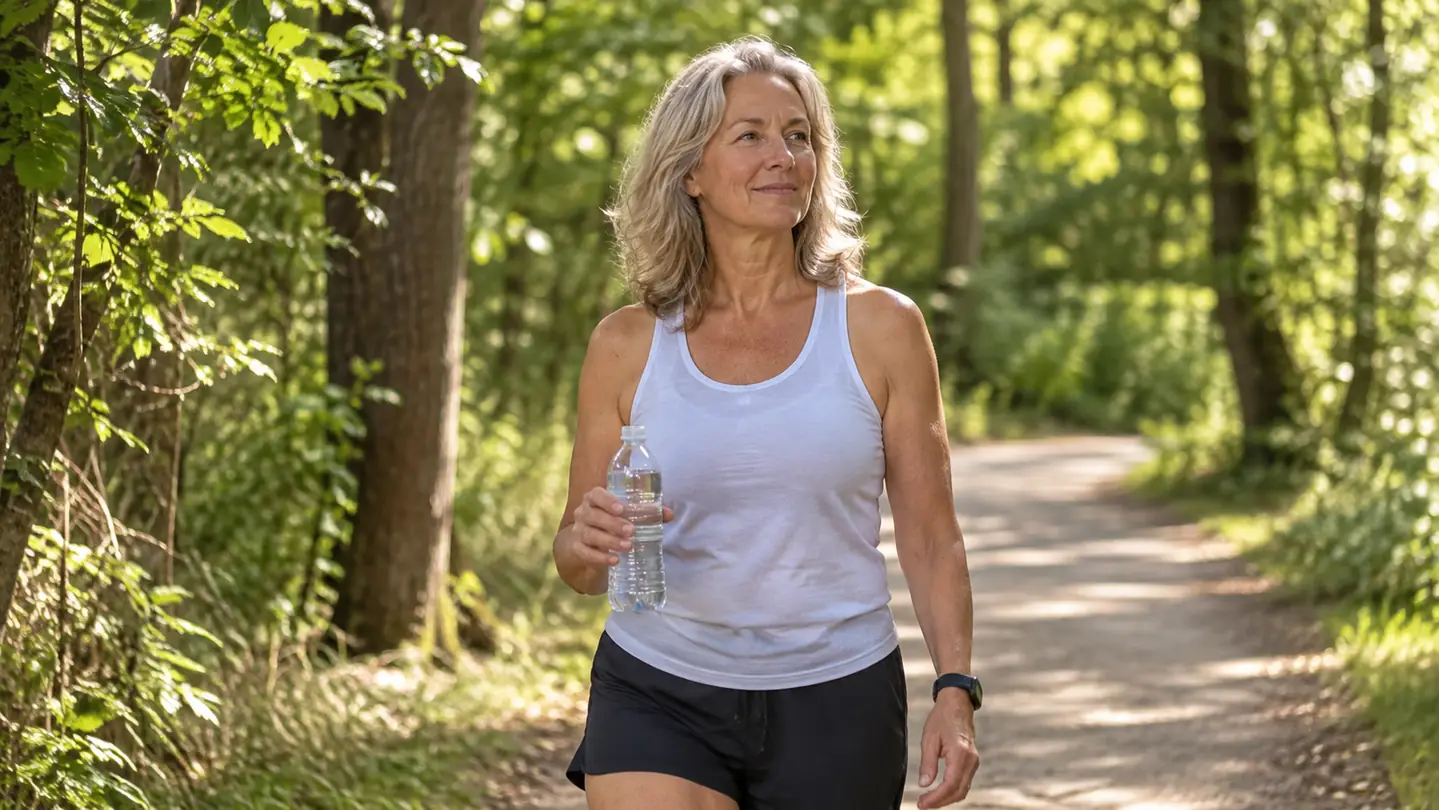
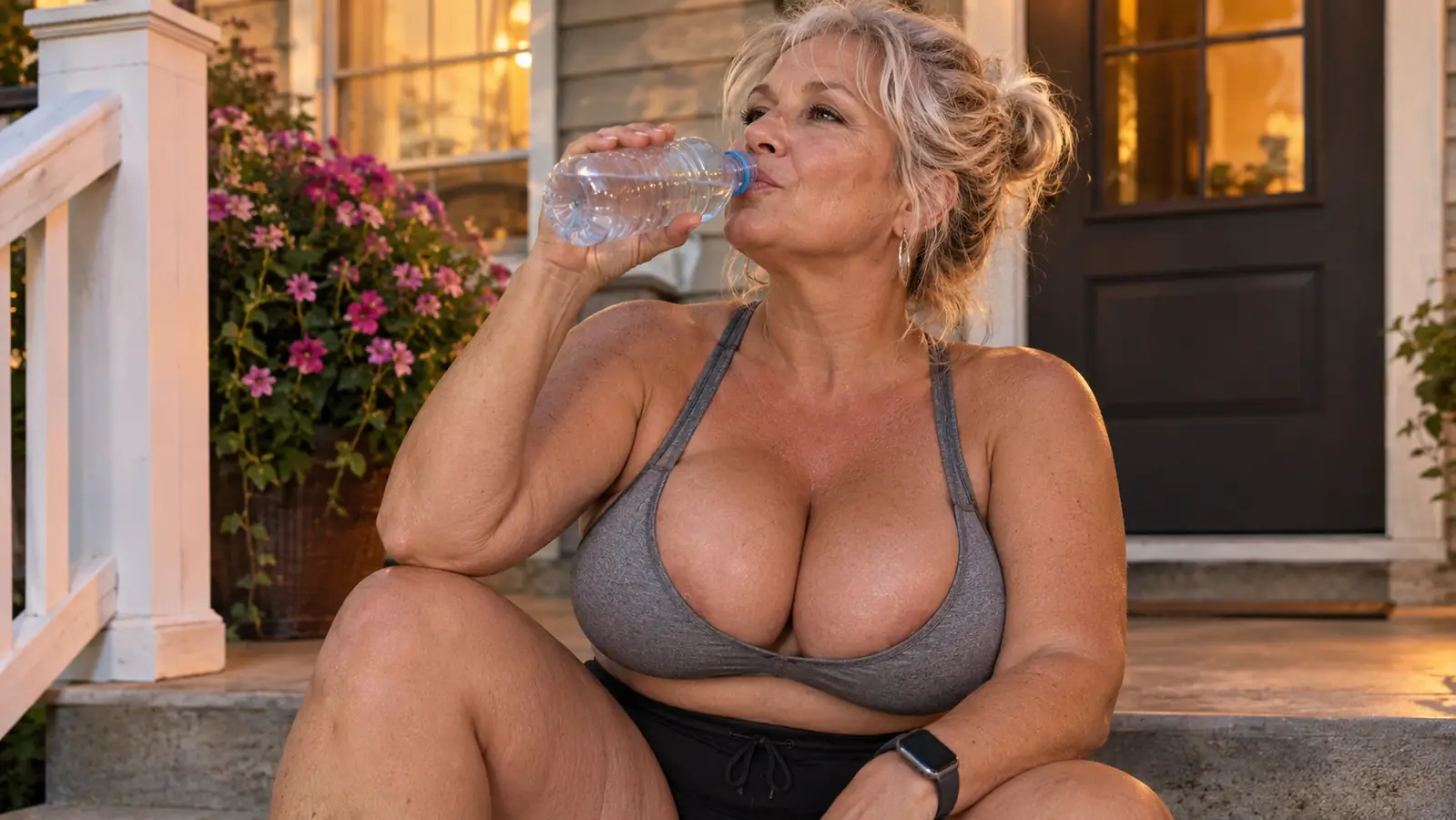
You know the feeling. You come home from a walk in the summer heat, and you are not just thirsty. You are drained. The kind of drained that makes you sit down on the porch step and stay there a while. I have been there more times than I can count, and for most of my life I answered it the same way: drink a big glass of cold water and hope for the best. Some days that worked. Some days it did not, and I could not tell you the difference between those days by looking at the thermometer. The older I get, the less patience I have for feeling off after a walk. I would rather fix the cause than sit on the porch hoping the feeling passes.
I am Renee Pellerin, 58, a retired track coach in Chattanooga, Tennessee. I walk hills most evenings with my husband Glenn, and I lift three mornings a week in the garage. I am not a doctor and this is not medical advice. This is what I figured out over a long, hot summer about staying hydrated on walks, and the part HydroMATE electrolyte packets came to play in my routine. I tested them for five months before I felt like I had anything worth writing down. What I found surprised me, because it was not a new water bottle or a fancy cooling towel. It was a small packet of powder that I already had in the cabinet.
The routine that got me through a Chattanooga summer
One HydroMATE stick in a 24 oz bottle, on the days that earn it. No measuring, no separate shaker, no fuss. See today's price and read the label for yourself.
Amazon Check Today's Price on Amazon →Step 1: Start the walk already hydrated
The mistake I made for years was treating the walk as the start of my hydration. I would head out the door with a bottle, take a few sips on the way, and then try to catch up when I got home. That is backwards. By the time you feel thirsty, you are already behind, and on a hot day you spend the rest of the walk trying to close a gap that keeps opening. I see it in people I walk with too. They take their first real drink at the turnaround point, and then wonder why the second half of the walk is a grind.
Now I keep a 24 oz bottle on the kitchen counter and drink from it through the day. A few swallows every time I walk past. Nothing dramatic, nothing that requires a reminder on my phone. By the time Glenn and I head out the door, I am not starting from empty. That one change did more for how I feel on the hills than anything else I tried, and it costs nothing. It is the kind of small fix that sounds too simple to matter, which is exactly why most people skip it.
The other part of starting hydrated is being honest about the day. If I know we are walking the long loop, I drink a little extra in the afternoon. If it is one of those July days where the air gets thick by 9 am, I plan the walk for the evening and I do not pretend the heat is not there. You cannot outwalk a 95 degree afternoon in Tennessee. You can work around it.
Step 2: Know when plain water is not enough
Plain water is fine for a short walk. I still use it for the 20 minute evening strolls around the neighborhood. But on a walk longer than an hour, or on the kind of day where I am sweating through my shirt before I hit the first hill, water alone stopped being enough for me. I would finish the bottle and still feel off, the way you feel when you are tired but you cannot quite place why. That is the part that took me years to connect to hydration. I kept treating the problem as if it were about the heat, when it was really about what the heat was pulling out of me.
That is where HydroMATE comes in. The packets have sodium, potassium, and magnesium, the minerals you lose when you sweat, plus vitamin C and vitamin B12. They are low sugar, 10 calories, no artificial colors, and the box I bought is a 30 count variety pack. The whole box weighs about 7 ounces, so it is not taking up half my kitchen cabinet.
I am not going to tell you it prevents cramps, because I cannot prove that and I will not pretend otherwise. What I can tell you is that on the days I use it, I feel steadier on the walk home. That is a real difference I noticed over five months, not something I read on the label. If it did nothing for me, I would say so. I have returned plenty of things that did not earn their spot. This one did, and the reason is simple: it does what it says on the box, and it does it without turning my routine into a project.
Step 3: Put the stick in the bottle you already carry
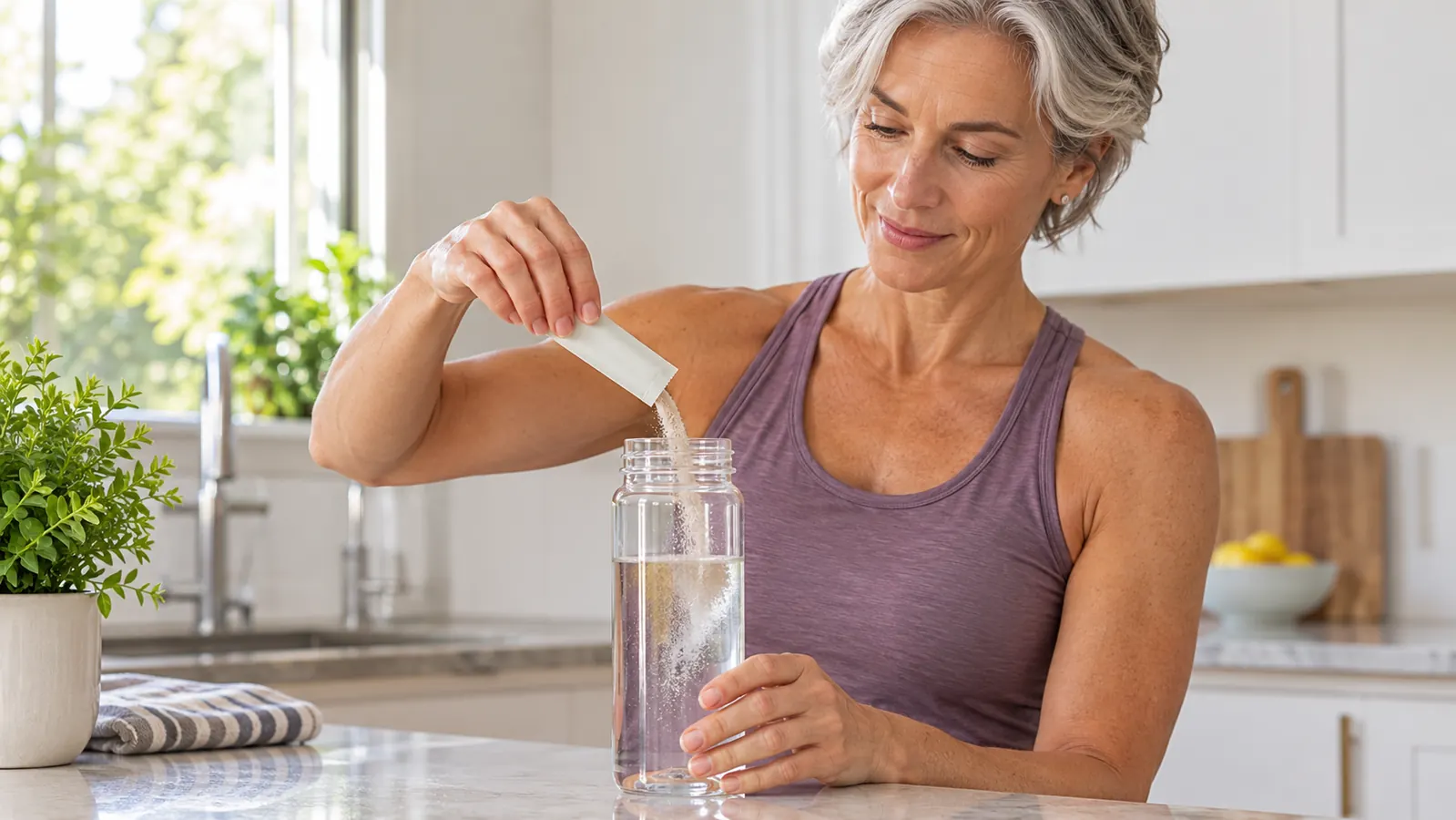
The thing that made this routine stick is that it does not add any steps. I do not mix a pitcher. I do not measure. I tear open one stick pack, pour it into my 24 oz bottle, give it a shake, and go. The stick packs are small enough to drop in a pocket or a bag if I decide partway through the day that I am going to need one. That matters more than it sounds like. The routines that survive are the ones that fit into the life you already have, not the life you would need to build around them.
I drink it the way I would drink plain water, a few swallows at a time, on the trail and after. It tastes fine, which matters more than you would think when you are trying to drink something on a hot day. I am not going to name a favorite flavor, because I do not have one, and the variety pack means I do not have to pick. Some days I finish the whole bottle on the walk. Some days I finish it on the porch after.
One note on the bottle: I use the same 24 oz bottle I already owned. You do not need a special shaker or a fancy insulated jug for this to work. The powder dissolves with a shake, and I have never had a clump at the bottom. If you are the kind of person who will not stick with a routine that requires measuring scoops and washing a separate shaker, this is the version that will actually last.
Step 4: Use it on the days that earn it
I do not use HydroMATE every day. That would be overselling it. I use one stick after a hill walk longer than an hour, on pickleball Saturdays, and on the hot days when I come home wiped out. I bought the box in June 2026 when the Chattanooga heat started, and five months later I am maybe a third of the way through a 30 count box. It lasts. That matters to me, because I would rather buy one box that sits on the counter for months than keep replacing something I use up in a week.
The timing matters as much as the product. I used to wait until I felt bad and then try to fix it. Now I treat the stick as part of the walk, the same way I treat my shoes or my bottle. On the days I know will be long, I put the stick in the bottle before I leave the house. On the days that surprise me, I mix it when I get home. Both work. The point is not to be precious about it.
Pickleball Saturdays are the clearest example. I play for a couple of hours in the morning, and by the time I get home I have sweat through everything I was wearing. That is a one-stick day, no question. The long hill walk with Glenn is a one-stick day too. A short evening stroll is not. You will figure out your own version of that math within a couple of weeks, and once you do, you will not have to think about it anymore.
Step 5: Make it a habit, not a project
Every routine I have kept for more than a month has one thing in common: it is easy. The HydroMATE box sits on the kitchen counter next to my water bottle. When I come in from a long walk, I see it, I mix one, and I sit on the porch and drink it while Glenn and I talk about the day. It took about two weeks before it stopped being a thing I remembered to do and started being just what I do. That is the goal with any habit, and it is why I do not keep the box in a cabinet somewhere.
The other thing that made it stick is that it is not a big production. There is no schedule to keep, no scoop to lose, no shaker to wash. The packets are made in the USA, the box holds 30 of them, and they are keto-friendly, which matters to some people I know even if it is not my own diet. For me the appeal is simpler: it is one small thing that makes the hot months easier.
I will also say this: the habit only works if you are honest about when you need it. I do not use it on every walk, and I do not use it on days when I have barely left the house. I use it on the days that earn it. That is what keeps it from feeling like a chore, and it is why I am still doing it five months later.
What Else Helps
HydroMATE is one part of my routine, not the whole thing. I also try to walk in the cooler parts of the day, I wear a hat, and I check my Fitbit to see my heart rate on the hills so I know when to back off. On the days when the heat is too much, I use the walking pad in the spare bedroom instead of pushing through outdoors. And I still drink plain water all day long. The electrolytes are a tool for the days that need them, not a replacement for water.
I also learned to eat something before a long walk, even if it is just half a banana. The years I spent coaching taught me that people who show up to practice on an empty tank fall apart faster in the heat. The same is true for a hill walk in July. Water, electrolytes, and a little food. That is the whole system, and it is not complicated.
One more thing I will mention, because it surprised me: the order matters. I drink plain water all day, I use the HydroMATE stick around the walk, and I do not try to cram a full day of hydration into the hour before bed. Spreading it out beats loading up all at once. That is the part nobody tells you, and it is the part that actually made the difference for me.
If you want the longer version, I have a full review of the HydroMATE powder itself, a comparison to Liquid IV, and a piece on why electrolyte packets belong in a gym bag. This article is the short version: the routine that works for me, in the order I do it.
One stick in my 24 oz bottle on the long walks, and I stopped coming home feeling drained. That is the whole review.
If you walk in the heat, this is worth a look
A 30 count variety pack, low sugar, 10 calories, made in the USA. I use it on the days that earn it, and it has earned its spot on my counter. Check today's price on Amazon.
Amazon Check Today's Price on Amazon →